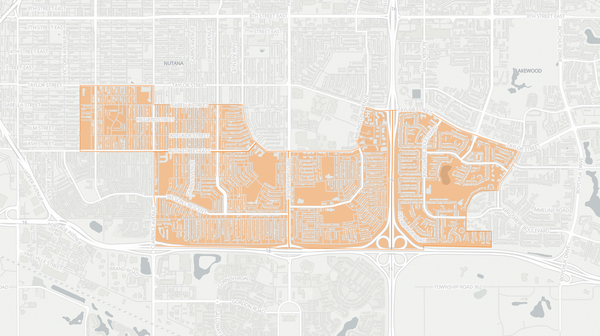
Dakota-Arm River — 2024 Saskatchewan Provincial Election Results Map
Dakota-Arm River — 2024 Election Results
Poll-by-poll results for Dakota-Arm River in the 2024 Saskatchewan election. The Saskatchewan Party candidate won this riding. Explore detailed voting data, candidate results, and turnout statistics at the poll level.
Riding information
Auto generated. Flag an issue.Dakota—Arm River
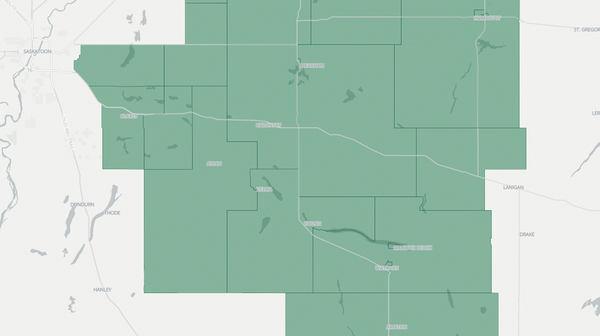
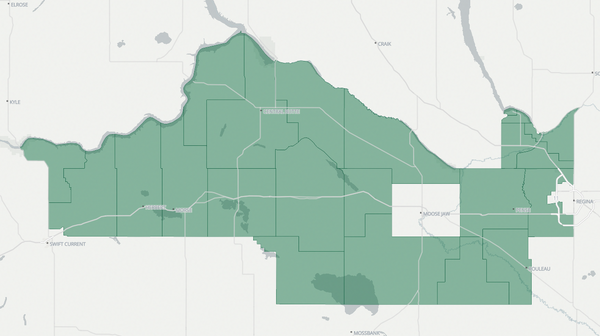
Created through the 2024 redistribution, Dakota—Arm River spans a wide swath of south-central Saskatchewan along the Highway 11 corridor between Regina and Saskatoon. The constituency absorbs much of the former Arm River riding along with territory from other neighbouring seats, taking in communities such as Davidson, Outlook, Craik, Elbow, and Raymore. Outgoing MLA Dana Skoropad, who had won Arm River for the Saskatchewan Party in 2020, announced in August 2023 that he would not seek another term, citing the toll of political life on his young family. His departure opened the newly drawn seat for the first time, drawing five candidates from across the political spectrum in a riding where agriculture and resource extraction underpin the local economy.
Candidates
Barret Kropf (Saskatchewan Party) — Kropf is a sports management professional who grew up in Estevan before attending Trinity Western University, where he earned a Bachelor of Arts in Leadership. He spent more than three decades coaching and managing in hockey, cycling, and football at levels ranging from collegiate to international. Kropf served as head coach of the Briercrest Clippers, earning ACAC Coach of the Year honours in 2006, and later served as an assistant coach with the Czech Republic national women's junior team, helping them win a bronze medal at the 2006 World Championships. He went on to coach at Trinity Western University for a decade and most recently served as general manager and head coach at Prairie Hockey Academy in Caronport, Saskatchewan's first Hockey Canada accredited school. A resident of Caronport, he won a contested Saskatchewan Party nomination to succeed the retiring Skoropad.
Jordan Wiens (NDP) — Wiens is a research agrologist who grew up on a grain farm and holds both a Bachelor of Science in Agronomy and a Master of Science in Soil Science from the University of Saskatchewan. He works in soil chemistry research and has deep ties to the agricultural community that defines the riding. Outside his professional work, Wiens is active in curling, volleyball, and musical ensembles.
Darren Ebenal (Saskatchewan United Party) — Ebenal was born in Craik and raised on a farm near Davidson. He began his career as a recreation director for the towns of Davidson and Biggar, earning a Local Government Administration Certificate from the University of Regina during that time. He later worked as a driller in the oil patch across western Canada before taking a position as an underground operator at PCS Allan, where he served as a safety supervisor, training supervisor, and mine rescue team captain.
Raymond L. Carrick (Progressive Conservative) — Carrick is a farmer from Eyebrow who has worked the land for more than four decades on a farm that has been in his family for nearly eighty years. He served twenty-six years on municipal council and campaigned on expanding irrigation, strengthening rural healthcare, and investigating foreign acquisition of farmland.
Local Issues
Healthcare access loomed over Dakota—Arm River throughout the 2020–2024 term. The Davidson Health Centre was among the rural facilities that experienced service disruptions as the Saskatchewan Health Authority struggled with chronic staffing shortages. Across the province, more than fifty hospitals saw service disruptions between 2019 and 2023, and communities in this riding felt the consequences directly, with residents forced to travel long distances to reach open emergency departments. The Saskatchewan Party government launched a Health Human Resources Action Plan in September 2022, pledging tens of millions of dollars to recruit healthcare workers, but many rural residents remained sceptical that relief was reaching their communities.
Agriculture continued to drive the riding's economy, and the ongoing federal carbon tax remained a flashpoint in farm country. Producers faced elevated input costs for fuel, fertilizer, and grain drying, and the Saskatchewan Party's vocal opposition to the levy resonated strongly in a constituency dependent on grain farming and ranching. The emergence of the Saskatchewan United Party and the continued presence of the Progressive Conservatives on the ballot reflected a segment of the rural electorate that wanted even more aggressive pushback against federal policy on energy and agriculture.
The riding's vast geography also highlighted persistent infrastructure concerns, including highway maintenance, rural broadband connectivity, and the sustainability of small-town services in communities with declining populations.