Kitchener—Conestoga — 2025 Ontario Provincial Election Results Map
Kitchener—Conestoga — 2025 Election Results
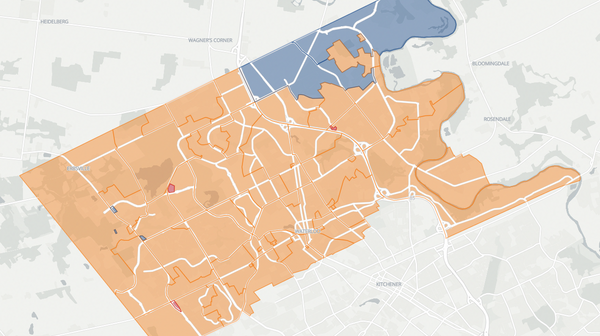
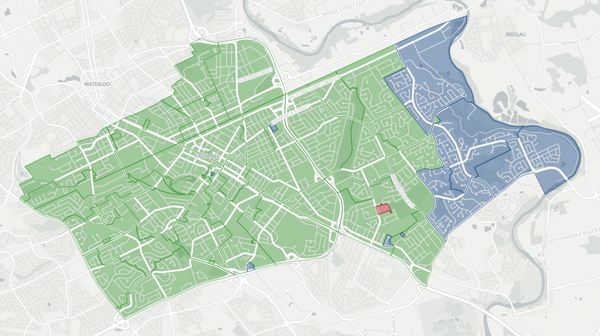
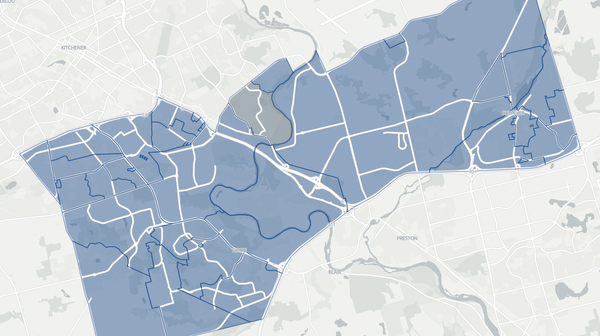
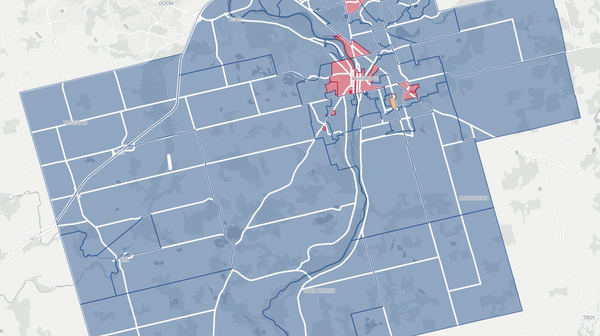
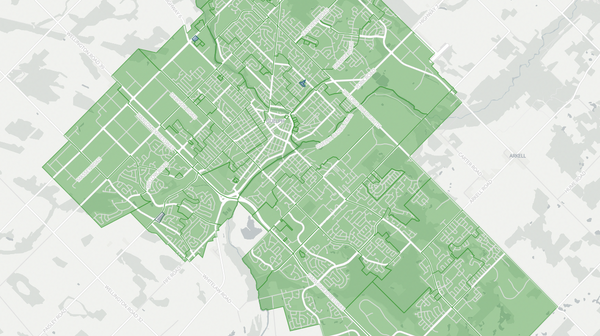
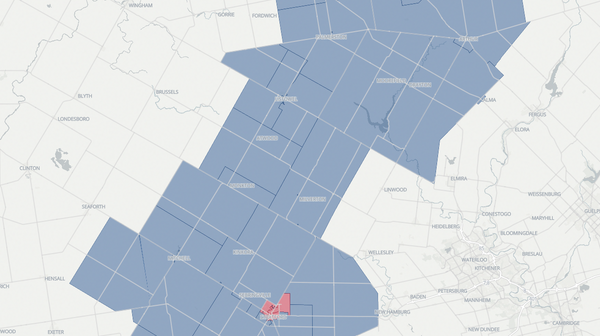
Poll-by-poll results for Kitchener—Conestoga in the 2025 Ontario election. The Progressive Conservative candidate won this riding. Explore detailed voting data, candidate results, and turnout statistics at the poll level.
Riding information
Auto generated. Flag an issue.Kitchener—Conestoga
Kitchener—Conestoga is Waterloo Region’s most rural provincial riding, spanning the townships of Woolwich, Wellesley, and Wilmot along with the southwestern portion of the City of Kitchener. The riding includes the communities of Elmira, St. Jacobs, New Hamburg, Baden, and Breslau, and is home to a significant Old Order Mennonite and Amish farming population. Progressive Conservative Mike Harris won the seat in 2018 and was re-elected in 2022. In June 2024, he was appointed Minister of Red Tape Reduction, his first cabinet position, and introduced Bill 227, the Cutting Red Tape, Building Ontario Act, later that year. As the son of former Ontario Premier Mike Harris, his family name carried both recognition and political associations in the riding.
The most explosive local issue of the term emerged in 2024 when the Region of Waterloo began assembling 770 acres of farmland in Wilmot Township for future industrial use, reported to be connected to a Toyota electric vehicle battery plant. Farmers and property owners who received purchase offers said they were threatened with expropriation if they refused to sell, sparking an organized opposition movement under the banner Fight for Farmland.
Candidates
Mike Harris (Progressive Conservative) — The son of former Premier Mike Harris, Harris Jr. was first elected in 2018 and served as a backbench MPP before being appointed Minister of Red Tape Reduction in June 2024. He introduced Bill 227, a red tape reduction package containing over sixty burden reduction initiatives. His campaign highlighted investments in the Wellesley Township Recreation Centre and funding for MRI services at Grand River Hospital.
Joe Gowing (Liberal) — A banker, former small business owner, and former trustee with the Waterloo Catholic District School Board, Gowing served as president of the Royal Canadian Legion Branch 126. He had also been the Liberal candidate in the riding in 2018. His campaign focused on housing affordability, drawing attention to the gap between housing costs and local incomes.
Jodi Szimanski (NDP) — An education worker at the University of Waterloo serving as associate director of communications, engagement, and digital experience in the co-op program, Szimanski grew up in Waterloo Region with family ties to farming and manufacturing. She served on the board of the United Way and was an advocate for the rights of Wilmot farmers affected by the land assembly.
Brayden Wagenaar ran for the Green Party, Jim Karahalios for the New Blue Party, and Patrick Doucette for the Ontario Party. Late in the campaign, the Green candidate publicly offered his support to NDP candidate Szimanski.
Local Issues
The Wilmot Township land assembly was the defining issue of the 2022–2025 term in Kitchener—Conestoga. The Region of Waterloo sought to purchase 770 acres of farmland, including six farms and six residential properties bounded by Bleams Road, Nafziger Road, Highway 7, and Wilmot Centre Road, for future industrial development. By early 2025, the region had spent eighteen million dollars to acquire one farm covering 161 acres and three residential properties, totalling about twenty per cent of the targeted lands. Hundreds of community members spoke out against the process, citing the loss of prime agricultural land, environmental concerns, and a perceived lack of transparency. The provincial government provided funding to the region for the project but publicly criticized the municipality for its handling of the process.
Housing affordability and land-use planning were closely linked to the farmland debate. The riding’s three townships experienced significant development pressure as Waterloo Region’s population expanded, and residents reported that adult children could not afford to rent or buy in the communities where they grew up. Debates about where and how to build new housing pitted the desire for growth against the imperative to protect farmland, a tension that the Wilmot land assembly brought into sharp focus.
Transit and rural infrastructure rounded out the local agenda. A GO Transit train station in the community of Breslau had been promised for years but remained unbuilt, frustrating commuters who depended on car travel to reach jobs in Kitchener-Waterloo and the Greater Toronto Area. Broadband internet expansion to rural properties was also a priority, with candidates debating how to bring high-speed connectivity to farming communities that remained underserved.