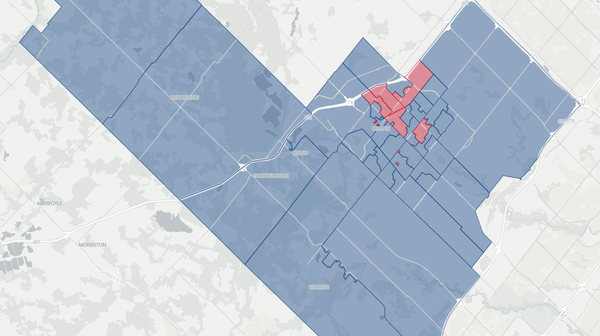
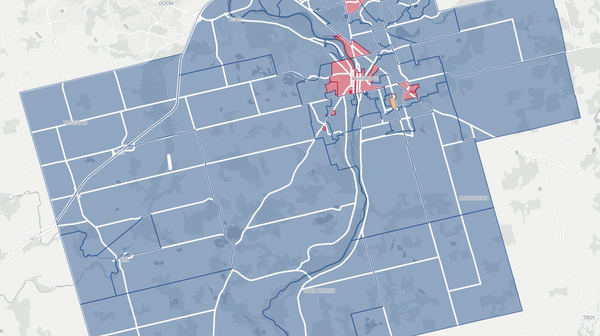
Guelph — 2025 Ontario Provincial Election Results Map
Guelph — 2025 Election Results
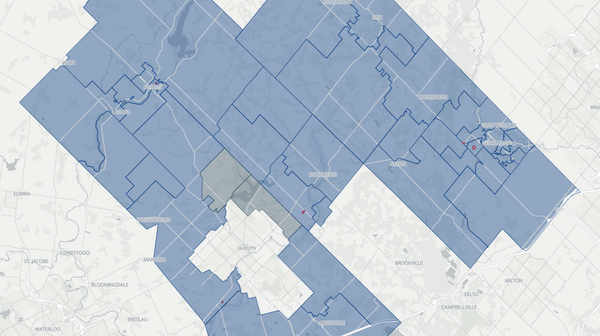
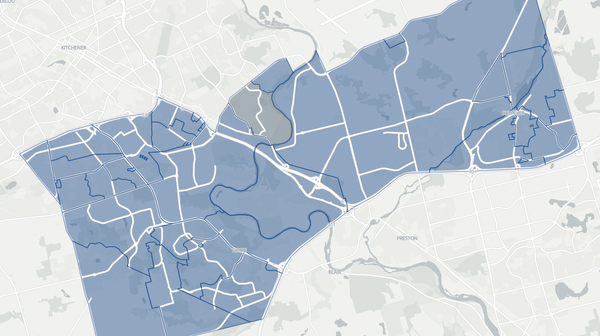
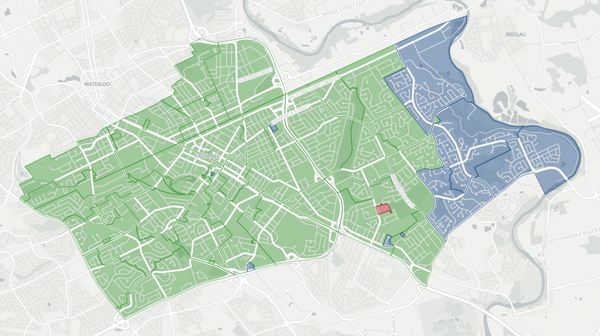
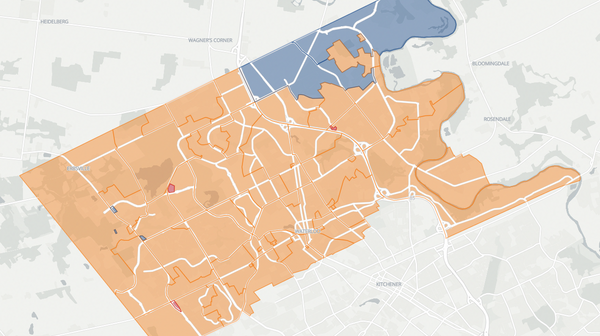
Poll-by-poll results for Guelph in the 2025 Ontario election. The Green Party candidate won this riding. Explore detailed voting data, candidate results, and turnout statistics at the poll level.
Riding information
Auto generated. Flag an issue.Guelph
Guelph remained the stronghold of Ontario Green Party leader Mike Schreiner, who had made history in 2018 as the first Green MPP ever elected in the province and comfortably held the seat in 2022. Over the 2022–2025 term, Schreiner continued to serve as a vocal critic of the Ford government's environmental and housing policies, while the riding itself grappled with a deepening housing and homelessness crisis. The number of families accessing emergency shelters in Guelph and Wellington County more than doubled between 2023 and 2024, and gaps in mental health, substance use, and addiction services grew more acute. With the snap election called for February 2025, Schreiner sought a third term while the three major parties fielded a mix of first-time and returning candidates in a riding that remained distinctly progressive in character.
Candidates
Mike Schreiner (Green Party) — The incumbent MPP and Ontario Green Party leader, Schreiner grew up on a farm in Kansas before moving to Canada in the 1990s. He holds degrees from the University of Kansas and Indiana University. Before entering politics, he co-founded Local Food Plus, a non-profit promoting sustainable food systems, and became leader of the Ontario Greens in 2009. He was first elected in 2018 and returned in 2022.
Robert Coole (Progressive Conservative) — A semi-retired horse trainer and president of the Guelph PC riding association since 2014, Coole was a longtime party volunteer in the riding. He served on the Guelph legion branch executive board and acted as a liaison with the city on a veterans' memorial crosswalk project. He was also a member of the Ontario Trillium Foundation's area grant review team.
Mustafa Zuberi (Liberal) — At 24, Zuberi was the youngest candidate in the race. He moved to Guelph from Pakistan at age 13 and graduated from the University of Guelph with a political science degree. While at university, he served as president of the Young Liberal Club and received a bridge-building scholarship from the Muslim Society of Guelph for helping recently arrived students integrate into the community.
Cameron Spence (NDP) — A lifelong renter and father who earned a PhD in Global Health and Social Medicine from King's College London and a master's from the London School of Economics, Spence had also taught at McMaster University. He later worked on factory floors at Polycon and Well.ca in Guelph before transitioning into community organizing with the local NDP.
Minor candidates included Carina Fraser (New Blue Party).
Local Issues
Homelessness and the housing crisis dominated the local conversation heading into the 2025 election. The City of Guelph reported that nearly 6,000 families in the Guelph-Wellington area were living in housing that was unaffordable or inadequate, and the number of families using emergency shelters had more than doubled over the previous year. Encampments remained visible in parts of the city, and the question of how to provide adequate supportive housing was central to all-candidates debates. The city called on the province to collaborate with municipalities on building housing for all income levels.
Health care access was another pressing concern. Guelph lacked adequate mental health, substance use, and addiction services, with residents seeking psychotherapy or psychiatric care facing long waitlists or no available options at all. The city's lone hospital, Guelph General, faced capacity pressures, and multiple candidates raised the idea of a second hospital or expanded medical training at the University of Guelph. The shortage of family physicians in the region compounded these challenges.
The threat of U.S. tariffs on Canadian goods added an economic dimension to the campaign. Guelph's advanced manufacturing sector and agri-food industry were seen as potentially vulnerable, and candidates debated how the provincial government should respond to protect local jobs and supply chains. The city's priorities document for the provincial election also stressed the need for permanent and predictable funding for community paramedicine and other health programs to reduce reliance on hospital emergency rooms.