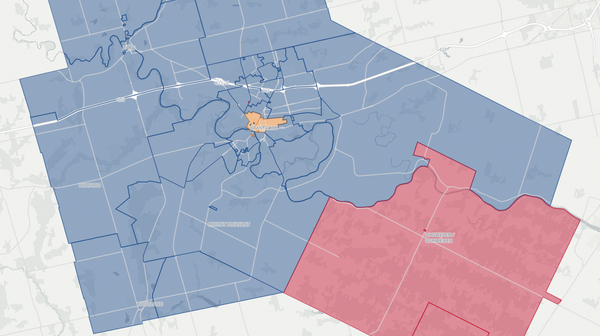
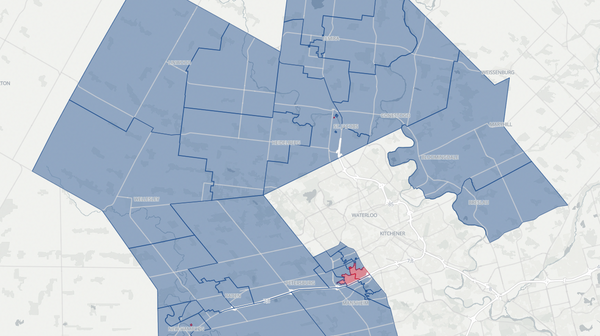
Cambridge — 2025 Ontario Provincial Election Results Map
Cambridge — 2025 Election Results
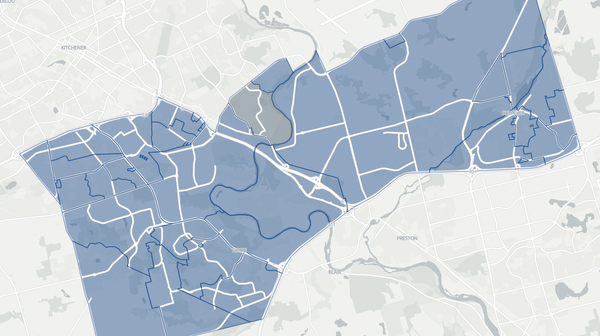
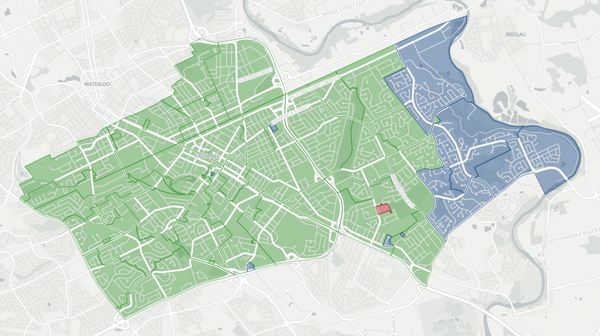
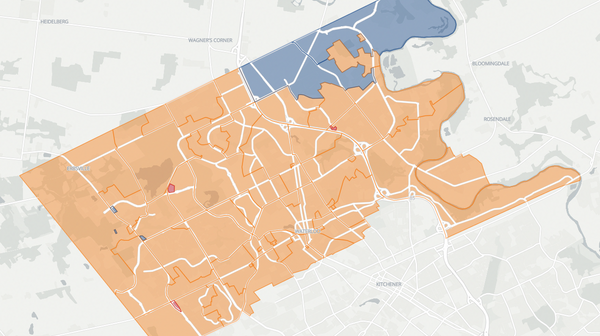
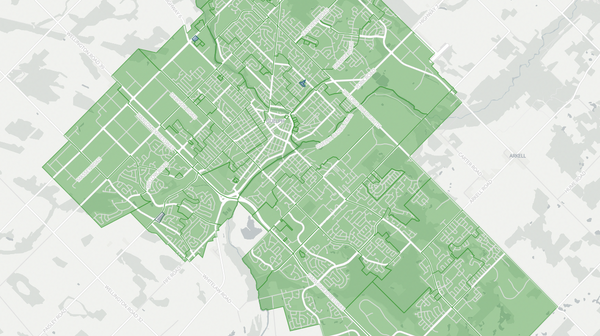
Poll-by-poll results for Cambridge in the 2025 Ontario election. The Progressive Conservative candidate won this riding. Explore detailed voting data, candidate results, and turnout statistics at the poll level.
Riding information
Auto generated. Flag an issue.Cambridge
First-term PC MPP Brian Riddell sought re-election in Cambridge, the mid-sized Waterloo Region city formed from the amalgamation of Galt, Preston, and Hespeler. Riddell, a former Conestoga College professor and longtime business executive, had served during the 2022–2025 term as Parliamentary Assistant to the Minister of Public and Business Service Delivery and Procurement, and as Chair of the Standing Committee on Social Policy. The riding had been a four-way contest in 2022 following the departure of former PC-turned-New Blue MPP Belinda Karahalios, and the 2025 race again featured Karahalios running under the New Blue banner alongside established candidates from the major parties.
Cambridge’s economy is anchored by manufacturing, with Toyota Motor Manufacturing Canada’s operations among the city’s largest employers. The city has also become a growing part of the broader Kitchener-Waterloo tech corridor while continuing to grapple with homelessness, addiction, and affordability challenges that intensified during the 2022–2025 term.
Candidates
Brian Riddell (Progressive Conservative) — Born in the former town of Galt, Riddell has lived in Cambridge his entire life. He held senior management and engineering roles at Bridgestone Canada and Michelin Canada over a career spanning more than 30 years. He holds degrees from Wilfrid Laurier University, the University of Chicago, and Conestoga College, and taught as a Creative Industries professor at Conestoga before his election.
Rob Deutschmann (Liberal) — Deutschmann is a personal injury lawyer who established his practice in Kitchener in 1995 after earning his law degree with distinction from the University of Western Ontario. He served as mayor of North Dumfries Township and regional councillor for the Region of Waterloo from 2010 to 2014, and most recently served as a regional councillor from 2018 until resigning in January 2025 to run for the provincial Liberal candidacy. He also sat on the Grand River Conservation Authority Board.
Marjorie Knight (NDP) — Knight is a longtime Cambridge resident, anti-poverty advocate, and family outreach worker with the House of Friendship. She serves on the boards of the Cambridge Shelter Corp and ACCKWA, and previously helped found Rhythm and Blues Cambridge. This was her third consecutive provincial campaign in the riding, having run competitive races in 2018 and 2022.
Carla Johnson (Green Party) — Johnson ran on the Green Party ticket, highlighting homelessness and affordability as key concerns.
Belinda Karahalios (New Blue Party) — Karahalios co-founded the New Blue Party after being expelled from the PC caucus in 2020 for voting against Bill 195, the emergency powers extension legislation. She served as the MPP for Cambridge from 2018 to 2022 and campaigned in 2025 on affordability and opposition to the harmonized sales tax.
Local Issues
Homelessness and the addiction crisis intensified in Cambridge during the 2022–2025 term. The Region of Waterloo’s 2024 point-in-time count found more than 2,300 individuals experiencing homelessness across the region, double the figure from 2021. Cambridge saw encampments established in several locations, with the city issuing and later withdrawing eviction notices at one site on Branchton Road in 2024. In November 2024, encampments were cleared in Cambridge as municipal leaders called for greater provincial and federal support. The crisis intersected with the ongoing opioid epidemic and inadequate shelter capacity.
The Blair warehouse controversy from the 2022 election had largely concluded by this term, with the Broccolini development moving forward after courts ruled in the developer’s favour. However, the broader issue of Minister’s Zoning Orders and provincial overrides of local planning decisions remained a live debate. The Liberals and NDP argued the province had undermined municipal authority, while the PCs defended MZOs as necessary tools for accelerating housing and infrastructure development.
Healthcare staffing and affordability were persistent concerns. Cambridge Memorial Hospital faced recruitment challenges common across Ontario, and the cost of housing in the region, while lower than in Toronto, had risen significantly. As the Kitchener-Waterloo region attracted more tech-sector workers, Cambridge residents in manufacturing and service occupations found themselves competing for housing in an increasingly expensive market.