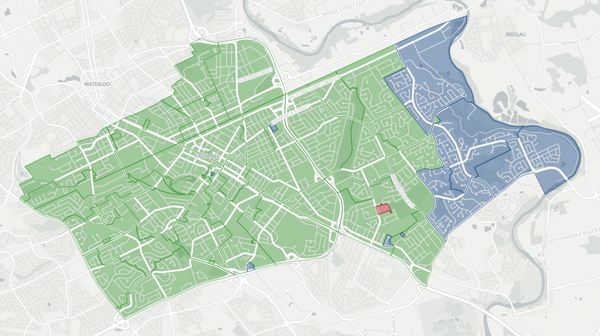
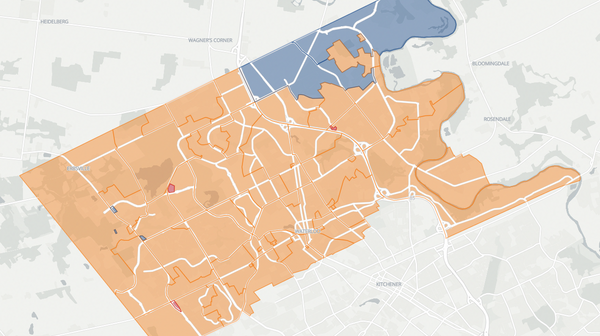
Wellington—Halton Hills — 2025 Ontario Provincial Election Results Map
Wellington—Halton Hills — 2025 Election Results
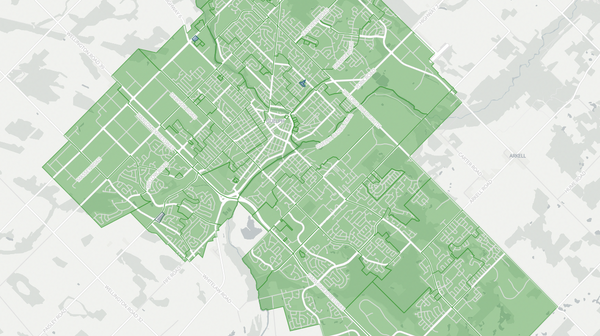
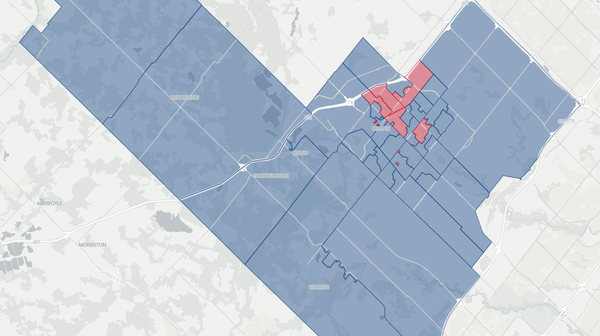
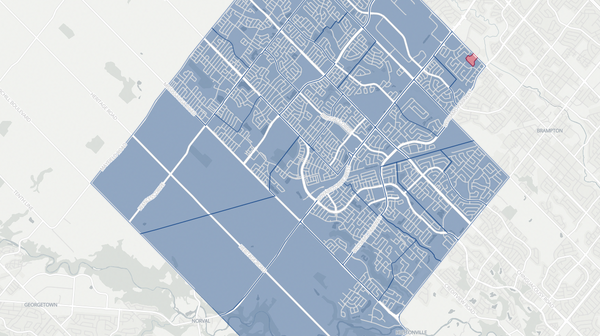
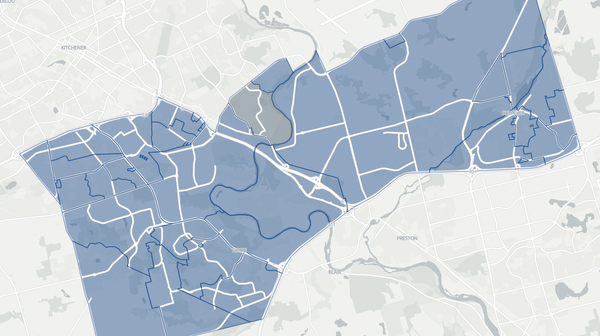
Poll-by-poll results for Wellington—Halton Hills in the 2025 Ontario election. The Progressive Conservative candidate won this riding. Explore detailed voting data, candidate results, and turnout statistics at the poll level.
Riding information
Auto generated. Flag an issue.Wellington—Halton Hills
Wellington—Halton Hills entered the 2025 provincial election facing a generational transition. Ted Arnott, who had represented the riding as a Progressive Conservative since 1990—making him one of the longest-serving members in the history of the Ontario Legislature—announced in October 2024 that he would not seek re-election. Arnott had served as Speaker of the Legislature since 2018 and was re-elected to the Speaker's chair in 2022. His departure after 34 years in office opened the riding to its first competitive contest in decades, drawing candidates with strong local profiles.
The riding spans a mix of small towns and agricultural communities across parts of Wellington County and the Town of Halton Hills, including Fergus, Elora, Georgetown, Acton, Arthur, and Mount Forest. The rural character of the riding, combined with the pressures of development radiating outward from the Greater Toronto Area, made land use and farmland protection central themes of the campaign.
Candidates
Joseph Racinsky (Progressive Conservative) — A Halton Hills town councillor representing Ward 2 since being elected in 2022 at the age of 20, Racinsky previously worked in the constituency office of MPP Parm Gill. At 23 years old at the time of the election, he became one of the youngest MPPs ever elected to Queen's Park.
Alex Hilson (Liberal) — A Ward 1 councillor for the Town of Halton Hills, Hilson is a lifelong resident of the community. He has worked as the Acton Business Improvement Area coordinator, as a youth programmer, and has volunteered with the Halton Hills Optimist Club and the Halton Hills Interfaith Community.
Bronwynne Wilton (Green Party) — A Centre Wellington township councillor since 2022, Wilton holds three degrees from the University of Guelph, including a PhD in Rural Studies and a Master of Science in Rural Planning and Landscape Architecture. She is the owner of Wilton Consulting Group, a firm focused on supporting the agriculture and agri-food sector.
Simone Kent (NDP) — An education worker and dairy farmer based in Fergus, Kent holds a degree in chemical engineering from the University of Ottawa. She has served as president of Jersey Ontario and has been active in community events, including the Fergus Fall Fair.
Other candidates included Stephen Kitras (New Blue Party), Jason Medland (Ontario Party), and Ron Patava (Independent).
Local Issues
Farmland preservation and land use policy stood at the centre of the riding's political discourse during the 2022–2025 term. The provincial government's 2023 Greenbelt controversy, in which protected lands were opened for development before the decision was reversed following public outcry and the Auditor General's report, heightened anxiety in a riding where agriculture is a pillar of the local economy. The Wellington Federation of Agriculture and the Ontario Federation of Agriculture continued to voice opposition to policies that would consume prime agricultural land for urban expansion.
Highway 413, while not routed directly through the riding, remained a significant issue. The proposed highway would pave over more than 2,000 acres of farmland in the broader region, and local candidates debated whether the project represented sound transportation policy or an extension of sprawl-driven development that threatened the agricultural landscape.
Healthcare access was a persistent concern in the riding's smaller communities. Many residents of the Wellington—Halton Hills riding lacked a family doctor as of the campaign period, reflecting a broader provincial shortage. Candidates debated strategies for training new physicians, integrating international medical graduates, and improving access to services in rural areas where residents often travel significant distances for care. Rural broadband connectivity, while improved through provincial and federal investments, remained uneven, with residents in some parts of the riding still lacking reliable high-speed internet service.