Victoria-Beacon Hill — 2024 British Columbia Provincial Election Results Map
Victoria-Beacon Hill — 2024 Election Results
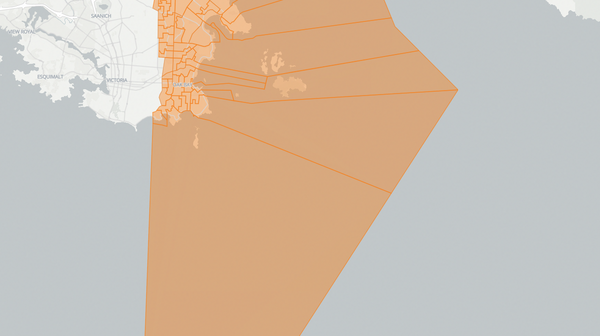
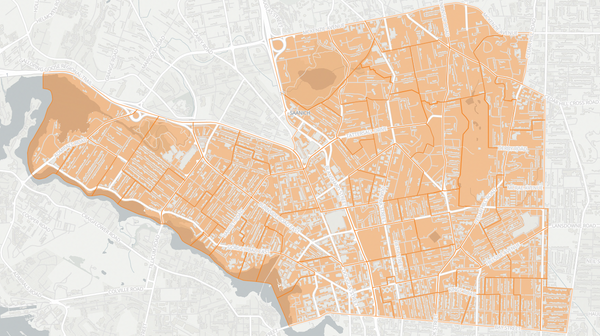
Poll-by-poll results for Victoria-Beacon Hill in the 2024 British Columbia election. The BC NDP candidate won this riding. Explore detailed voting data, candidate results, and turnout statistics at the poll level.
Riding information
Auto generated. Flag an issue.Victoria-Beacon Hill
Victoria-Beacon Hill encompasses the southern tip of Vancouver Island's capital city, taking in the Inner Harbour, the provincial legislative precinct, the James Bay residential neighbourhood, the Dallas Road waterfront, and the parkland of Beacon Hill Park. The riding stretches northward to include portions of the Fairfield and Gonzales neighbourhoods, where tree-lined streets of character homes give way to apartment buildings closer to Cook Street Village. As the seat that houses the provincial legislature, the riding has a distinctive character — a mix of government workers, retirees, young renters, and tourism-dependent businesses serving the steady flow of visitors arriving by ferry, floatplane, and cruise ship at the nearby Ogden Point terminal.
Candidates
Grace Lore (BC NDP) — Lore was the incumbent MLA, first elected in 2020 following the retirement of Carole James, who had served as NDP leader and later as Minister of Finance. A political scientist by training, Lore earned her Master's degree from the London School of Economics and a PhD from the University of British Columbia before joining the University of Victoria as a lecturer in Canadian politics and gender studies. She was appointed Minister of Children and Family Development in January 2024.
Sonia Furstenau (BC Green Party) — Furstenau was the leader of the BC Green Party, first elected to the Legislature in 2017 in the riding of Cowichan Valley. She held a Bachelor of Arts in History and Medieval Studies and a Master of Arts in History from the University of Victoria, and later completed a Bachelor of Education through UVic's post-degree professional program. She had worked as a high school teacher in the Cowichan Valley. She chose not to defend her existing seat and instead ran in Victoria-Beacon Hill, describing the move to the capital as a return to the city where she had attended university and raised her first child.
Tim Thielmann (Conservative Party) — Thielmann was a lawyer who had worked with First Nations communities for fifteen years. He is legally blind, with no vision in his left eye and ten per cent use of his right eye, and uses a white cane. He identified public safety as the most pressing issue in the riding, citing untreated addiction and mental illness as drivers of crime downtown.
Local Issues
Homelessness and the struggle to house the capital region's most vulnerable residents remained a defining challenge. Beacon Hill Park had become a flashpoint during the COVID-19 pandemic when encampments expanded through 2020 and 2021, and while the provincial government and the City of Victoria signed a memorandum of understanding in February 2024 — the HEART/HEARTH framework — to move people from encampments into shelter and housing, the visible presence of people sleeping rough in parks and doorways persisted. The province announced 72 new overnight shelter spaces in Victoria in August 2024, split between Our Place Society and the Salvation Army, and opened recovery-oriented housing with supportive services, but advocates maintained the overall gap between need and available units remained vast.
The contest between Lore and Furstenau made Victoria-Beacon Hill one of the most closely watched races in the province. Furstenau's decision to leave her Cowichan Valley seat and challenge the NDP incumbent transformed the riding into a proxy battle over the future of the BC Green Party and the left-of-centre vote on Vancouver Island. Both candidates worked to distinguish themselves on issues including housing, climate policy, and healthcare, while the Conservative candidate appealed to voters frustrated with public disorder and street-level crime. The three-way dynamic raised the possibility of a Green breakthrough in the capital.
The toxic drug crisis continued to claim lives in the capital region at a devastating pace. Victoria's overdose death rate remained among the highest in the province outside Metro Vancouver, and candidates debated the appropriate response — from the NDP's partial reversal of drug decriminalization through the re-criminalization of public consumption, to the Green Party's advocacy for expanded safe supply and harm reduction services, to the Conservative call for a stronger emphasis on mandatory treatment pathways. The intersection of the toxic drug supply, mental illness, and homelessness created a set of interconnected challenges that no single policy lever had been able to resolve.