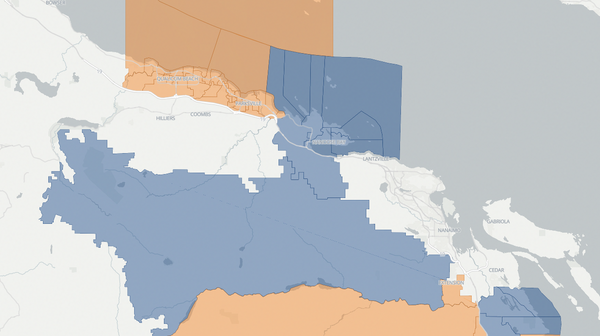
Cowichan Valley — 2024 British Columbia Provincial Election Results Map
Cowichan Valley — 2024 Election Results
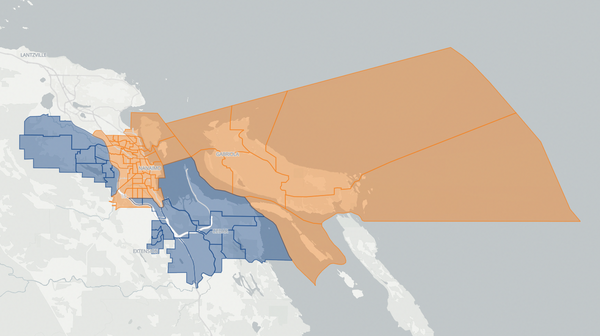
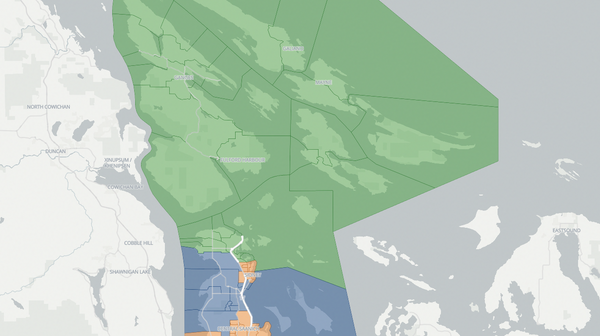
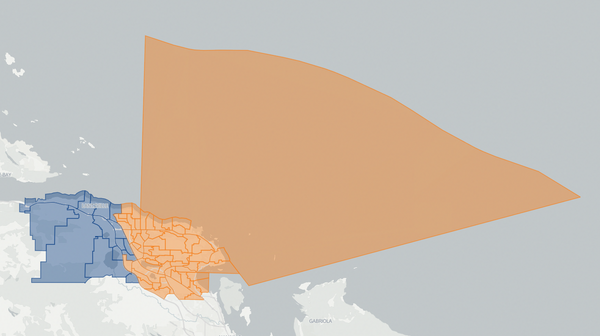
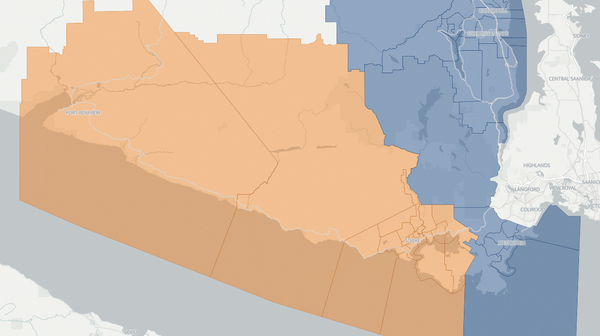
Poll-by-poll results for Cowichan Valley in the 2024 British Columbia election. The BC NDP candidate won this riding. Explore detailed voting data, candidate results, and turnout statistics at the poll level.
Riding information
Auto generated. Flag an issue.Cowichan Valley
Cowichan Valley occupies a broad, sheltered lowland on southern Vancouver Island, stretching from the shores of Cowichan Lake in the west through the Municipality of North Cowichan and the City of Duncan — the valley's commercial centre — to Shawnigan Lake and Cobble Hill in the southeast. The riding lies within the traditional territory of the Quw'utsun (Cowichan) people, and Cowichan Tribes — one of the largest First Nations in British Columbia by population — is a significant presence in the community's civic and economic life. The local economy blends small-scale farming and viticulture in the warm Cowichan microclimate, forestry operations in the surrounding uplands, and a tourism sector that markets the valley as a culinary and wine destination. The Cowichan River, a Canadian Heritage River renowned for its steelhead and salmon runs, threads through the heart of the riding and has become a focal point for watershed health and climate adaptation debates.
The 2024 contest saw NDP candidate Debra Toporowski — a member of Cowichan Tribes and a two-term North Cowichan councillor — face Conservative John Koury, who also had experience on North Cowichan council, and Green candidate Cammy Lockwood, an organic farmer from Cobble Hill, in a competitive three-way race on a ballot that also included two independents.
Candidates
Debra Toporowski (BC NDP) — Toporowski was a member of Cowichan Tribes who had been elected to the Cowichan Tribes council five times beginning in 2013, becoming the first woman to hold elected positions on both the Cowichan Tribes council and the Municipality of North Cowichan council simultaneously. She served two terms on North Cowichan council starting in 2018, was appointed Acting Mayor in 2022, and worked for twelve years as a constituency assistant for two successive MLAs. A dedicated advocate for watershed health, she was appointed Indigenous Watershed Champion in 2021, served on the Pacific Salmon Commission beginning in 2020, and was a member of the Cowichan Watershed Board.
John Koury (Conservative Party of BC) — Koury held a Master's degree in Business from Royal Roads University and a Chartered Director accreditation from McMaster University's DeGroote School of Business. His career as a business consultant spanned more than two decades in senior executive management and corporate board roles. He served two consecutive terms on North Cowichan council and chaired the Economic Development Committee. A long-time conservative political activist, Koury had been the federal Conservative candidate of record in the riding in both 2004 and 2011.
Cammy Lockwood (BC Green Party) — Lockwood owned and operated Lockwood Farms in Cobble Hill with her husband James, supplying fresh produce and organic eggs to more than 8,000 customers and 400 families. Their operation received the BC and Yukon Outstanding Young Farmers award in 2019. She came to politics through the climate events of 2021, when the heat dome devastated her farm, and ran on a platform centred on climate action, sustainable agriculture, and food security.
Independent candidates Eden Haythornthwaite and Jon Coleman also contested the riding.
Local Issues
Watershed health and salmon conservation dominated environmental concerns in the Cowichan Valley during the 2020–2024 period, driven by a succession of drought years that pushed the Cowichan River to critically low flows during the summer months. In the summer of 2023, water levels dropped to historically low levels, causing water temperatures to spike and oxygen levels to plummet in pools where fish congregated. The result was a devastating fish die-off that killed an estimated 84,000 juvenile steelhead and other species. The provincial government issued a fish population protection order in August 2023 temporarily restricting water use for industry and forage crops in the Koksilah River watershed. Work on rebuilding the Cowichan Weir — a structure that regulates the flow of water from Cowichan Lake into the river — was identified as a key infrastructure priority to increase water storage capacity during winter months for release during dry spells, but the project's timeline and scope remained subjects of debate among candidates.
The forestry sector's decline cast a long shadow over the riding's economic outlook. The broader trend of mill curtailments and reduced timber harvesting across Vancouver Island had cost jobs and eroded the tax base in communities that had relied on the forest industry for generations. North Cowichan's municipal forest — one of the few community-managed forests in the province — became a flashpoint for debates about old-growth logging, with the municipality imposing a moratorium on harvesting in certain areas while it conducted ecological assessments. Candidates grappled with how to support forestry-dependent workers while transitioning toward more sustainable land management practices.
Housing affordability and homelessness intensified as issues across the valley. The Cowichan Housing Association launched a transitional housing initiative called "The Village" in March 2022, providing shelter for thirty-four homeless individuals — the first project of its kind in the region. The province partnered with North Cowichan and the City of Duncan to build close to one hundred new supportive homes for people experiencing or at risk of homelessness. Meanwhile, Cowichan Tribes undertook its own housing development, building new affordable units and advancing a development at Cowichan Way in Duncan through the BC Builds program. Despite these efforts, the Cowichan Valley's limited rental stock and rising property values left many residents struggling to find affordable accommodation.