Kootenay-Rockies — 2024 British Columbia Provincial Election Results Map
Kootenay-Rockies — 2024 Election Results
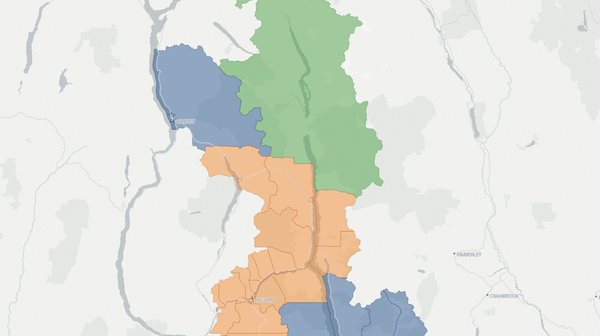
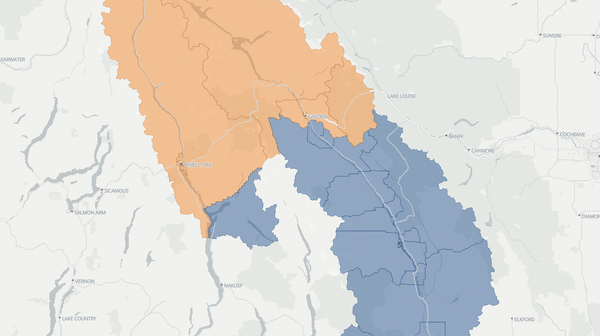
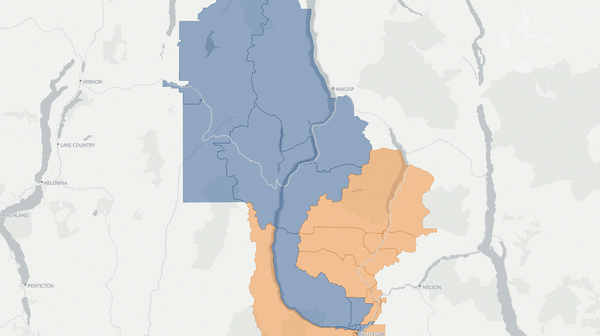
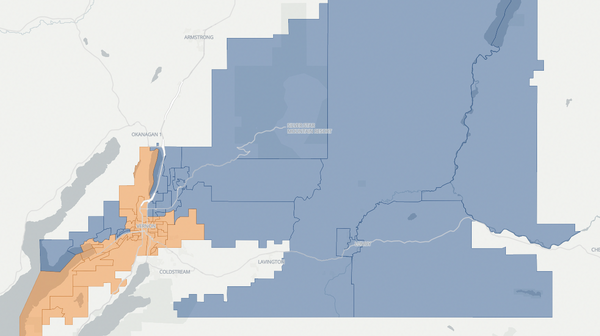
Poll-by-poll results for Kootenay-Rockies in the 2024 British Columbia election. The Conservative Party candidate won this riding. Explore detailed voting data, candidate results, and turnout statistics at the poll level.
Riding information
Auto generated. Flag an issue.Kootenay—Rockies
Kootenay—Rockies occupies the southeastern corner of British Columbia, stretching from Cranbrook and Kimberley in the Rocky Mountain Trench through the Elk Valley communities of Fernie, Sparwood, and Elkford. The riding was renamed from Kootenay East following minor boundary adjustments for the 2024 election. Cranbrook, with roughly 21,000 residents, serves as the regional service centre, while the Elk Valley's economy is anchored by Teck Resources' metallurgical coal mines—among the largest steelmaking coal operations in the world. Outdoor recreation, including skiing at Fernie Alpine Resort and mountain biking, supports a growing tourism sector alongside the traditional resource base.
Candidates
Pete Davis (Conservative Party) — Davis was originally from Revelstoke and was raised by a single mother in Cranbrook. Married since 2002, he had four children and described himself as an avid outdoorsman. He had cultivated business relationships across sectors including logging, forestry, automotive, heavy equipment, and mining in the Elk Valley and East Kootenays, and had spent seven years in federal Conservative politics working with the Kootenay—Columbia Electoral District Association.
Tom Shypitka (Independent) — Shypitka was the incumbent MLA for the region, having won the seat as a BC Liberal in 2017 and held it through the 2020 election. A Cranbrook native with deep family roots in the community, he built a career in the hospitality industry before moving into financial advising. His civic involvement included stints on Cranbrook city council and the regional district board, and he was a decorated competitive curler who represented British Columbia at the Brier. After BC United suspended its campaign in August 2024 and the Conservatives had already nominated a candidate, he launched an independent bid to retain his seat.
Sam Atwal (BC NDP) — Atwal was a Sparwood district municipal councillor who was born and raised in mining towns in Manitoba and Alberta. He was active in youth mentorship, having worked with Strengthening Early Years and Youth Action Sparwood.
Kerri Wall (BC Green Party) — Wall was a Fernie resident since 2008 with more than 25 years of experience in public health and community service. She had worked with Interior Health since 2010, helping municipalities integrate health considerations into local planning. She held a Master of Arts in Leadership and Training and had previously run for the Greens in the same riding in 2020.
Local Issues
The coal mining industry's environmental footprint in the Elk Valley had escalated from a regional concern to an international issue during the NDP's term. Selenium pollution from Teck Resources' metallurgical coal operations had contaminated the Fording and Elk rivers, with selenium concentrations many times higher than what the province considered safe for aquatic life. In December 2023, the City of Fernie began searching for a new backup water supply after selenium levels in its secondary source, the James White Wells, exceeded BC Water Quality Guidelines. In March 2024, Canada and the United States jointly referred the transboundary pollution issue to the International Joint Commission for investigation. The proposed Crown Mountain mine, a new metallurgical coal project in the Elk Valley, continued to advance through provincial and federal environmental review, adding to concerns about cumulative contamination.
Health care access was a persistent worry across the riding's vast geography. Kimberley's hospital had been closed since 2002, requiring all emergency patients to be transported to Cranbrook, and ambulance coverage gaps remained a source of recurring anxiety—particularly for the aging population. The shortage of family physicians and specialists across the East Kootenay meant long waits and medical travel for routine care. The pandemic had strained these already thin resources, and by 2024 the staffing situation had not meaningfully improved.
Housing affordability and the cost of living had tightened across the riding. Fernie's ski-resort economy and appeal to outdoor recreation enthusiasts had driven housing prices beyond the reach of many service-sector workers, while Cranbrook faced its own affordability challenges as population growth outpaced new construction. The broader economic picture was shaped by the coal industry's dominance—well-paying mining jobs supported communities in Sparwood and Elkford, but the sector's long-term trajectory amid tightening environmental regulation and the global energy transition was a source of underlying uncertainty.