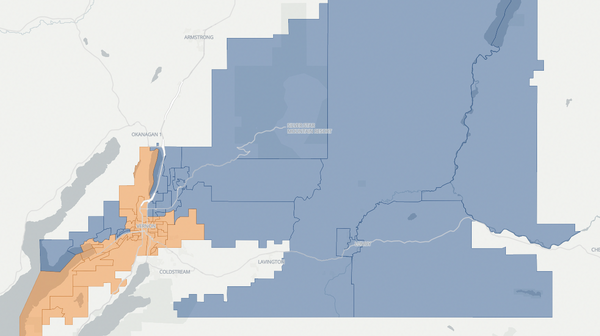
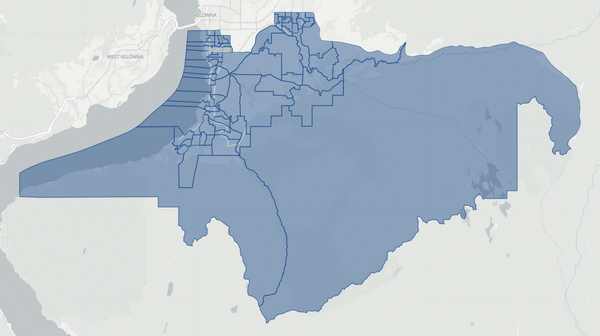
Kootenay Central — 2024 British Columbia Provincial Election Results Map
Kootenay Central — 2024 Election Results
Poll-by-poll results for Kootenay Central in the 2024 British Columbia election. The BC NDP candidate won this riding. Explore detailed voting data, candidate results, and turnout statistics at the poll level.
Riding information
Auto generated. Flag an issue.Kootenay Central
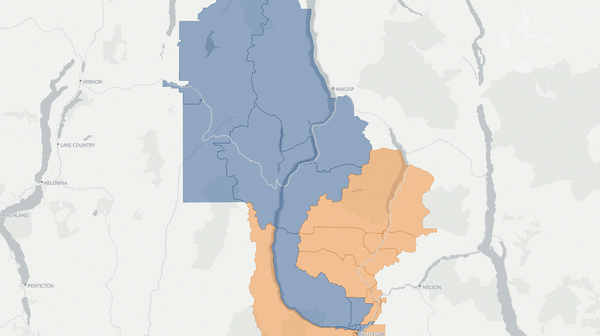
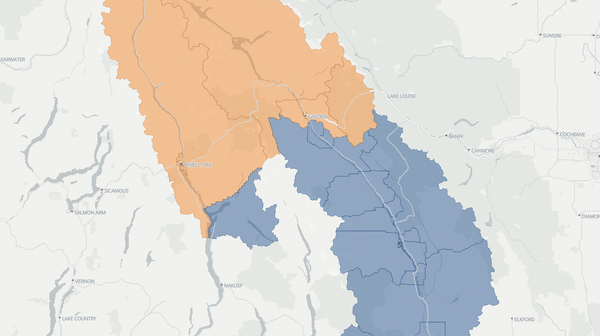
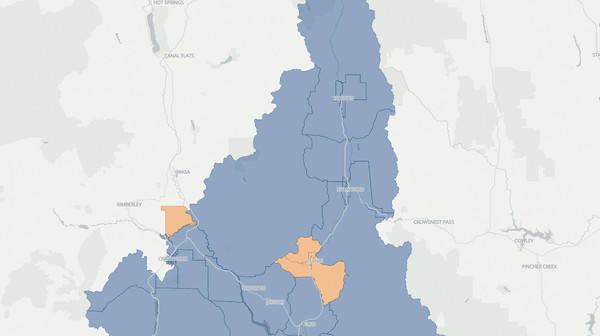
Kootenay Central follows the arc of the Kootenay River and its tributaries through the West Kootenay, centred on the city of Nelson and extending south through Salmo to Creston in the Creston Valley and north to Nakusp, Silverton, and New Denver along the shores of the Arrow and Slocan lakes. The riding was reorganized from the former Nelson—Creston constituency for the 2024 election, with the addition of the upper Slocan Valley and Arrow Lakes communities expanding its already vast geography. The economy blends forestry, agriculture—particularly the Creston Valley's orchards and grain farms—with a growing arts and culture scene in Nelson, outdoor recreation tourism, and the cannabis cultivation sector.
Candidates
Brittny Anderson (BC NDP) — Anderson was the incumbent MLA, first elected in 2020 in the former Nelson—Creston riding. A lifelong Kootenay resident, she held a Master of Science in Environmental Science and Policy from the Central European University in Budapest, a bachelor's degree in international relations from UBC Okanagan, and had started her post-secondary studies at Selkirk College. She had worked in regional government environmental services and previously owned a consulting firm serving the cannabis industry. Before her election to the legislature, she served on Nelson city council and the Regional District of Central Kootenay board.
Kelly Vandenberghe (Conservative Party) — Vandenberghe had served as director of Electoral Area C for the Regional District of Central Kootenay since 2022. He had previously been an elected councillor in Leduc County, Alberta, and built a career leading a heavy equipment auction company.
Nicole Charlwood (BC Green Party) — Charlwood held a degree in economics and had over a decade of political experience, including serving as a Nelson city councillor following a 2021 by-election. A resident of rural Blewett for 20 years, she had also run for the Greens in the 2020 provincial election in the same riding.
Corinne Mori (Independent) — Mori had been based in Nelson for over a decade and brought experience in healthcare, construction, and small business. She held a Bachelor of Science in Nursing and had lost her nursing position during the COVID-19 pandemic after declining vaccination.
Local Issues
The 2024 wildfire season struck the West Kootenay with unusual ferocity, with the Southeast Fire Centre recording 73,048 hectares burned—significantly more than the 44,028 hectares consumed in 2023. Fifty-one evacuation orders affecting more than 4,100 properties were issued, along with 112 evacuation alerts covering more than 11,600 properties. The Aylwin Creek wildfire near Silverton forced evacuation of the village itself, a community newly added to the riding's boundaries. Smoke blanketed the valleys for weeks, disrupting tourism, agriculture, and daily life. The repeated devastation intensified calls for expanded fuel management programs, better emergency communications infrastructure in remote areas, and provincial investment in community wildfire resiliency.
Health care access remained a chronic frustration across the riding's dispersed communities. Residents in Nakusp, New Denver, and Creston faced drives of 90 minutes or more for specialist appointments, and the shortage of family physicians continued to leave many without a regular doctor. Advocates pressed for the addition of kidney dialysis services at Kootenay Lake Hospital in Nelson to reduce the burden of medical travel on patients. The broader shortage of health care workers across the Interior Health region—nurses, paramedics, and specialists—had been exacerbated by the pandemic and showed few signs of improvement by election day.
Housing affordability had escalated from a persistent concern to an acute crisis. Nelson's appeal to remote workers, retirees, and lifestyle migrants had driven up property values and squeezed the rental market, while smaller communities like Creston, Salmo, and the Slocan Valley communities faced similar pressures on a smaller scale. Senior citizens were identified as a particularly vulnerable demographic, with many struggling to find affordable housing suitable for aging in place. The NDP government's investments in affordable housing construction had added units across the province, but the pace of delivery in rural communities lagged behind the growing need.