Saanich—Gulf Islands, BC — 2025 Federal Election Results Map
Saanich—Gulf Islands — 2025 Election Results
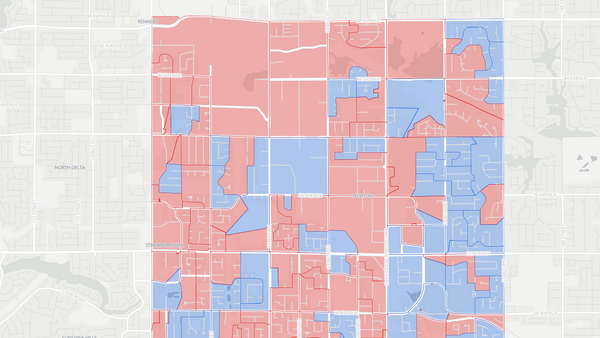
Poll-by-poll results for Saanich—Gulf Islands in the 2025 Canadian federal election. The Green Party candidate won this riding. Explore detailed voting data, candidate results, and turnout statistics at the poll level.
Riding information
Auto generated. Flag an issue.Saanich—Gulf Islands
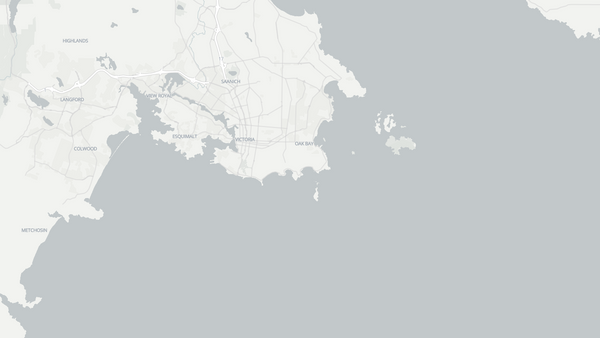
Saanich—Gulf Islands encompasses the northern portion of the Saanich Peninsula on Vancouver Island and the Southern Gulf Islands scattered through the Salish Sea. The riding includes the municipalities of North Saanich, Sidney, and Central Saanich, the northern section of the District of Saanich, and the islands of Salt Spring, Galiano, Pender, Mayne, and Saturna, among others. With a median age of 52.4—the highest in Canada—and more than 31 percent of residents over 65, the riding has a distinctly older demographic compared to most British Columbia constituencies.
Candidates
Elizabeth May (Green Party) has represented Saanich—Gulf Islands since 2011, when she became the first Green Party member elected to the Canadian House of Commons. Born in Hartford, Connecticut, May moved to Nova Scotia with her family in 1972 and became a Canadian citizen in 1978. She earned a law degree from Dalhousie University in 1983 and spent years as an environmental lawyer and activist, serving as senior policy advisor to federal Environment Minister Tom McMillan in the Mulroney government and as founding executive director of the Sierra Club of Canada. She led the Green Party from 2006 to 2019 and has served as co-leader since 2022. She is an Officer of the Order of Canada and a recipient of the United Nations Global 500 Award.
David Beckham (Liberal) is a Sidney resident of 13 years who was born and raised on a family farm in Killarney, Manitoba. He has built a career in environmental innovation and solar energy, working to develop integrated solar technology for commercial buildings. He was acclaimed as the Liberal candidate for the riding.
Cathie Ounsted (Conservative) has lived in Saanich for 35 years. She and her husband operate Ounsted and Company, a local accounting firm. Her public service includes terms on the Central Saanich Police Board, the Peninsula Co-Op Board of Directors, Central Saanich council, and nine years on the Victoria Airport Authority Board of Directors, including two years as chair. She previously owned the Red Barn Market grocery stores and served as a director of operations for Thrifty Foods.
Colin Plant (NDP) grew up on the Saanich Peninsula, where his parents were dairy farmers, and attended Stelly's Secondary School. A theatre teacher at Claremont Secondary with 25 years in the Saanich School District, Plant has served on the Capital Regional District Board since 2014, including as Board Chair since 2018, where he led efforts on affordable housing expansion and the declaration of a regional climate emergency.
About the Riding
Saanich—Gulf Islands bridges two distinct landscapes: the agricultural and residential Saanich Peninsula and the scattered island communities of the Southern Gulf Islands. The peninsula municipalities of Sidney, North Saanich, and Central Saanich are characterized by farmland protected under the Agricultural Land Reserve, quiet residential neighbourhoods, and the commercial hub of Sidney's waterfront, which serves as a gateway to the Gulf Islands via BC Ferries. The Victoria International Airport, located in North Saanich, is the riding's largest single employer.
The Gulf Islands—Salt Spring, Galiano, Pender, Mayne, Saturna, and several smaller islands—are home to a mix of retirees, artists, farmers, and remote workers. Salt Spring Island, the largest, has a year-round population of roughly 11,000 and a vibrant local food and arts economy anchored by its famous Saturday market. The smaller islands are more sparsely populated and heavily dependent on ferry service for access to healthcare, shopping, and employment on Vancouver Island.
The riding sits on the traditional territories of the W̱SANÉĆ peoples, and reconciliation with local First Nations—particularly around treaty negotiations and marine resource stewardship—is an ongoing priority. In 2025, the riding's older demographic made healthcare access, seniors' housing, and pension adequacy especially salient issues. Ferry service reliability and affordability were persistent concerns for island residents. Environmental protection of the Salish Sea, including the impact of vessel traffic on the endangered southern resident orca population, remained a defining issue in a riding that has long prioritized ecological stewardship.