Beauce, QC — 2025 Federal Election Results Map
Beauce — 2025 Election Results
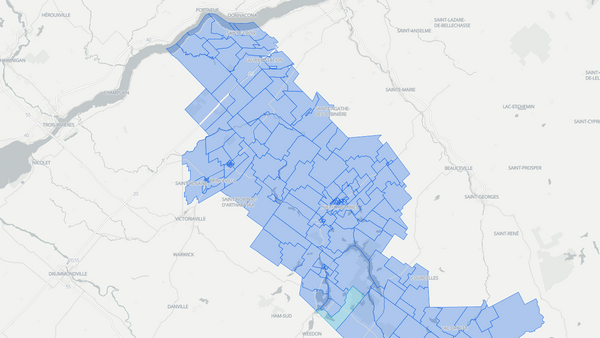
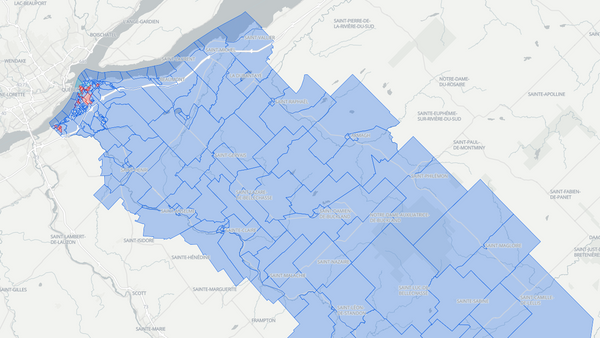
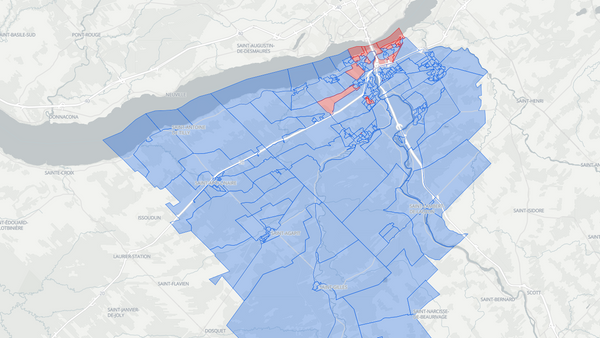
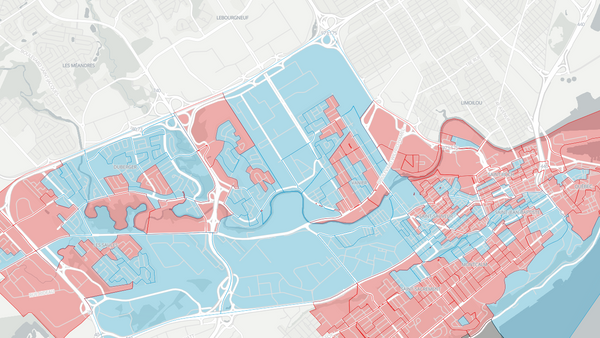
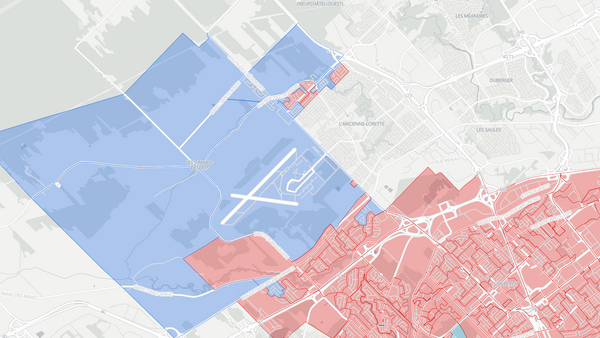
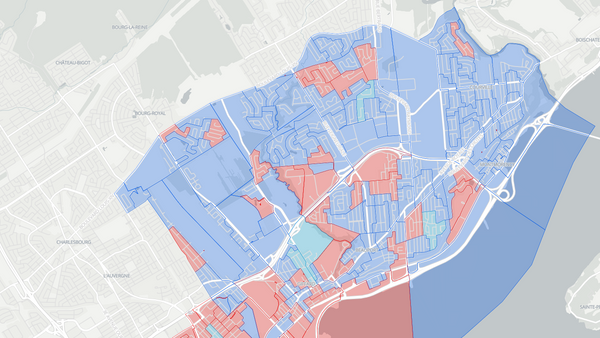
Poll-by-poll results for Beauce in the 2025 Canadian federal election. The Conservative candidate won this riding. Explore detailed voting data, candidate results, and turnout statistics at the poll level.
Riding information
Auto generated. Flag an issue.Beauce
Beauce occupies the heartland of Quebec's most storied entrepreneurial region, stretching south of Quebec City to the US border along the Chaudiere River valley. The riding takes in the towns of Saint-Georges, Sainte-Marie, Beauceville, and Saint-Joseph-de-Beauce, as well as dozens of smaller municipalities across the regional county municipalities of Beauce-Sartigan, Robert-Cliche, and La Nouvelle-Beauce. With a population of roughly 100,000, Beauce is overwhelmingly francophone, Catholic in heritage, and defined by a culture of small-business ownership and self-reliance that has made it famous across Quebec. The region is also one of Canada's largest maple syrup producing areas.
Candidates
Jason Groleau (Conservative) won the riding in his first run for federal office. Born in 1976, Groleau is a businessman who owns grocery stores and a restaurant and bar in the Beauce region. He previously spent 12 years as a director at Labatt Breweries. Before his business career, Groleau was a junior hockey player in the QMJHL from 1993 to 1997, serving as captain of the Victoriaville Tigres.
Maryelle-Henriette Doumbia (Liberal) is originally from Cote d'Ivoire and holds a master's degree in administration sciences from Laval University. She arrived in Canada in 2019 and worked for Quebec's Cybersecurity and Digital Ministry before seeking the Liberal nomination. She has been a member of the Liberal Party since 2022 and was acclaimed as the candidate.
Gaetan Mathieu (Bloc Quebecois) devoted his career to education and sports promotion at the secondary and college levels in the Beauce region. He spent decades at Cegep Beauce-Appalaches as residential director and later director of sports, served as head football coach, and sat on the board of the Reseau du Sport Etudiant du Quebec for more than 10 years.
Maxime Bernier (People's Party - PPC) is the founder and leader of the People's Party of Canada. A native of Saint-Georges-de-Beauce, Bernier holds a commerce degree from UQAM and studied civil law at the University of Ottawa. He represented Beauce as a Conservative MP from 2006 to 2019, serving as Minister of Industry and Minister of Foreign Affairs under Prime Minister Harper. After narrowly losing the 2017 Conservative leadership race to Andrew Scheer, Bernier left the party in 2018 to found the PPC. He has not won a seat since.
Annabelle Lafond-Poirier (NDP) ran as the New Democratic Party candidate.
About the Riding
Beauce's identity is inseparable from its entrepreneurial spirit. The region boasts one of the highest rates of business ownership per capita in Canada, with hundreds of small and medium-sized enterprises in manufacturing, food processing, construction, and agricultural services. Saint-Georges, the region's largest town with over 30,000 residents, is the commercial centre of a network of family-owned firms that export products across North America. The proximity of the US border has historically oriented the region's economy southward, and free trade has been central to local prosperity.
The riding's political history is distinctive. Beauce was a Liberal stronghold for decades before swinging to the Conservatives in 2006 under Bernier. His departure to form the PPC in 2018 created a three-way contest that the Conservatives won in 2019 with Richard Lehoux, who held the seat until retiring before the 2025 election. Bernier's continued presence as a PPC candidate in his home riding added a layer of personal drama to the 2025 race, though his party's national support had declined sharply from its 2021 peak.
In 2025, US tariff threats were an existential concern for a region whose manufacturing and agricultural exports flow heavily across the border. Maple syrup production -- Beauce accounts for a significant share of Quebec's output, and Quebec produces the vast majority of the world's supply -- faced potential disruption. Labour shortages in manufacturing and construction, health-care access in rural communities, and the cost of living were additional pressures on a riding that prizes economic independence and practical governance.