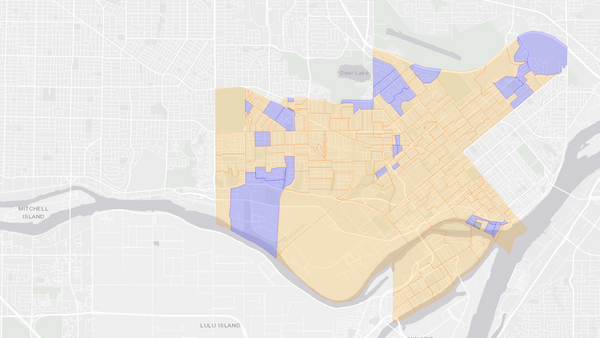
Port Moody—Westwood—Port Coquitlam, BC — 2008 Federal Election Results Map
Port Moody—Westwood—Port Coquitlam — 2008 Election Results
📌 The Canadian federal electoral district of Port Moody—Westwood—Port Coquitlam was contested in the 2008 election.
🏆 James Moore, the Conservative candidate, won the riding with 25,535 votes (54.6% of the vote).
🥈 The runner-up was Zoë Royer (NDP-New Democratic Party) with 10,418 votes (22.3%), defeated by a margin of 15,117 votes.
📊 Other notable candidates: Ron McKinnon (Liberal, 15%) and Rod Brindamour (Green Party, 8%).
Riding information
Auto generated. Flag an issue.Port Moody—Westwood—Port Coquitlam
This Metro Vancouver seat wrapped around the head of Burrard Inlet and reached north into the mountains along Indian Arm. It took in all of Port Coquitlam, the small villages of Belcarra and Anmore, the part of Coquitlam lying north of Highway 7A, and the strip of Port Moody north of Murray Street and Guildford Drive. Most of its 716 square kilometres was steep and empty, but nearly all of its 116,000 residents lived in a compact band of suburban neighbourhoods on the valley floor and up the slopes of Eagle Ridge and Westwood Plateau.
Candidates
James Moore (Conservative) — Moore was first elected in 2000, at twenty-four, in the predecessor riding of Port Moody—Coquitlam—Port Coquitlam, and was returned in the redrawn seat in 2004 and 2006. He grew up in New Westminster, took a political science degree at the University of Northern British Columbia and worked in Vancouver radio, where he hosted a talk show. On 25 June 2008 Stephen Harper appointed him Secretary of State for the 2010 Olympics, the Asia-Pacific Gateway and Official Languages.
Zoë Royer (NDP) — Royer, a dental office administrator living in Port Moody, campaigned on transit, affordability and protection of the inlet.
Ron McKinnon (Liberal) — A computer systems analyst from Port Coquitlam.
Rod Brindamour (Green Party) — A business analyst living in Coquitlam.
Rob Gillespie carried the Libertarian banner.
About the Riding
The riding sat in one of the fastest-growing corners of Metro Vancouver. Port Coquitlam had grown from a railway town into a suburban city of its own while remaining built around Canadian Pacific's Coquitlam yard, a 360-acre marshalling and locomotive complex that ranks among the largest rail facilities in North America. North Coquitlam filled in through the 1990s and 2000s with subdivisions on Westwood Plateau and townhouse blocks around Coquitlam Centre. On the far shore of the inlet the seat picked up Port Moody's Heritage Mountain and Pleasantside slopes and the old Ioco townsite, while Anmore and Belcarra stayed small semi-rural villages hemmed in by parkland and the Indian Arm shoreline; Port Moody's older centre and its industrial waterfront lay on the other side of the riding boundary.
Transportation dominated local argument. The Tri-Cities had been promised rapid transit for more than a decade and had watched projects go elsewhere. TransLink approved a streetcar for the Evergreen Line in 2006, and the province reversed that in early 2008 in favour of SkyTrain, settling the technology without settling when anything would be built. In the meantime residents used West Coast Express commuter trains and a congested Barnet–Lougheed corridor into Burnaby and Vancouver.
Most working residents commuted, and the arithmetic of that commute shaped the campaign. Fuel prices had spiked over the summer, mortgage costs and household debt were rising, and the credit market collapse of September and October pushed the economy to the front of the contest. Moore's opponents pressed him on transit timelines, housing costs and the treatment of the Burrard Inlet foreshore; his campaign leaned on his new ministerial file and the federal money moving through Olympic and gateway infrastructure across the Lower Mainland. The population was young by regional standards, with a high share of families with children, and immigrant communities — Korean, Chinese and South Asian in particular — concentrated in the newer Coquitlam and Port Coquitlam subdivisions.