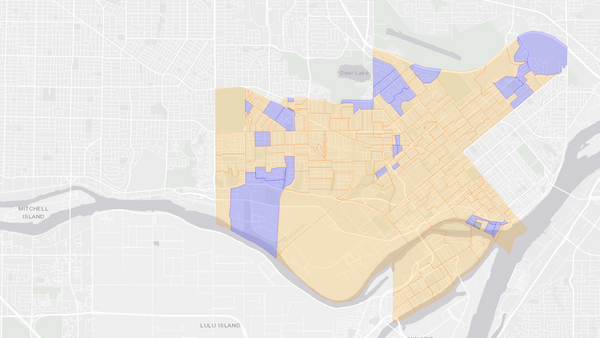
New Westminster—Coquitlam, BC — 2008 Federal Election Results Map
New Westminster—Coquitlam — 2008 Election Results
📌 The Canadian federal electoral district of New Westminster—Coquitlam was contested in the 2008 election.
🏆 Dawn Black, the NDP-New Democratic Party candidate, won the riding with 20,787 votes (41.8% of the vote).
🥈 The runner-up was Yonah Martin (Conservative) with 19,299 votes (38.8%), defeated by a margin of 1,488 votes.
📊 Other notable candidates: Michelle Hassen (Liberal, 11%) and Marshall Smith (Green Party, 7%).
Riding information
Auto generated. Flag an issue.New Westminster—Coquitlam
This riding took in most of New Westminster — everything but Queensborough and the western neighbourhoods out around 22nd Street station, which sat in Burnaby—New Westminster — together with the southwestern part of Coquitlam, including Maillardville, Austin Heights and the streets along the Lougheed Highway, and the southern half of Port Moody around Moody Centre. The Fraser River formed the southern boundary and the Brunette River ran through the middle. At under sixty square kilometres it was among the smaller constituencies in the province, and one of the best connected: the SkyTrain Expo and Millennium lines both ran through it.
Candidates
Dawn Black (NDP) — Born in Vancouver on 1 April 1943, Black worked as an assistant to New Democrat MP Pauline Jewett and later to provincial member John Cashore before running herself. She won New Westminster—Burnaby in 1988 and served as her party's critic for the status of women from 1989 and for child care from 1990; her 1991 private member's bill established 6 December as a national day of remembrance and action on violence against women. Defeated in 1993 and again in 1997, both times by Paul Forseth, she returned to the Commons in 2006 by beating him, and spent the 39th Parliament as defence critic, pressing the government through 2007 on the handling of prisoners transferred to Afghan authorities.
Yonah Martin (Conservative) — Martin had taught for about two decades in the Abbotsford, Burnaby and Coquitlam school districts. In 2003 she co-founded the C3 Society, a non-profit set up to build connections between communities in the Lower Mainland.
Michelle Hassen (Liberal) — Hassen managed a department at a not-for-profit organisation and lived in Port Moody.
Marshall Smith (Green) — Smith worked as a municipal inspector in New Westminster.
Lewis C. Dahlby, a Port Coquitlam business owner, ran for the Libertarian Party, and Roland Verrier, a Coquitlam electrician, for the Marxist-Leninist Party.
About the Riding
New Westminster had been the capital of the mainland colony and was incorporated in 1860, the first city in what became British Columbia, and the riding still carried the institutional weight that came with that history. Royal Columbian Hospital, the region's principal trauma centre, and the main campus of Douglas College were the biggest institutional employers, alongside the Justice Institute of British Columbia on McBride Boulevard and a considerable provincial and municipal payroll. Condominium towers had been going up along the waterfront and around the SkyTrain stations for several years, and the city's population was growing again after decades of stagnation.
The Coquitlam portion had a different history. Maillardville was founded in 1909 when several hundred francophone mill workers were recruited from Quebec to work at Fraser Mills on the river, and it remained the province's principal French-speaking settlement; the sawmill that created it had closed in 2001, taking some 500 logging and milling jobs with it. Industrial land along Braid Street and the Brunette corridor still supported freight, rail and manufacturing work.
Transit was the standing local grievance. A rapid transit line to Coquitlam had been promised, cancelled and re-promised since the 1990s, and although the 2008 federal budget created a public transit capital trust from which the project was to draw, no construction date had been set when the campaign began. Traffic on the Lougheed Highway and the Port Mann approaches, and the province's plan to twin that bridge, filled in the rest of the transportation argument.
Paul Forseth had held the seat and its predecessors for Reform, the Alliance and the Conservatives from 1993 until Black unseated him in 2006, and both parties treated the 2008 rematch as winnable.