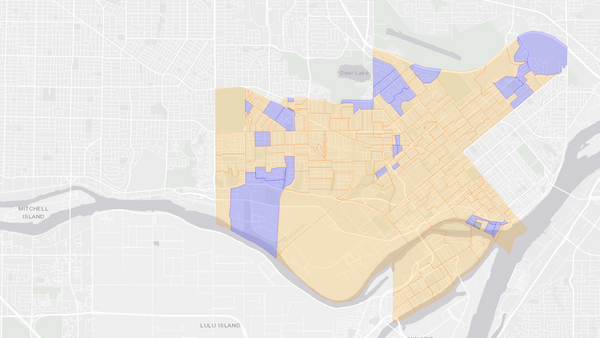
Fleetwood—Port Kells, BC — 2008 Federal Election Results Map
Fleetwood—Port Kells — 2008 Election Results
📌 The Canadian federal electoral district of Fleetwood—Port Kells was contested in the 2008 election.
🏆 Nina Grewal, the Conservative candidate, won the riding with 21,389 votes (44.7% of the vote).
🥈 The runner-up was Brenda Locke (Liberal) with 12,502 votes (26.1%), defeated by a margin of 8,887 votes.
📊 Other notable candidates: Nao Fernando (NDP-New Democratic Party, 23%) and Brian Newbold (Green Party, 6%).
Riding information
Auto generated. Flag an issue.Fleetwood—Port Kells
Surrey was adding residents faster than almost any other Canadian city through the 2000s, and Fleetwood—Port Kells covered its northeastern quarter. The riding gathered the established Fleetwood neighbourhoods along Fraser Highway, the newer streets of Fraser Heights above the Trans-Canada, part of East Newton, the subdivisions of North Clayton, and the industrial yards and farm flats of Port Kells beside the Fraser River, together with Barnston Island out in the channel. Its western edge ran close to 152nd Street, leaving the Guildford commercial district and Surrey's city centre to neighbouring seats.
Candidates
Nina Grewal (Conservative) — Grewal was born in Osaka in 1958 and lived in Liberia before her family settled in Canada. She sold registered education savings plans and raised her children in Surrey, then won this seat at its creation in 2004, the same election at which her husband, Gurmant Grewal, took neighbouring Newton—North Delta. In her first two Parliaments she brought forward private members' bills on identity theft, child pornography, television advertising and the age of consent, and sat on committees dealing with foreign affairs, international human rights, immigration, heritage and the status of women.
Brenda Locke (Liberal) — Locke ran the British Columbia Liquor Licensee and Retailers Association from 1985 to 2001, then won Surrey-Green Timbers for the provincial Liberals in Gordon Campbell's 2001 landslide. Campbell appointed her minister of state for mental health and addiction services in September 2004, and she held the post until the 2005 provincial election. This was her second consecutive federal run in the riding.
Nao Fernando (NDP) — An employment relations officer living in Surrey, Fernando stood for the New Democrats, whose organisers saw room to grow among the riding's working-class and union households.
Brian Newbold (Green) — An education coordinator from Surrey, Newbold carried the Green nomination.
About the Riding
This was one of the most diverse federal ridings in British Columbia and one of the youngest. Close to half its residents had been born outside Canada, with India, the Philippines, China and Korea supplying the largest groups, and Punjabi was spoken at home by a substantial minority. Sikh, Christian, Muslim and Hindu congregations all had a visible presence along Fraser Highway. Household sizes ran above the provincial average, school enrolment was climbing and the housing stock was overwhelmingly new.
Growth at that pace generated the riding's federal grievances. Transit service was thin, with SkyTrain stopping well to the west and Surrey's rapid transit ambitions unfunded. Highway 1 through Port Kells was slated for widening under the provincial Gateway Program alongside a twinned Port Mann Bridge, and the proposed South Fraser Perimeter Road would run along the river below the riding's industrial lands; both carried federal infrastructure money and both drew argument over farmland and neighbourhood impacts. The Golden Ears Bridge, then nearing completion, would put its southern landing in Langley and send fresh traffic through the same corridor. Immigration processing backlogs and family reunification timelines were constant business at constituency offices, and the run of gang shootings across the Lower Mainland in this period kept public safety on the doorstep.
Employment came from retail, health care, construction, transportation and light manufacturing rather than from any single large employer. Port Kells held warehousing and industrial operations along the river, and farms persisted on the low ground between subdivisions. Politically the seat had been Conservative since it was drawn, built on suburban homeowners, small business owners and immigrant families who had moved away from earlier Liberal loyalties — a realignment visible in Surrey through the 2004 and 2006 results.