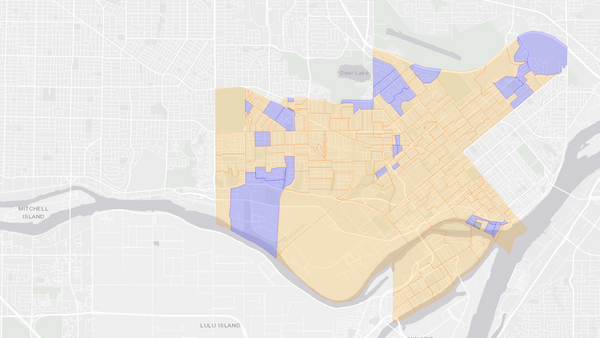
Delta—Richmond East, BC — 2008 Federal Election Results Map
Delta—Richmond East — 2008 Election Results
📌 The Canadian federal electoral district of Delta—Richmond East was contested in the 2008 election.
🏆 John Cummins, the Conservative candidate, won the riding with 26,252 votes (55.7% of the vote).
🥈 The runner-up was Dana L. Miller (Liberal) with 10,371 votes (22.0%), defeated by a margin of 15,881 votes.
📊 Other notable candidates: Szilvia Barna (NDP-New Democratic Party, 14%) and Matthew Laine (Green Party, 8%).
Riding information
Auto generated. Flag an issue.Delta—Richmond East
Container gantries, cranberry bogs and cul-de-sacs sat within a few kilometres of one another in Delta—Richmond East. South of the Fraser the riding took in the western half of Delta — Tsawwassen, Ladner, Boundary Bay, the peat expanse of Burns Bog, the Tilbury industrial flats and Annacis Island — while North Delta lay outside it, in Newton—North Delta. North of the river the district covered the southern and eastern parts of Lulu Island in Richmond, from Steveston and Ironwood across to Hamilton and the Bridgeport industrial lands. Its edges were drawn by working infrastructure: the Roberts Bank terminals, the BC Ferries berths at Tsawwassen, the George Massey Tunnel and the Alex Fraser Bridge.
Candidates
John Cummins (Conservative) — Cummins taught school in Delta for about fifteen years and ran a commercial gillnet on the Fraser for roughly twenty-five, and he brought both to Ottawa after winning the seat for Reform in 1993. He twice served as his party's fisheries critic and was among the most persistent parliamentary critics of how the Department of Fisheries and Oceans managed Fraser sockeye. He was seeking a sixth term.
Dana L. Miller (Liberal) — An entrepreneur living in Delta, Miller had contested the same riding as the Green candidate in 2004 and carried the Liberal nomination in 2008.
Szilvia Barna (NDP) — A marketing executive from Delta, Barna stood for the New Democrats in a suburban seat where the party had rarely been close.
Matthew Laine (Green) — An assistant shipping manager from Delta, Laine campaigned for the Greens on farmland protection and the ecology of the river delta.
About the Riding
Two federal files sat squarely inside these boundaries in 2008. The first was the port. The container terminal at Roberts Bank was midway through a $400-million project to add a third berth, lifting Deltaport's throughput by about half, and the expansion came bundled with the road and rail links needed to move the boxes inland — among them the proposed South Fraser Perimeter Road, whose alignment along the river drew objections over Burns Bog and farmland. The second was the Tsawwassen First Nation Final Agreement, negotiated next to the ferry causeway and given royal assent on 26 June 2008 after ratification votes by the nation in 2007 and provincial legislation later that year. It settled land and governance questions on the edge of a metropolitan area and reopened a long argument about converting agricultural land near the port.
Farming here is real rather than ornamental. Delta's flats grow potatoes, vegetables, greenhouse crops and berries on some of the best soil in the province, and the fields on the Boundary Bay side double as winter feeding ground for enormous numbers of migratory birds. Ladner still works as a fishing village, its harbour berthing gillnetters whose season depended on returns that kept coming in short; across the river Steveston, whose canneries once lined the waterfront, faced the same arithmetic. Declining Fraser sockeye gave Cummins's fisheries advocacy immediate local weight in both places.
Eastern Lulu Island is a different landscape again — warehousing, light industry and rapidly densifying residential blocks in a city whose population had been remade by immigration within a generation. Richmond had become one of the most heavily Chinese-Canadian municipalities in the country, and that showed in the riding's northern half. Tsawwassen and Ladner ran older and more settled, with a high proportion of long-tenure homeowners. What the two halves shared was a traffic complaint: the George Massey Tunnel, four lanes opened in 1959, backed up daily in both directions and had no committed replacement from any level of government.