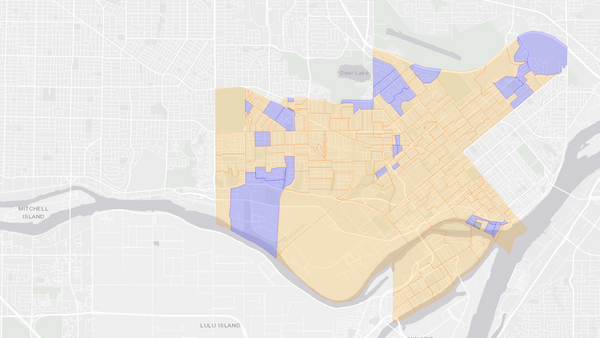
Vancouver Centre, BC — 2008 Federal Election Results Map
Vancouver Centre — 2008 Election Results
📌 The Canadian federal electoral district of Vancouver Centre was contested in the 2008 election.
🏆 Hedy Fry, the Liberal candidate, won the riding with 19,506 votes (34.6% of the vote).
🥈 The runner-up was Lorne Mayencourt (Conservative) with 13,968 votes (24.8%), defeated by a margin of 5,538 votes.
📊 Other notable candidates: Michael Byers (NDP-New Democratic Party, 21%) and Adriane Carr (Green Party, 18%).
Riding information
Auto generated. Flag an issue.Vancouver Centre
Sixteen square kilometres held more than 123,000 people, making Vancouver Centre the most densely populated federal riding in western Canada and one where almost nobody lived in a detached house. It took in the downtown peninsula west of Cambie Street and the Dunsmuir Viaduct — the West End, Coal Harbour, the business district, Yaletown, Downtown South and Stanley Park — then crossed False Creek for Fairview, the co-op housing of False Creek South, the eastern blocks of Kitsilano as far as Maple Street, and the old industrial land on the southeast shore of False Creek.
Candidates
Hedy Fry (Liberal) — Fry was seeking a sixth consecutive term in a seat she first won in 1993 by defeating Prime Minister Kim Campbell. She trained in medicine at the Royal College of Surgeons in Dublin, practised as a family physician attached to St. Paul's Hospital for twenty-three years, and led the Vancouver and then the provincial medical association at the turn of the 1990s. Jean Chrétien brought her into the ministry in January 1996 as secretary of state for multiculturalism and the status of women, a post she held for six years.
Lorne Mayencourt (Conservative) — Mayencourt had represented Vancouver-Burrard provincially since 2001, holding it in 2005 by a margin settled only on a judicial recount. He said he would not seek another term there, then resigned outright on 12 September 2008, days into the federal campaign. At the legislature he was best known for the Safe Streets Act, aimed at aggressive panhandling.
Michael Byers (NDP) — Byers held the Canada Research Chair in Global Politics and International Law at the University of British Columbia, working on Arctic sovereignty, the law of the sea and Canadian defence policy. His 2007 book Intent for a Nation: What Is Canada For? argued for a more independent foreign policy. During the campaign he went beyond his own leader's position on the oil sands, telling a debate at UBC that the projects should be shut down rather than merely capped.
Adriane Carr (Green) — Carr took a master's degree in urban geography at UBC, taught at Langara College and worked full time for the Western Canada Wilderness Committee from 1989. She helped found the Green Party of British Columbia in 1983 and was its first leader, returning to lead it from 2000 to 2006, when Elizabeth May made her a deputy leader of the federal party. She had run four times provincially; this was her first federal campaign.
Two further names appeared on the ballot: John Clarke for the Libertarian Party and Michael Hill, a warehouse worker, for the Marxist-Leninist Party.
About the Riding
The West End packed tens of thousands of residents into a few dozen blocks, most of them renters and a striking share in their twenties and thirties. Davie Street was its commercial spine and the centre of a neighbourhood long identified with Vancouver's gay community, while Yaletown's converted warehouses and towers had drawn younger professionals onto former rail land.
Work here meant offices — law and accounting firms, mining and exploration head offices, banks and brokerages, and a growing cluster of film, animation and video game studios — with tourism the other pillar, built on the cruise terminal at Canada Place and the hotels along Robson and Georgia. St. Paul's Hospital on Burrard was the largest single institution inside the boundaries.
Preparations for the 2010 Winter Olympics had turned much of the riding into a construction site: the convention centre's west building at Burrard Landing, the Canada Line tunnel beneath Granville Street, and the athletes' village rising on the southeast False Creek waterfront. Whether that spending would leave behind affordable housing or only more expensive condominiums was a live argument.
Two federal decisions cut close. The cancellation in August 2008 of the PromArt and Trade Routes programs, worth some $14 million a year between them, landed in a riding thick with galleries, theatres, festivals and touring companies. Drug policy was the other: Insite sat a few blocks past the eastern boundary in Vancouver East, and Ottawa's court fight over its future ran through the campaign, with homelessness in Downtown South and the loss of single-room housing giving the argument a local face. The seat had been Liberal since 1993 and Progressive Conservative for the thirteen years before that, and with the vote on the left dividing several ways the Conservatives treated it as one of their better urban prospects.