The CBC would never hire Project Veritas. It hired the Yes Men.
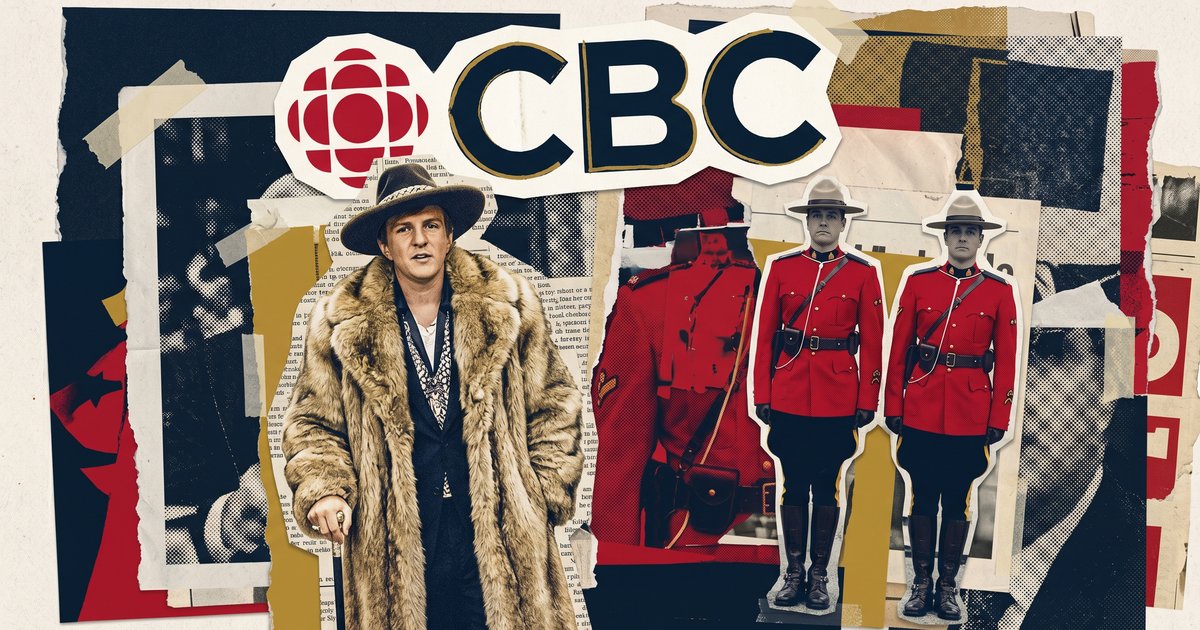
Lindsay Shepherd received an email in January from people she had never met, expressing interest in her children's book about Sir John A. Macdonald. They connected her with a company called Heritage Figures Canada, which was developing a line of Macdonald collectibles. They hired her as a consultant. Over the following months, she participated in meetings, signed contracts, reviewed documents, attended a commercial shoot, and examined a prototype figurine.
Heritage Figures Canada did not exist. Its website was fabricated. Its employees were actors. The contracts were drawn up under false pretenses. The entire operation — months of deception, fake documents, paid consulting fees, fabricated corporate identities — was a production of CBC Entertainment and APTN, created with the collaboration of the Yes Men, an American left-wing activist group, and funded with Canadian tax dollars.
In a second filmed session, the production revealed itself. A costumed John A. Macdonald impersonator appeared and began talking about "racial purity." Shepherd described the experience: the whole thing "had all been a setup in order to demonize Sir John A. and smear me."
For deeper analysis and exclusive posts, subscribe to my Substack.
She was not the only target.
How CBC and the Yes Men built Northland Tales
The show is called Northland Tales — working title; it was originally pitched as "Counting Coup" at the Banff World Media Festival in 2024. NLT1 Productions, a Saskatchewan-based company, produced it for CBC Entertainment and APTN with additional funding from the Indigenous Screen Office, a federal body under Canadian Heritage. The estimated budget was $2.5 to $5 million, drawn from public sources.
The show's premise: an Indigenous activist trio targets unsuspecting Canadians through hidden-camera deception operations framed as addressing historical injustices against Indigenous peoples. The Yes Men were part of the production. Igor Vamos, co-founder of the left-wing activist group (an associate professor at Rensselaer Polytechnic Institute who operates under the alias "Mike Bonanno"), appeared in the production under the fake name "Mike Smith." His associate Molly Gore posed as "Pam Gibson," a producer at another fictitious entity called Forge Media.
The production created at least two fake companies with functioning websites — Heritage Figures Canada and Forge Media — designed to withstand basic due diligence. Targets were offered cash honorariums, consulting agreements, travel, and hotel accommodations. Contracts reportedly contained AI/deepfake clauses granting the production rights to alter footage through changes to "visual style, sequencing, pacing, juxtaposition, or contextual framing."
The targets were not public officials or corporate executives. They were ordinary Canadians chosen for their opinions.
Lindsay Shepherd, RCMP veterans, and the other targets
Frances Widdowson — a former Mount Royal University professor who had questioned the dominant media and political narrative around the 2021 Kamloops ground-penetrating radar findings — was lured to a Vancouver studio under the pretence of appearing on a show called "Wake Up Canada." During filming, two Indigenous men dumped a box of children's shoes on the table in front of her — a direct reference to the memorials placed at residential school sites across Canada in 2021. Widdowson said afterward: "I just don't like being lied to." She added: "For the CBC to participate in that, I think, is disgraceful."
Brian Porter — an 82-year-old retired elementary school teacher from Brockville, Ontario, Macdonald's hometown — was befriended at a local bakery by Igor Vamos, operating under a false name. A crew later spent hours filming in Porter's home, photographing his Canadian memorabilia and a Macdonald puppet he had purchased from the late CBC puppeteer Noreen Young. Porter was an amateur historian whose offence was caring about his town's most famous resident — Sir John A.
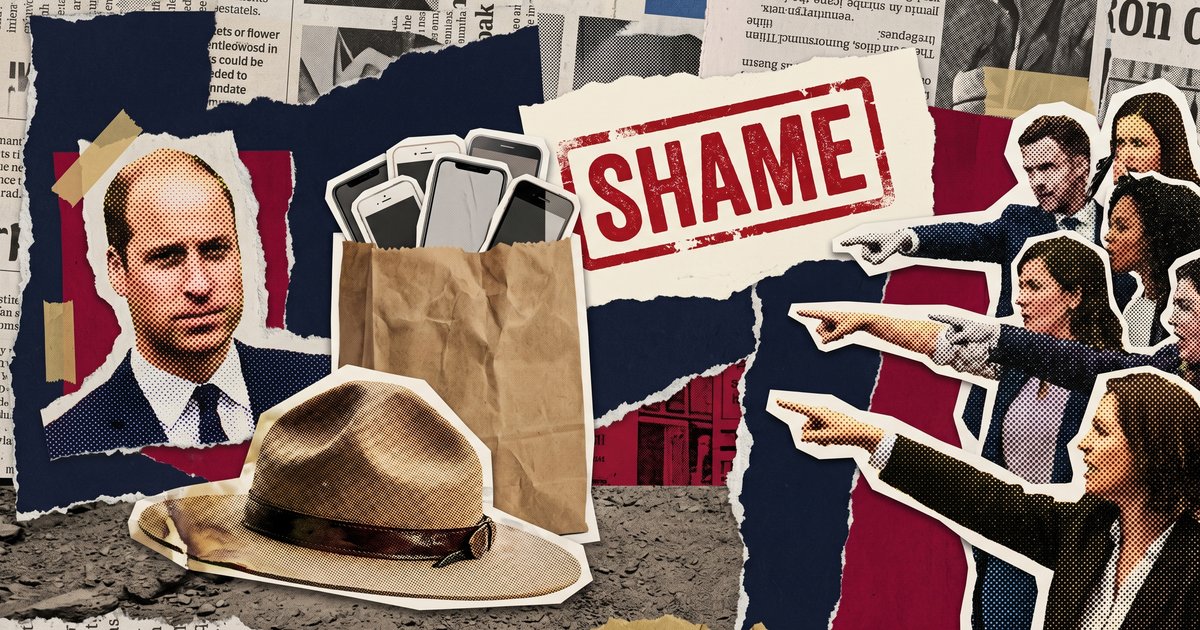
Retired RCMP officers received the most elaborate treatment. Clinton Jaws, a nearly 40-year veteran, was contacted in January by a "Michael Burnett" claiming to produce a documentary called "After the Call" for BBC 2 and CBC, about life after policing. Officers were flown to Vancouver on all-expenses-paid trips, told to wear their Red Serge ceremonial uniforms, and informed that Prince William would attend a ceremony honouring their service.
Prince William was not there. Instead, a large screen played a fake video address from King Charles announcing that the RCMP was being dissolved over its historical treatment of Indigenous peoples. An Indigenous speaker then delivered a lengthy address celebrating the supposed dissolution while directing remarks at the uniformed officers seated on stage. Their phones had been taken. Jaws said he was "sick to my stomach." The National Police Federation called it "a profound breach of trust" and demanded the show's cancellation.
Conservative MP Aaron Gunn and Quillette editor Jonathan Kay were also approached but declined. Dallas Brodie, a Vancouver-area political figure, had a staff member investigate the production company and found that none of Forge Media's claimed prior work appeared on IMDB. The website went offline shortly after.
Every known target shares a common characteristic: they hold views that dissent from progressive orthodoxy on residential schools, Sir John A. Macdonald, or policing. The production did not target anyone on the political left. It was not satire aimed in multiple directions. It was an operation aimed in one direction, at one set of people, for holding one set of views.
The Yes Men: 25 years of left-wing deception operations
The CBC's production partners have a 25-year record that makes the show's ideological orientation unmistakable.
The Yes Men — Jacques Servin and Igor Vamos — have been running elaborate hoaxes since the late 1990s. Their method, which they call "identity correction," involves impersonating representatives of corporations or government agencies to generate media coverage and humiliate their targets. In 2004, Vamos appeared on BBC World as a fake Dow Chemical spokesman and announced that Dow would spend $12 billion compensating victims of the Bhopal disaster. Dow's stock dropped 4.24% in 23 minutes. In 2009, they held a fake press conference at the National Press Club as U.S. Chamber of Commerce representatives, announcing a reversal on climate policy. In 2011, a fake press release claiming General Electric would return its $3.2 billion tax refund was picked up by the Associated Press. GE's market cap dropped $3.5 billion before the hoax was exposed.
Their targets over a quarter century: George W. Bush, the WTO, Dow Chemical, Halliburton, ExxonMobil, Shell, Chevron, Peabody Energy, Koch Industries, the NRA, the U.S. Chamber of Commerce, General Electric, BlackRock, and TotalEnergies. ABC News has described them straightforwardly as "liberal pranksters." Their own website states they have "a specific political bottom line" and that their targets are "leaders and big corporations who put profits ahead of everything else."
They have never targeted a progressive organization, a left-wing politician, an environmental group, or a labour union. Their one apparent exception — a 2017 prank at the Democratic National Committee — involved impersonating a DNC official to push the party further left, calling for Medicare for all, free college, and the end of corporate lobbying. Their complaint about the Democrats was that they were insufficiently progressive.
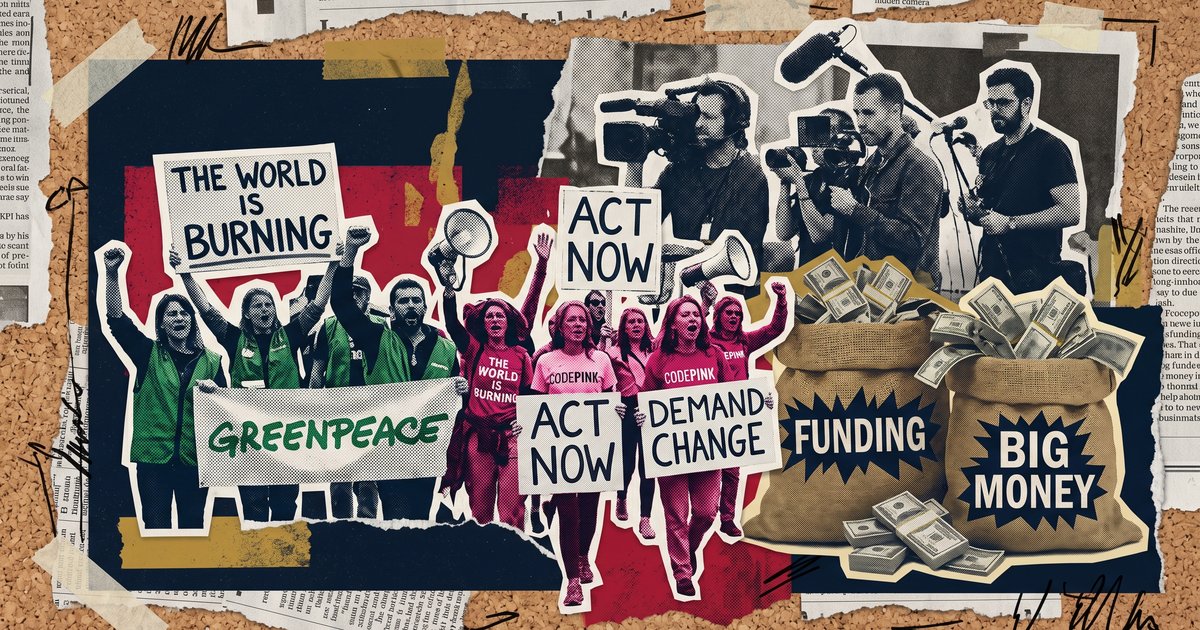
Every partner organization they have collaborated with — Greenpeace, CODEPINK, Rainforest Action Network, Amazon Watch, Iraq Veterans Against the War — ranges from leftist to radical fringe leftwing activist group. Their ideology is not hidden. It is stated, documented, and consistent across decades.
This is the group the CBC selected to collaborate with on a taxpayer-funded production targeting Canadian citizens for their political views.
Would the CBC ever partner with Project Veritas?
Consider this thought experiment. Imagine CBC announced a partnership with Project Veritas — the American right-wing undercover operation founded by James O'Keefe — to produce a prank show targeting progressive activists. Imagine the show created fake NGOs, fabricated websites, hired left-wing academics under false consulting agreements, and then ambushed them on camera to humiliate them for their views on climate policy, abortion, or gender identity. Imagine retired teachers and social workers were flown to CBC studios under false pretences, told a dignitary would honour their service, and then were subjected to a staged confrontation designed to shame them.
The reaction is not difficult to predict. There would be no CBC spokesperson calling it a "long-established television format." There would be no one comparing it to Borat. The CBC would never commission such a show because the CBC would never see Project Veritas as a legitimate creative partner. Every journalist, producer, and executive in the building would recognize Project Veritas for what it is: an ideologically motivated operation that uses deception to target political and ideological opponents.
O'Keefe famously dressed up as a pimp to deceive ACORN employees on hidden camera — an operation so provocative it destroyed the organization. Imagine him doing that under CBC contract. CBC employees might have burned the building down. Yet Project Veritas and the Yes Men use functionally identical methods. Fake identities. Fabricated organizations. Financial inducements. Hidden recording. Selective framing. Targeting people for their political views. O'Keefe himself has acknowledged that the Yes Men were a model for his approach. The methods are the same. The ideology is opposite.
Mainstream media — including the CBC — has spent years describing Project Veritas's methods as deceptive, unethical, and fraudulent. When the CBC funded the same methods aimed at people it disagreed with, it called them "a long-established television format."
The asymmetry is the tell. The CBC does not object to deception operations on principle. It objects to deception operations aimed at its allies. When the targets are conservatives, retirees, and police veterans, deception becomes satire, and satire becomes truth-telling, and truth-telling becomes reconciliation.
Using residential schools as cover for political targeting
The production's defenders frame it as Indigenous comedy addressing historical injustice. CBC described the show as deploying "a form of comedy being deployed to increase better understanding of historical injustices against Indigenous peoples and support truth and reconciliation in Canada."
This framing is doing some heavy lifting. It wraps ideological targeting in the moral authority of residential school survivors and exploits the sensitivity of the subject matter as a shield against criticism — because who could object to reconciliation?
But the show did not engage with residential school history. It did not interview survivors. It did not examine the historical record. It created fake companies, hired an 82-year-old man under false pretences, dumped children's shoes on a professor's desk, faked a video of King Charles, and told RCMP veterans that Prince William would honour their service so they could be publicly humiliated on camera.
Reconciliation does not require the deception of private citizens. It doesn't require bending the truth to shape a narrative. This was a political operation that borrowed reconciliation's moral authority as cover. The residential school system was genuinely tragic. Using it as cover for political stunts cheapens the subject matter in a way the show's defenders seem unable to recognize. It gives well-meaning Canadians reason to suspect that the institutions recounting this sad chapter of Canadian history are willing to deceive them for ideological reasons.
CBC institutional bias and the double standard on deception
The Northland Tales scandal is a concentrated example of a pattern that extends well beyond one show.
In Canadian media and institutional life, the words "partisan," "ideological," and "polarizing" are applied almost exclusively to challenges from the right. A conservative think tank that questions a policy is ideological. A progressive advocacy group that promotes its own preferred policy is engaged in social justice. A right-wing commentator who questions an official narrative is a denialist. To the left, protesters who invert the Holocaust to demonize Jewish Canadians on campuses are expressing legitimate geopolitical dissent. A left-wing activist group that runs months-long deception operations against private citizens is doing comedy. A right-winger doing the same? That's edgelord criminal harassment.
This is how institutional bias operates. It does not require a conspiracy. The CBC commissioned a show about reconciliation and historical memory, selected creative partners whose politics happened to align perfectly with the institution's own, and never paused to consider that the targets — all of them on one side of contested public debates — revealed the politics of the exercise. The bias is structural. It lives in the assumptions about who the obvious villains are, whose dissent is dangerous and whose activism is brave.

The target list makes the point. The production approached Lindsay Shepherd, Frances Widdowson, retired RCMP officers, Conservative MP Aaron Gunn, an elderly retired teacher, a Quillette editor, and a TMU historian. It did not approach anyone who might push back from the left. It did not subject its own assumptions to the same treatment. The "satire" ran in one direction because the institution that funded it could not conceive of running it in any other.
Taxpayer cost: $5 million for fake companies instead of clean water
The plane tickets that flew RCMP veterans to a humiliation ceremony, Igor Vamos's hotel room and per diem, Heritage Figures Canada's fake website, Forge Media's fabricated contracts — all of it came from Canadian taxpayers. The estimated budget of $2.5 to $5 million represents public money spent to deceive private citizens selected for their political views. For context, forty long-term drinking water advisories across thirty-eight First Nations communities remain in effect today, some since the 1990s. UBC researchers have demonstrated that point-of-entry water filtration systems can lift advisories in small reserves at roughly $7,000 per household. At that cost, the Northland Tales budget could have provided clean drinking water to 350 to 700 homes on reserves. The Parliamentary Budget Office has found that Ottawa chronically underfunds the operations and maintenance of existing reserve water systems by $138 million a year — meaning $5 million would cover the annual maintenance shortfall for several communities. Instead it went to fake websites, fake companies, and plane tickets — to own the Cons.
Toronto defamation lawyer Denis Grigoras told The Hub that there is "a strong arguable case in civil fraud" and that the misrepresentations were "textbook" fraudulent because "they go to the very identity and purpose of the party with whom the targets thought they were dealing." He noted that "consent procured in that manner is not real consent," potentially invalidating the contracts targets signed. If lawsuits proceed, any damages and legal costs will also be borne by the public.
The CBC paused production on May 20 but has not cancelled the show, has not apologized to any target, has not explained how the production passed internal review, and has not committed to releasing the footage Lindsay Shepherd has demanded.
What Northland Tales reveals about the CBC
Canadians fund the CBC on the premise that a public broadcaster will serve all Canadians — including the ones whose views the institution finds objectionable. The premise of Northland Tales was that some Canadians' views are so objectionable that deceiving them with public money is a form of public service. That premise should disqualify the CBC from the trust it claims to hold.
For more, subscribe to the Substack.
Related Posts
Theresa Spence ends — whatever it was she was doing
Have the Canadian media caught on to the perform ance artist named Spence who is making a devastating point about modern liberal journalism? — Stephen Taylor…
CBC vandalizes Wikipedia too
One of the stories raging in the Canadian blogosphere today is the Toronto Star’s Wikipedia edit of Rob Ford’s Wikipedia page linking readers to a parody site…
Now, more than ever
There’s an old adage that says that one is judged by the company they keep. While I think that this may be a bit too simplistic at times, I find that time and…