From the pages of Nature’s Climate Change Journal

Nature Climate Change,

Members of the public with the highest degrees of science literacy and technical reasoning capacity were not the most concerned about climate change. Rather, they were the ones among whom cultural polarization was greatest. This result suggests that public divisions over climate change stem not from the public’s incomprehension of science but from a distinctive conflict of interest: between the personal interest individuals have in forming beliefs in line with those held by others with whom they share close ties and the collective one they all share in making use of the best available science to promote common welfare.

So here we learn that “deniers” aren’t dumb or scientifically illiterate. But one rhetorically wonders which group they refer to that suffers from a “distinctive conflict of interest” that is driven by “personal interest” that “individuals have in forming beliefs in line with those held by others with whom they share close ties.”

This from the peer-reviewed journal of the prestigious Nature Publishing Group.

Eco-authoritarians

From the global movement that brought you “the debate is over” and the push to tax that which is most intricately linked with productivity, industry, er, life… CO2.

Warning: graphic

[link]

All those in favour of keeping away from power those with a violent, intolerant, and dogmatic view on how humans should collectively and individually behave… don’t raise your hand.

UPDATE: The producers of the film have responded to the predictable response,

Last week, 10:10 made available a short film. Following the initial reaction to the film we removed it from our website and issued an apology on Friday 2 October.

Subsequently there has been negative comment about the film, particularly on blogs, and concern from others working hard to build support for action on climate change. We are very sorry if this has distracted from their efforts.

We are also sorry to our corporate sponsors, delivery partners and board members, who have been implicated in this situation despite having no involvement in the film’s production or release.

We will learn from this mistake. Today I have written to supporters and stakeholders explaining that we will review processes and procedures to make sure it cannot happen again. Responsibility for this process is being taken by the 10:10 board.

The media coverage of the film was not the kind of publicity we wanted for 10:10, nor for the wider movement to reduce carbon emissions.

If people have been in touch with us personally about the film, we will be replying to individual emails over the next few days. Meanwhile our thanks go out to all those who support 10:10 and who work to combat the threat of climate change.

Eugenie Harvey
Director, 10:10 UK

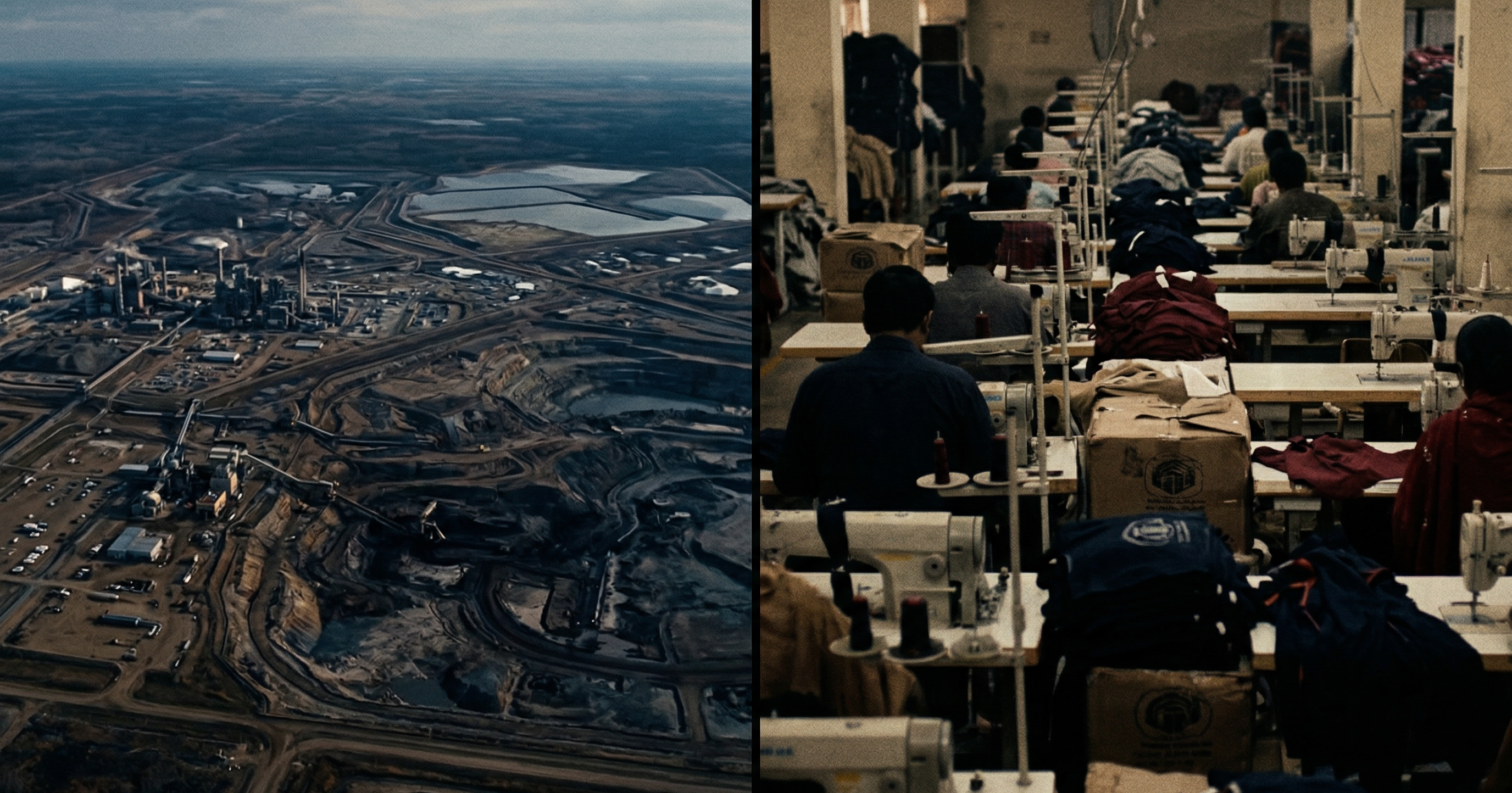
Tar vs. Blood – Fools, PR and the shifting sands of corporate social responsibility

The trendy thing to do these days for trendy companies that sell trendy products is to show their trendy customers that these companies care about more than just their bottom line, they also care about how showing that they care can affect the same.

Take climate change. An issue that is all the rage (at least is was before the global economic downturn) among consumers who have been inundated with a large and wasteful awareness campaign about it. Yes, we’ve all learned about the perils of out-of-control consumption, have been directed to consume more, but to consume products that are allegedly less harmful to humanity. So how are multinational corporations serving humanity these days?

Take the Gap, Timberland and Levi’s.

These three companies are the latest to boycott the Alberta “tarsands” because of the CO2 emissions that come from the extraction process. Here’s CP’s writeup:

Another four major U.S. companies are joining the move to either avoid or completely boycott fuel produced from Alberta’s oilsands.

The Gap, Timberland and Levi Strauss have all told their transportation contractors that they will either give preference to those who avoid the oilsands or have asked them what they’re doing to eliminate those fuels.

The move adds to growing international economic pressure on the oilsands industry and the Alberta government to reduce its environmental impact.

Indeed, the Gap, Timberland and Levi Strauss are shifting away from the Alberta oilsands. But is it a focus on the elimination of oil? No, we can see that the order put out has been to only avoid oil from Alberta’s oilsands projects.

In a market system, when you pull one source you must supplant with another. And indeed, that’s what’s happened here. If these companies don’t get their oil from Alberta, the supply will be increased from other sources, namely countries that breed terror and radicalized citizens that wish to see people in Western countries suffer.

It is unclear whether the Gap, Timberland and Levis have told their stores in Riyadh Saudi Arabia to boycott Alberta’s oilsands oil, but this poses an important question: does the socially conscious Saudi shopper care enough about how those Albertan oil tycoons are murdering the Earth? And if so, when will we see a boycott?