Huron—Bruce — 2025 Ontario Provincial Election Results Map
Huron—Bruce — 2025 Election Results
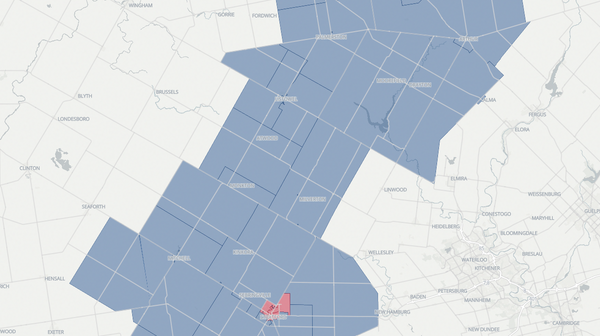
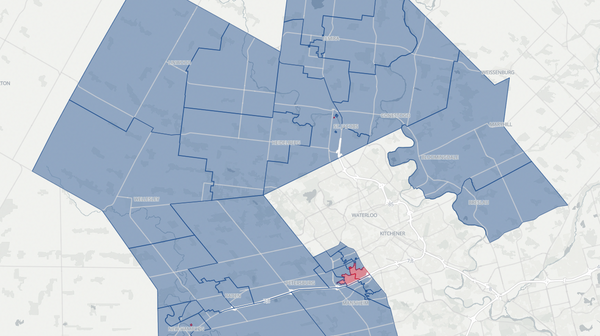
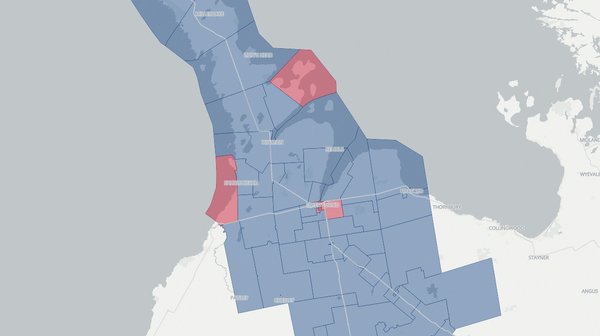
Poll-by-poll results for Huron—Bruce in the 2025 Ontario election. The Progressive Conservative candidate won this riding. Explore detailed voting data, candidate results, and turnout statistics at the poll level.
Riding information
Auto generated. Flag an issue.Huron—Bruce
Huron—Bruce is a large rural riding along the eastern shore of Lake Huron encompassing the towns of Goderich, Kincardine, Wingham, and Teeswater, as well as the farming countryside of Huron and Bruce counties. Progressive Conservative Lisa Thompson had represented the riding since 2011, making her one of the longest-serving members of the Ford government’s caucus. During the 2022–2025 term, Thompson served as Minister of Agriculture, Food and Rural Affairs until a June 2024 cabinet shuffle split that ministry, after which she became Ontario’s first Minister of Rural Affairs. In January 2025, she announced a new Rural Economic Development Strategy focused on strengthening rural communities, attracting business, and growing the rural workforce.
The riding’s economy rests on two pillars: agriculture and nuclear energy. The Bruce Nuclear Generating Station near Kincardine produces roughly thirty per cent of Ontario’s electricity and is one of the world’s largest nuclear facilities. Bruce Power’s ongoing Life-Extension Program and Major Component Replacement project supports thousands of direct and indirect jobs, and during this term the company initiated a federal impact assessment to explore the construction of up to 4,800 additional megawatts of nuclear capacity at the site, a proposal known as Bruce C.
Candidates
Lisa Thompson (Progressive Conservative) — A University of Guelph graduate and farmer near Teeswater, Thompson previously served as general manager of the Ontario Dairy Goat Cooperative. She held the education portfolio from 2018 to 2019, moved to government and consumer services from 2019 to 2021, served as Minister of Agriculture, Food and Rural Affairs from 2021 to 2024, and became Minister of Rural Affairs in June 2024.
Ian Burbidge (Liberal) — A math and music teacher who studied at Queen’s University and had served as president of the Huron-Bruce Provincial Liberal Association. Now living near the Saugeen River in Bruce County, Burbidge ran a campaign focused on education, healthcare, and climate change. In an unconventional move, his campaign chose not to use lawn signs, citing environmental concerns.
Nick McGregor (NDP) — A lifelong Huron County resident and high school teacher in Goderich, McGregor holds an Honours Bachelor of Arts in History and a Bachelor of Education from Lakehead University. He is a member of the Ontario Secondary School Teachers’ Federation and a director with Huron County Pride, having helped organize the region’s first Pride festival. Emergency room closures, particularly at Clinton hospital, which had lacked overnight emergency availability since 2019, motivated his candidacy.
Matthew Van Ankum ran for the Green Party, Zack Weiler for the New Blue Party, and Bruce Eisen for the Ontario Alliance.
Local Issues
Healthcare access was the most pressing concern across the riding during the 2022–2025 term. Emergency departments at rural hospitals faced repeated closures and reduced hours due to staffing shortages, with the Clinton hospital’s overnight ER remaining closed since 2019. A shortage of family physicians left many residents without primary care, and recruitment of doctors and nurses to rural communities proved persistently difficult. In 2024, local municipal councils requested a pause on healthcare service level reductions until detailed studies could be conducted to safeguard the system.
The future of nuclear energy at the Bruce Power site carried significant economic implications. The proposed Bruce C expansion, which would add new reactors to the existing site, promised major job creation and positioned the region at the centre of Ontario’s clean energy strategy. At the same time, the ongoing refurbishment of existing reactors brought thousands of contract workers to the area, straining local housing, roads, and services in communities not built for such an influx.
Agricultural land protection remained a vital concern for the riding’s farming communities. Debates about development pressure, aggregate extraction, and the balance between economic growth and preserving productive farmland were constants at local campaign events. The rising cost of farming inputs, supply chain disruptions, and succession planning for family farms added urgency to calls for provincial support for the agricultural sector.