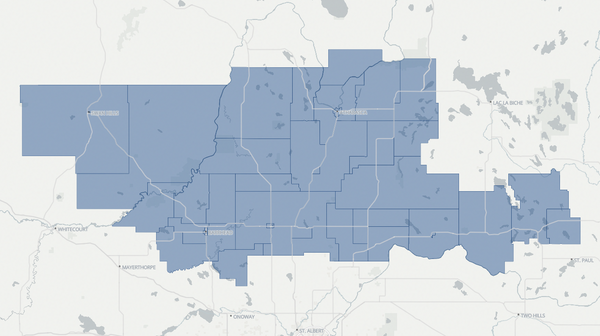
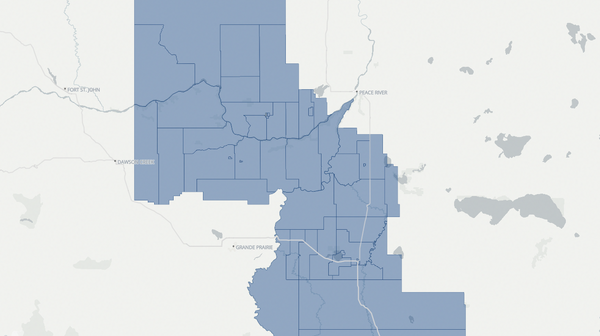
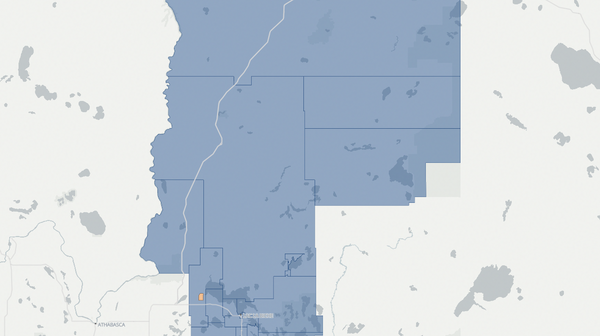
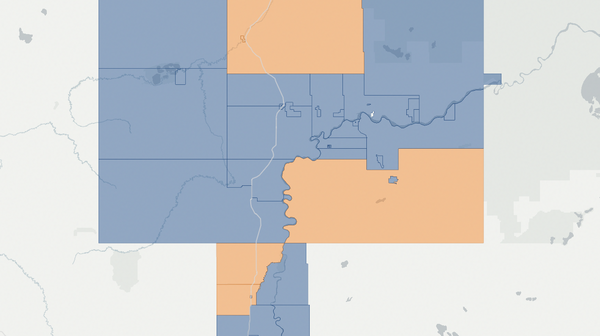
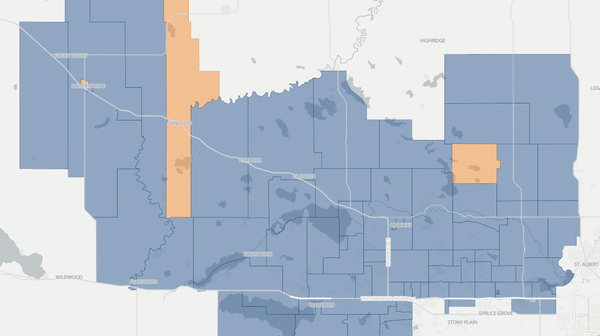
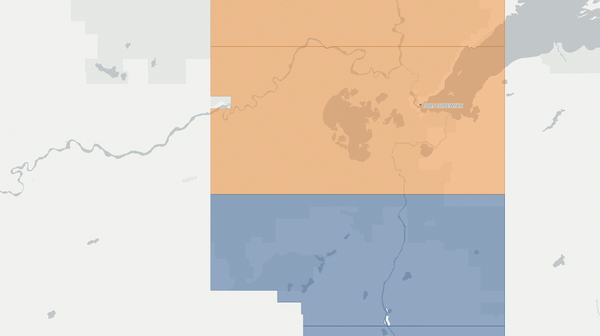
Lesser Slave Lake — 2023 Alberta Provincial Election Results Map
Lesser Slave Lake — 2023 Election Results
📌 The Alberta electoral district of Lesser Slave Lake was contested in the 2023 election.
🏆 SCOTT SINCLAIR, the United Conservative candidate, won the riding with 5,171 votes (65.0% of the vote).
🥈 The runner-up was DANIELLE LARIVEE (NDP) with 2,636 votes (33.2%), defeated by a margin of 2,535 votes.
Riding information
Auto generated. Flag an issue.Lesser Slave Lake
Covering a vast swath of northern Alberta, the Lesser Slave Lake riding radiates outward from the towns of Slave Lake and High Prairie to encompass a territory that includes eleven First Nation communities, several Metis settlements, and remote hamlets accessible only by gravel roads or winter routes. The Bigstone Cree Nation, Driftpile Cree Nation, Kapawe'no First Nation, Sawridge First Nation, Sucker Creek First Nation, Swan River First Nation, and Whitefish Lake First Nation are all within the riding's boundaries, giving the constituency one of the highest proportions of Indigenous residents in the province. The economy depends on forestry, oil and gas exploration, commercial fishing on Lesser Slave Lake, and agriculture, with government services and health care providing significant public-sector employment. Outgoing MLA Pat Rehn, who had been expelled from the UCP caucus in January 2021 over his holiday travel to Mexico during COVID-19 restrictions and allegations of poor constituency service, was later readmitted to caucus but chose not to seek re-election in 2023.
Candidates
Scott Sinclair (United Conservative) — A First Nations man who has lived and worked in the Lesser Slave Lake region for most of his life, Sinclair owns two small businesses and has been involved in motivational speaking for Indigenous youth. He won a closely contested UCP nomination, defeating Martine Carifelle by three votes on the third ballot. He was the UCP's only Indigenous candidate province-wide in the 2023 election.
Danielle Larivee (NDP) — A registered nurse with more than twenty-four years of experience in public health, Larivee represented Lesser Slave Lake from 2015 to 2019, serving as Minister of Municipal Affairs and later Minister of Children's Services in the Notley cabinet. After her 2019 defeat, she became first vice-president of the United Nurses of Alberta, advocating for nursing recruitment and working conditions. She returned to seek the riding a second time in 2023.
Local Issues
Health care access was the overriding concern in this geographically vast and underserved riding. Maternity services at hospitals in both Slave Lake and Wabasca were suspended beginning in May 2023, forcing expectant mothers to travel long distances for delivery. Emergency department closures at rural facilities across northern Alberta, driven by chronic nursing and physician shortages, reinforced fears that the region's health care infrastructure was deteriorating. Indigenous communities in the riding reported particular difficulties accessing culturally appropriate care and timely medical transport, and the riding's remoteness made recruitment of health professionals an ongoing challenge.
The forestry sector, which provides a significant share of employment in and around Slave Lake, faced ongoing uncertainty. Tolko Industries and other operators maintained sawmill operations in the region, but fluctuating lumber prices, softwood lumber trade tensions with the United States, and questions about long-term timber supply weighed on the industry. The 2023 Alberta wildfire season, which saw devastating fires across the province including in nearby communities, heightened concerns about forest management, fire prevention, and community preparedness in a riding still scarred by the 2011 Slave Lake wildfire that destroyed a third of the town.
Pat Rehn's tumultuous tenure as MLA coloured the riding's political landscape. His expulsion from caucus over pandemic-era travel, combined with allegations from Slave Lake town council that he rarely visited the constituency and was more focused on business interests outside Alberta, left a sense among voters that the riding had been poorly represented. The open seat attracted candidates who emphasized local roots and a commitment to being present in the community. Sinclair's status as an Indigenous candidate in a riding with a large Indigenous population, and Larivee's familiarity from her years as MLA and cabinet minister, set up a race that tested whether the UCP's rural dominance could hold in a riding where the incumbent's record had been a source of embarrassment for the party.