Lacombe-Ponoka — 2023 Alberta Provincial Election Results Map
Lacombe-Ponoka — 2023 Election Results
📌 The Alberta electoral district of Lacombe-Ponoka was contested in the 2023 election.
🏆 JENNIFER JOHNSON, the United Conservative candidate, won the riding with 14,324 votes (67.6% of the vote).
🥈 The runner-up was DAVE DALE (NDP) with 4,995 votes (23.6%), defeated by a margin of 9,329 votes.
📊 Other notable candidates: MYLES CHYKERDA (Alberta Party, 6%).
Riding information
Auto generated. Flag an issue.Lacombe—Ponoka
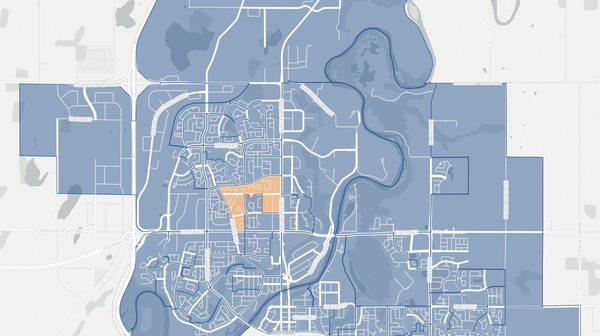
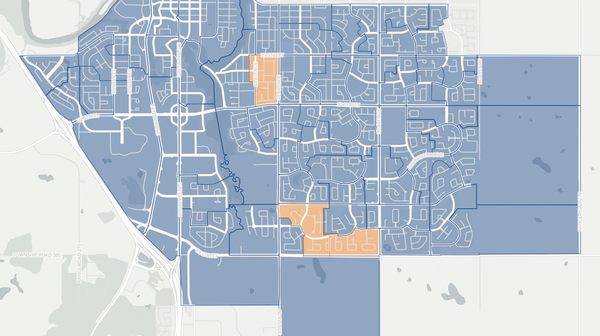
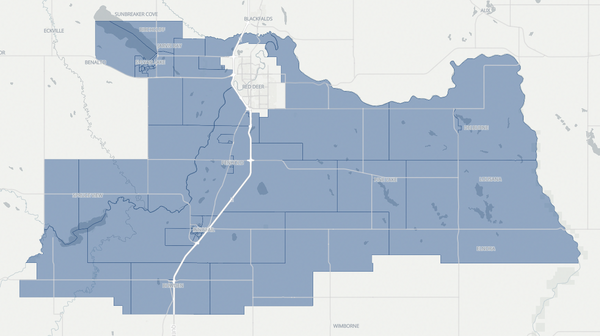
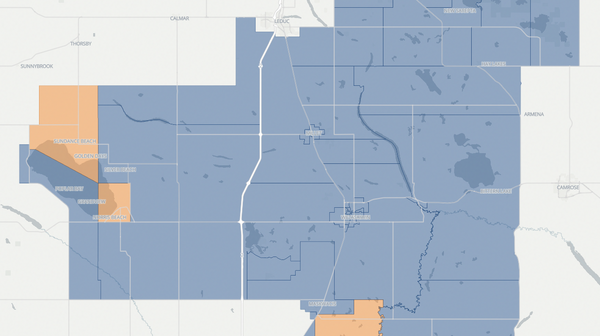
Stretching along the Highway 2 corridor in central Alberta, Lacombe—Ponoka takes in the cities of Lacombe and Ponoka along with smaller communities including Clive, Alix, Mirror, Bentley, and Delburne. The constituency is predominantly agricultural, with mixed farming, cattle ranching, and grain production forming the economic backbone, supplemented by small-town commerce and proximity to Red Deer's labour market. The riding has been a conservative stronghold for generations. Outgoing MLA Ron Orr, a Baptist minister first elected under the Wildrose banner in 2015, chose not to seek re-election, opening the seat to a contested UCP nomination that was won by Jennifer Johnson. However, Johnson's candidacy became embroiled in controversy after audio surfaced of her making offensive remarks about transgender children at a September 2022 meeting, leading UCP leader Danielle Smith to announce that Johnson would not be permitted to sit in the UCP caucus if elected.
Candidates
Jennifer Johnson (United Conservative) — A registered nurse with a Bachelor of Science in Nursing who was completing a master's degree in leadership at the time of the campaign, Johnson farms with her husband near Bentley and operates a prairie fruit orchard in the agri-tourism sector. She won the UCP nomination in February 2023 over flight paramedic Dusty Myshrall and Lacombe city councillor Chris Ross. After audio of her comparing transgender students to feces surfaced publicly, Smith declared Johnson would sit as an independent if elected, though she remained on the ballot as the UCP candidate.
Dave Dale (NDP) — A teacher with twenty-five years of experience in Alberta's education system, including public, private, Indigenous, and special education settings, Dale taught Grade 6 in Delburne at the time of the campaign. Before entering teaching, he worked in child and youth care. He held a Bachelor of Education from the University of Calgary and served as a local vice-president and negotiating subcommittee chair for the Alberta Teachers' Association. He lived in the hamlet of Mirror with his wife.
Local Issues
The Johnson controversy overshadowed much of the local campaign and drew national attention to the riding. Her remarks, made to the Western Unity Group in Stettler in September 2022, were widely condemned, and Smith's decision to bar her from caucus created an unprecedented situation: the UCP's nominated candidate would, if elected, sit as an independent rather than as a government member. Local voters were divided between those who supported Johnson's views on parental rights in education and those who found her language unacceptable. The episode highlighted broader tensions within the UCP between its socially conservative grassroots and the party leadership's efforts to moderate its public image.
Health care was a pressing concern across the riding. The Ponoka Hospital and Care Centre serves as a regional mental health facility, and residents worried about staff vacancies and the adequacy of services for a growing population. Family physician shortages affected both Lacombe and Ponoka, and the province-wide crisis in emergency department closures reinforced anxiety about the future of rural health care delivery.
Agriculture remained central to the riding's economy and politics. Drought conditions in 2021 and again in 2023 stressed cattle operations and reduced crop yields, with producers calling for improved crop insurance and water management infrastructure. The Lacombe Research and Development Centre, a federal Agriculture and Agri-Food Canada facility with a long history of livestock and crop innovation, remained an important local institution, and concerns about the adequacy of federal research funding persisted.