Bonnyville-Cold Lake-St. Paul — 2019 Alberta Provincial Election Results Map
Bonnyville-Cold Lake-St. Paul — 2019 Election Results
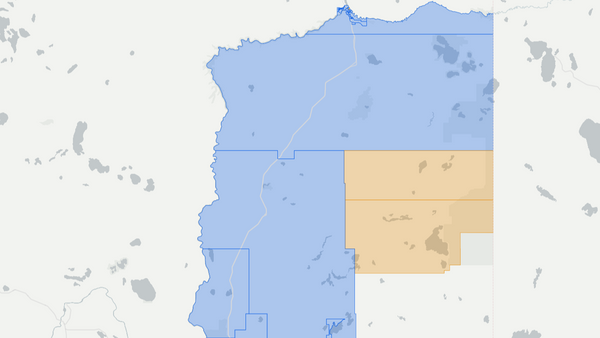
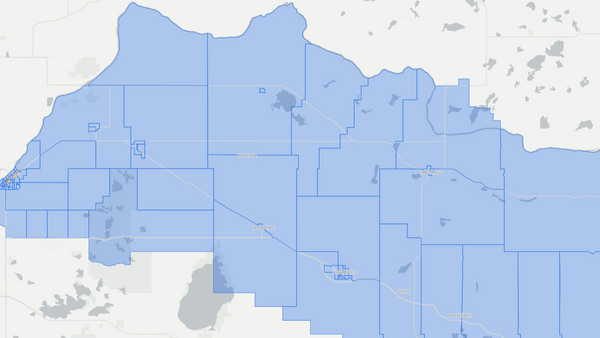
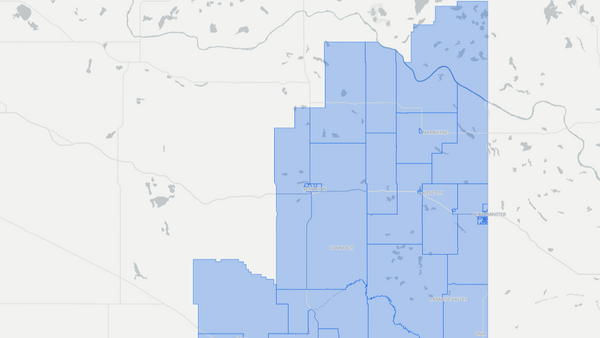
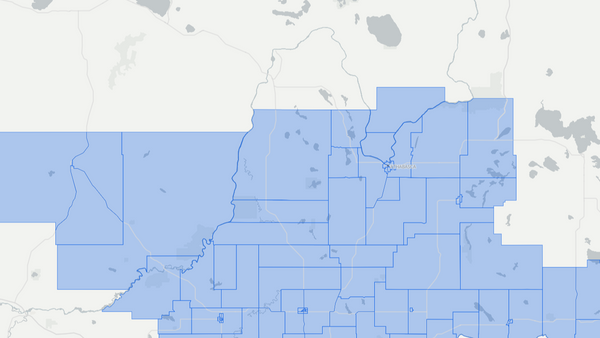
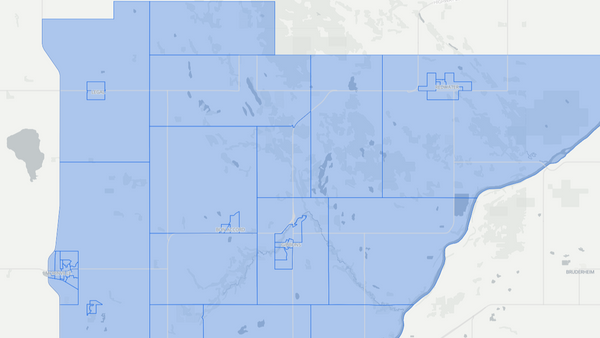
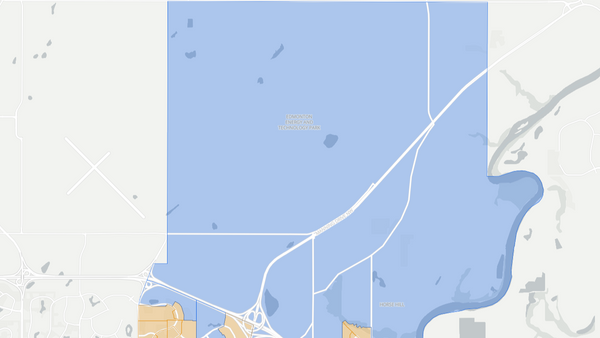
Poll-by-poll results for Bonnyville-Cold Lake-St. Paul in the 2019 Alberta election. The United Conservative candidate won this riding. Explore detailed voting data, candidate results, and turnout statistics at the poll level.
Riding information
Auto generated. Flag an issue.Bonnyville—Cold Lake—St. Paul
Bonnyville—Cold Lake—St. Paul is a newly created riding in northeastern Alberta, formed through the 2017 boundary redistribution. It stretches across the Lakeland region, encompassing the towns of Bonnyville, Cold Lake, and St. Paul, along with surrounding rural communities in the Municipal District of Bonnyville and Lakeland County. The area sits atop one of the largest heavy oil deposits in Canada and borders the Athabasca oil sands, making the energy sector the dominant economic force. Cold Lake is also home to 4 Wing Cold Lake, one of the largest Canadian Forces air bases. Heading into 2019, the riding had no direct incumbent due to redistribution, though David Hanson had represented much of the area as the Wildrose MLA for Lac La Biche—St. Paul—Two Hills since 2015.
Candidates
David Hanson (United Conservative) — Hanson worked for over 37 years in the construction industry, serving both the commercial and oil and gas sectors in roles ranging from foreman to construction inspector. He attended NAIT in 1982 and holds certification in three trades: plumbing, gasfitting, and steamfitting. First elected as a Wildrose MLA in 2015, he joined the UCP following the party merger.
Kari Whan (NDP) — Whan was an elementary school teacher at Cold Lake Elementary School. She moved to the Lakeland region sixteen years earlier and began her teaching career at a high school in Bonnyville before transferring to Cold Lake. This was her first run for political office.
Glenn Andersen (Alberta Party) — Andersen served as mayor of the Town of St. Paul from 2007 to 2017. He had previously sought the Progressive Conservative nomination in the former Lac La Biche—St. Paul—Two Hills riding ahead of the 2015 election.
David Garnett-Bennett (Alberta Independence) — Garnett-Bennett ran as the Alberta Independence Party candidate in the riding.
David Inscho (Alberta Advantage) — Inscho ran as the Alberta Advantage Party candidate. Originally from St. Paul, he was formerly a member of the Wildrose Party.
Kacey L Daniels (Independent) — Daniels ran as an independent candidate. She was a business owner and volunteer with the Glendon Fire Department.
Local Issues
The Lakeland region’s economy was under severe strain heading into the 2019 campaign. The prolonged oil price downturn that began in 2014 had already battered the area, and the situation worsened in late 2018 when the price of Western Canadian Select crude fell below US$14 per barrel. The NDP government responded with a mandatory oil production curtailment of 325,000 barrels per day effective January 1, 2019. In the Bonnyville area, Canadian Natural Resources Ltd. warned it would shut down its ECHO pipeline, which transports undiluted heavy crude from the region to blending facilities at Hardisty, threatening an estimated 500 to 1,000 jobs in the Lakeland area.
The community of Bonnyville had also experienced significant population decline, with Statistics Canada’s 2016 census initially reporting a drop of 12.9 percent from 2011 — among the largest percentage losses of any municipality in Canada with at least 5,000 inhabitants during that period. Statistics Canada later revised the population figure upward, and the town disputed the original figures and conducted its own census in 2017, counting a higher population. Regardless, the downturn had visibly affected local businesses and municipal revenue, and residents were anxious about the future of the oil and gas sector that underpins the region’s economy. Municipal leaders from Bonnyville, Lakeland County, and Elk Point warned publicly that changes to the curtailment formula could cost additional jobs.
Pipeline capacity remained a persistent concern. The Federal Court of Appeal’s August 2018 decision to quash approval of the Trans Mountain pipeline expansion deepened frustration in a region where virtually every family had ties to the energy industry. Local sentiment strongly favoured increased pipeline access to tidewater markets as a path toward economic recovery.