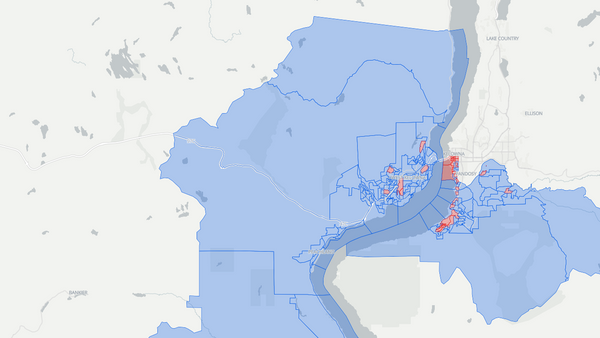
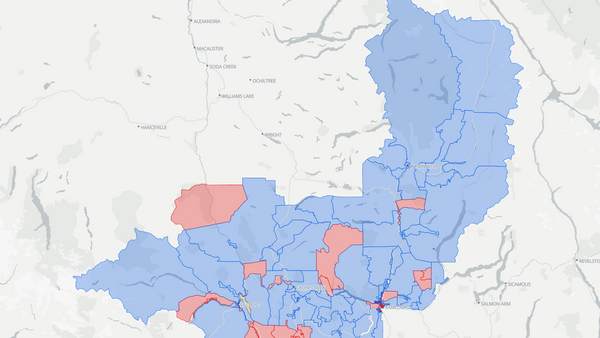
Columbia—Kootenay—Southern Rockies, BC — 2025 Federal Election Results Map
Columbia—Kootenay—Southern Rockies — 2025 Election Results
📌 The Canadian federal electoral district of Columbia—Kootenay—Southern Rockies was contested in the 2025 election.
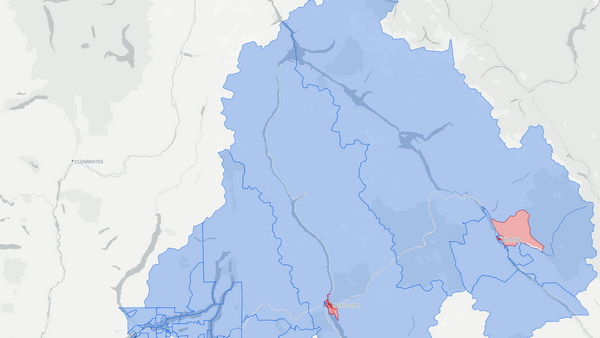
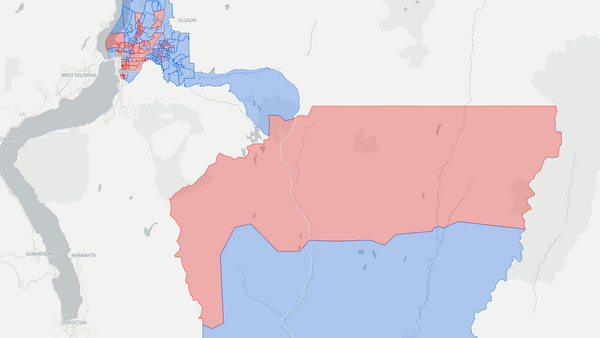
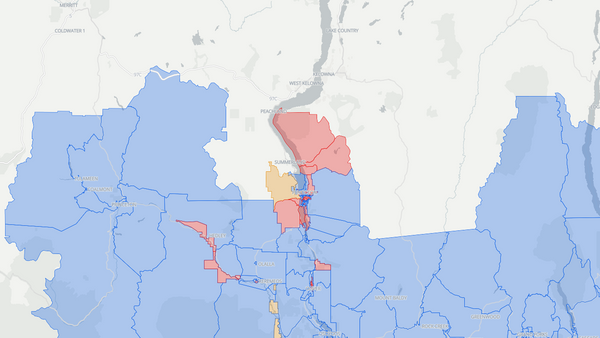
🏆 Rob Morrison, the Conservative candidate, won the riding with 36,081 votes (50.4% of the vote).
🥈 The runner-up was Reggie Goldsbury (Liberal) with 20,184 votes (28.2%), defeated by a margin of 15,897 votes.
📊 Other notable candidates: Kallee Lins (NDP-New Democratic Party, 18%).
Riding information
Auto generated. Flag an issue.Columbia—Kootenay—Southern Rockies
Columbia—Kootenay—Southern Rockies spans the southeastern corner of British Columbia, stretching from the Alberta border in the east to the Monashee Mountains in the west, and from the US border with Montana in the south to the northern reaches of the Columbia Valley. The riding is bounded by four mountain ranges—the Rockies, Purcells, Selkirks, and Monashees—and includes the communities of Cranbrook, Fernie, Sparwood, Elkford, Kimberley, Invermere, and Trail, along with the city of Nelson and surrounding communities gained under the 2022 redistribution from the former South Okanagan—West Kootenay riding. The Kootenay, Columbia, and Elk Rivers are defining geographic features of this vast, mountainous riding.
Candidates
Rob Morrison (Conservative) has represented the Kootenay-Columbia region since 2019 and sought re-election in the newly named riding. Before entering politics, Morrison served over 30 years with the Royal Canadian Mounted Police, retiring as a commissioned officer. His career included postings across western Canada and diplomatic work overseas.
Reggie Goldsbury (Liberal) is a fourth-generation Kootenay resident born in Cranbrook. He served as a logistics manager at the 2010 Winter Olympics, sat on the College of the Rockies board for two terms, and formerly owned the Dock ’n’ Duck restaurant in Balfour. He holds a bachelor’s degree in rural sustainability and works with the Ktunaxa Nation Council in social investment.
Kallee Lins (NDP) grew up in Castlegar and studied political science at McGill University. She is the Executive Director of the West Kootenay Arts Council and has spent 15 years in grassroots politics and non-profit advocacy, including work with Imagine Canada during the pandemic that helped shape federal emergency support programs for the charitable sector.
Steven Maffioli (Green Party) was born and raised in Fernie, where he manages a Save-On-Foods. He previously ran as a Green candidate in the 2023 Alberta provincial election and is a certified yoga instructor working toward a naturopathy designation.
James Wiedrick (Independent) is an emergency room physician at Kootenay Lake Hospital in Nelson who has practised medicine in the Kootenays for eleven years, with previous postings across western Canada and the Northwest Territories.
Laurie Baird (People’s Party) ran on the PPC platform.
About the Riding
Columbia—Kootenay—Southern Rockies is a resource-dependent riding where mining, forestry, and tourism form the economic backbone. The Elk Valley in the riding’s eastern reaches is one of the world’s most significant metallurgical coal-producing regions, with Teck Resources operating major mines near Sparwood and Elkford. Forestry sustains employment in the Trail, Nelson, and Cranbrook areas, though the industry has contracted with mill closures and shifting markets. Tourism and recreation—particularly skiing at Fernie, Panorama, and Kimberley, along with summer adventure tourism—provide a growing economic counterweight.
The Columbia River Treaty, governing water management and hydroelectric power generation between Canada and the United States since 1964, carries outsized importance in this riding. Negotiations over a modernized treaty were underway but stalled in early 2025 amid broader Canada-US tensions, leaving local communities uncertain about flood control, water levels, and the economic terms of cross-border power generation.
In 2025, healthcare access was among the most pressing concerns. Rural hospitals and clinics across the riding struggled with physician and nurse shortages, and the distances between communities made timely access to emergency care a persistent challenge. Housing affordability emerged as a significant issue even in smaller mountain towns, where short-term rental demand and resort-driven investment pushed prices beyond the reach of many local workers. Wildfire risk, exacerbated by drought conditions and the legacy of pine beetle damage, remained a constant concern for communities throughout the riding.