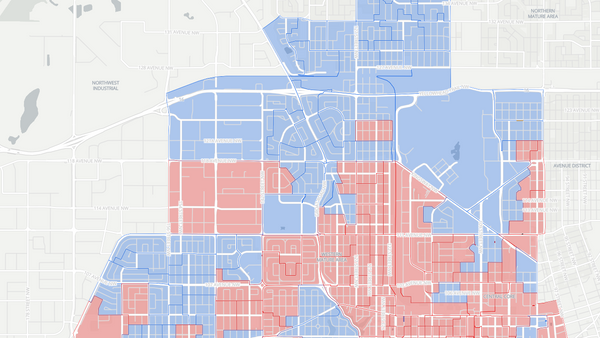
Lakeland, AB — 2025 Federal Election Results Map
Lakeland — 2025 Election Results
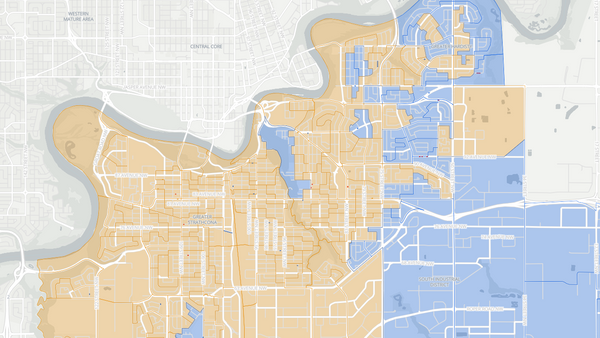
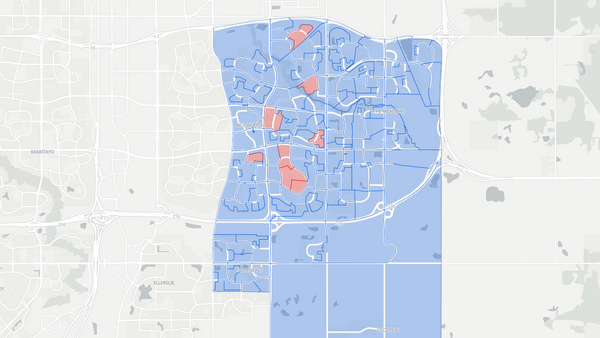
Poll-by-poll results for Lakeland in the 2025 Canadian federal election. The Conservative candidate won this riding. Explore detailed voting data, candidate results, and turnout statistics at the poll level.
Riding information
Auto generated. Flag an issue.Lakeland
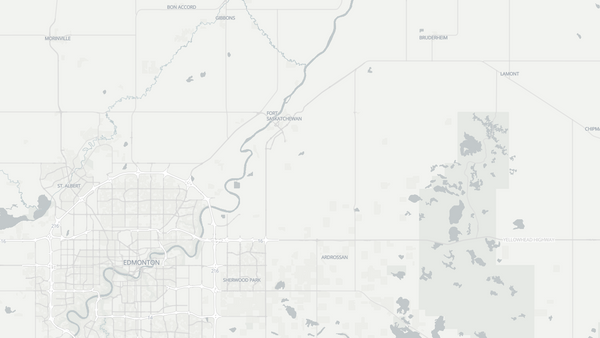
Lakeland stretches across east-central Alberta from the outskirts of Edmonton to the Saskatchewan border, covering a broad swath of parkland, farmland, and oil-producing territory. The riding's largest communities include Bonnyville, St. Paul, Lloydminster (the Alberta side), Vegreville, Vermilion, Smoky Lake, and Athabasca. The North Saskatchewan River and its tributary, the Vermilion River, flow through the riding. With its mix of agriculture, conventional oil and gas, and small-town service economies, Lakeland is one of Alberta's most characteristically rural ridings.
Candidates
Shannon Stubbs (Conservative) is the incumbent, first elected in 2015 and re-elected in 2019 and 2021. Raised near Chipman, Alberta, Stubbs holds a joint honours degree in English and political science from the University of Alberta. She worked as an intern in the office of Reform Party leader Preston Manning and as an assistant to MP Deborah Grey before serving as chief of staff to Wildrose Party leader Danielle Smith from 2010 to 2012. In Parliament, she serves as the shadow minister for Energy and Natural Resources.
Barry Milaney (Liberal) is a retired IT manager and Liberal volunteer. Though based in Calgary, he has family ties to Cold Lake, where his father served as the municipality's first mayor. He was acclaimed as the Liberal candidate.
Des Bissonnette (NDP) is a Lloydminster resident, author, and returning NDP candidate who previously ran in the riding in 2021. She has worked in a range of occupations including support care, retail, and custodial work across the Lloydminster and Bonnyville area.
Michael Manchen (People's Party), Bridget Burns (Green Party), and Micheal Speirs (Christian Heritage Party) also stood as candidates in the riding.
About the Riding
Lakeland occupies Alberta's parkland belt—a transitional zone between the dry grasslands of the south and the boreal forest to the north, characterized by rolling plains, small lakes, and fertile agricultural land. The riding is Alberta's second-largest producer of alfalfa and among the top producers of barley, oats, and mixed grains. Canola, spring wheat, and cattle ranching round out the agricultural economy. Lloydminster, the unique border city straddling the Alberta-Saskatchewan line, is the riding's largest urban area and serves as a hub for heavy oil production and upgrading.
Conventional oil and gas extraction has been a fixture of the riding's economy for decades, particularly around Bonnyville, Lloydminster, and Vermilion. The Cold Lake oil sands deposit extends into the riding's northern reaches, supporting in-situ bitumen operations. Vegreville, once home to a major federal immigration case-processing centre before its closure in 2018, has worked to diversify its economic base. St. Paul is known for the world's first UFO landing pad, built in 1967 as a centennial project, which has become a local tourism draw.
In 2025, the riding's dependence on energy exports to the United States made the trade dispute a dominant campaign issue. Agricultural producers faced tariff uncertainty on grain and oilseed shipments, while oil workers confronted questions about market access and the long-term trajectory of fossil-fuel demand. Rural healthcare access, physician shortages, aging infrastructure, and broadband connectivity were recurring concerns in a riding where small communities are separated by considerable distances.