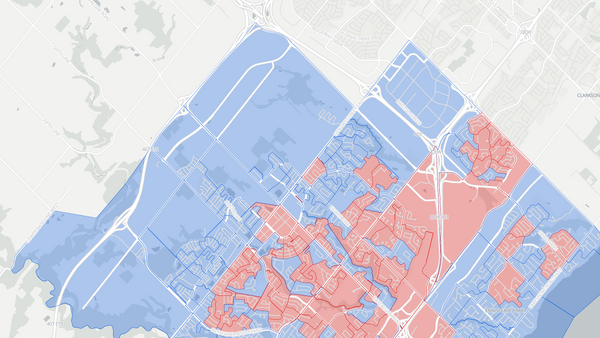
Mississauga—Lakeshore, ON — 2025 Federal Election Results Map
Mississauga—Lakeshore — 2025 Election Results
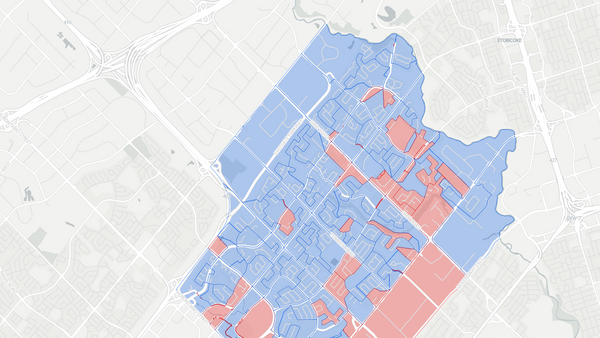
Poll-by-poll results for Mississauga—Lakeshore in the 2025 Canadian federal election. The Liberal candidate won this riding. Explore detailed voting data, candidate results, and turnout statistics at the poll level.
Riding information
Auto generated. Flag an issue.Mississauga--Lakeshore
Mississauga--Lakeshore is a waterfront riding running along the Lake Ontario shoreline in southern Mississauga, stretching from Clarkson and Sheridan in the west through Lorne Park and Port Credit to Lakeview in the east. The riding blends established lakeside neighbourhoods with pockets of intensification and redevelopment, and it mixes some of Mississauga's most affluent enclaves with more modest residential areas. It has been held federally by the Liberals since 2015, with Charles Sousa winning a December 2022 by-election and holding the seat in 2025.
Candidates
Charles Sousa (Liberal) is a former Ontario provincial cabinet minister and banker. Born in 1958 to Portuguese immigrant parents, Sousa was elected to the Ontario legislature in 2007 representing Mississauga South, serving three terms. He held several cabinet portfolios under Premiers Dalton McGuinty and Kathleen Wynne, most notably as Minister of Finance from 2013 to 2018, where he led Ontario to a balanced budget in 2017. After losing his provincial seat in 2018, he returned to politics by winning the 2022 federal by-election in Mississauga--Lakeshore.
Tom Ellard (Conservative) holds an undergraduate degree from the University of Toronto and a Master of Arts from the Royal Military College of Canada. A certified Project Management Professional, he has worked in project management since 2005. He campaigned on public safety, housing construction, and affordability.
Evelyn Butler (NDP) is a frontline worker and Mississauga resident of nearly a decade who has dedicated her time to supporting non-profit organizations. Her campaign focused on affordable housing, federal infrastructure funding tied to housing growth, and ensuring Mississauga receives its fair share of transit and public service investment.
Mary Kidnew (Green Party), Fahad Rao (People's Party - PPC), and Carlton Darby (Independent) also stood as candidates in the riding. Anna Di Carlo (Marxist-Leninist) rounded out the ballot.
About the Riding
Mississauga--Lakeshore's identity is anchored by its waterfront communities. Port Credit, a former fishing village at the mouth of the Credit River, has evolved into a vibrant mixed-use district with restaurants, galleries, a marina, and a weekly farmers' market that draws visitors from across the GTA. The neighbourhood's character is shaped by low-rise heritage buildings alongside newer condominium and townhouse developments. Lorne Park and Mineola, inland from the lake, are among Mississauga's most prestigious residential areas, with tree-canopied streets and large single-family homes. Clarkson and Sheridan, at the riding's western edge, offer a more modest suburban character.
The Lakeview neighbourhood, at the eastern end of the riding, is undergoing one of the largest waterfront redevelopment projects in the GTA. The former Lakeview Generating Station site, a massive brownfield on the lakeshore, is being transformed into a mixed-use community planned for thousands of residential units, commercial space, and public parkland. This project, along with ongoing intensification around the Port Credit GO station, is reshaping the riding's built form and raising questions about infrastructure capacity, traffic management, and community character.
In 2025, the riding's voters weighed waterfront development and environmental stewardship alongside the bread-and-butter issues of affordability and healthcare. The cost of living was a concern even in this relatively prosperous riding, with property taxes and home prices climbing steadily. Healthcare access, including family physician shortages and emergency room wait times at nearby Credit Valley Hospital, affected residents across the riding. The US tariff dispute and its broader economic implications added uncertainty, while local debates over intensification, lakefront access, and the pace of redevelopment gave the campaign a distinctly community-oriented dimension.