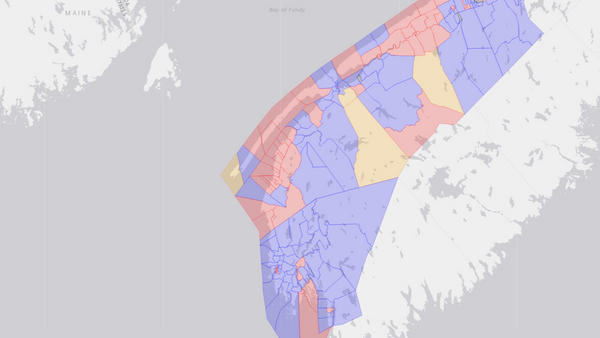
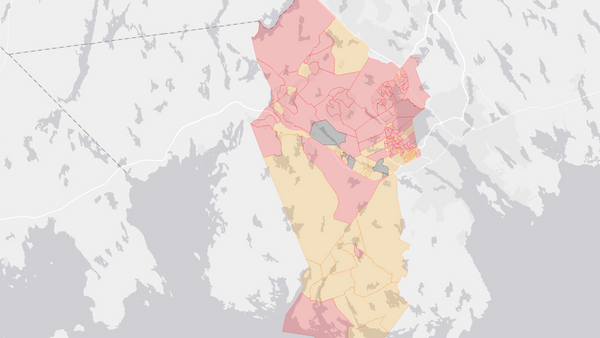
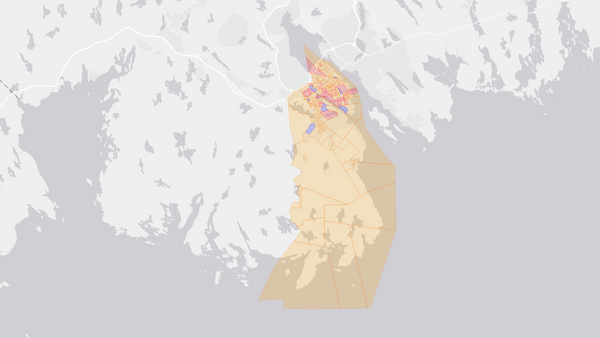
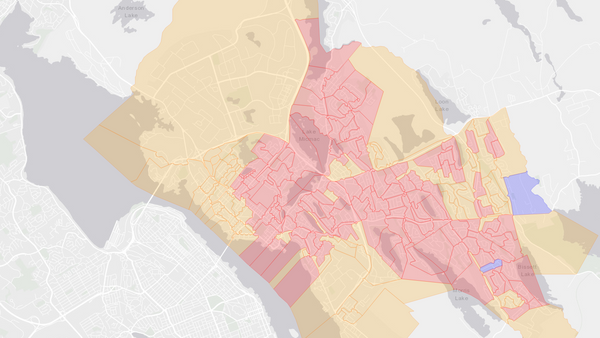
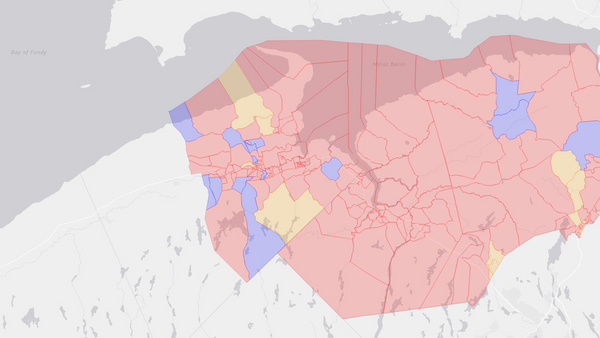
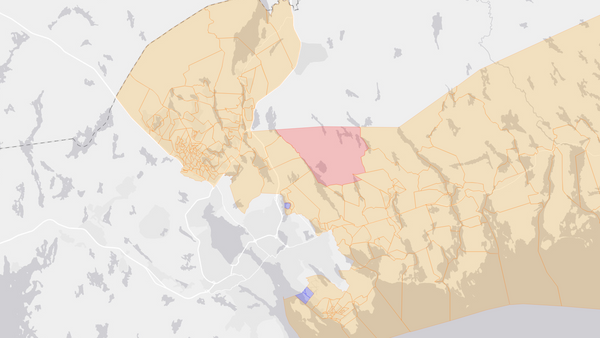
South Shore—St. Margaret's, NS — 2008 Federal Election Results Map
South Shore—St. Margaret's — 2008 Election Results
📌 The Canadian federal electoral district of South Shore—St. Margaret's was contested in the 2008 election.
🏆 Gerald Keddy, the Conservative candidate, won the riding with 14,388 votes (36.0% of the vote).
🥈 The runner-up was Gordon S. Earle (NDP-New Democratic Party) with 13,456 votes (33.7%), defeated by a margin of 932 votes.
📊 Other notable candidates: Bill Smith (Liberal, 24%) and Michael Oddy (Green Party, 5%).
Riding information
Auto generated. Flag an issue.South Shore—St. Margaret's
The Atlantic sets the terms here. The riding takes in the counties of Shelburne, Queens and Lunenburg together with the western edge of the Halifax Regional Municipality around St. Margaret's Bay. Bridgewater is its commercial centre; Chester, Mahone Bay, Lunenburg, Liverpool, Shelburne and Barrington line the shore, and Peggy's Cove marks its eastern gate.
Candidates
Gerald Keddy (Conservative) — Keddy was born at Bridgewater in 1953 and took a history degree at Acadia University in 1975. He grew Christmas trees and worked as an offshore drill operator before winning the old South Shore seat in 1997 as a Progressive Conservative, and had held the constituency ever since, through the merger and two further elections. He was appointed parliamentary secretary for the Atlantic Canada Opportunities Agency in October 2007, and in March 2008 the international trade file was added, so he answered for both in the Commons through the closing months of the Parliament. He lived at New Ross.
Gordon S. Earle (NDP) — Earle was born in Halifax in 1943 and spent his career in public accountability work. He was the first employee of the Nova Scotia Human Rights Commission and later its chief human rights officer, then an assistant to the provincial ombudsman, and then Ombudsman of Manitoba. He sat for Halifax West from 1997 to 2000, with critic duties covering national defence, veterans affairs, immigration and Indian affairs, and had contested this riding at both elections since.
Bill Smith (Liberal) — Smith, a chiropractor from New Germany in the Lunenburg County interior, ran for the Liberals.
Michael Oddy (Green) — Oddy, a teacher living at Hubbards, carried the Green nomination.
Joe Larkin, a retired fisherman from Shag Harbour, stood for the Christian Heritage Party.
About the Riding
Just under 83,000 people lived along this coast in 2006, and the older industries still set the rhythm. Lobster is the largest of them: boats out of Shelburne, Lockeport, Barrington and the Lunenburg County harbours account for a large share of the province's landed value. Scallops, groundfish and a growing aquaculture sector fill out the marine economy, and High Liner Foods, which began at Lunenburg in 1899 as the salt-fish house W.C. Smith & Company, still keeps its head office in the town.
Inland, forestry does the work. The Bowater Mersey newsprint mill at Brooklyn, outside Liverpool, had been Queens County's dominant employer since 1929, and its prospects moved with a North American newsprint market that had been shrinking for years. Woodlots and sawmills work the interior around Caledonia and New Germany, and Lunenburg County is one of Canada's main Christmas tree districts — a trade the sitting member had worked in himself. Michelin's Bridgewater plant, opened in 1971 and the largest of the company's three Nova Scotia factories, is the biggest manufacturing employer on the South Shore.
Tourism has grown into the third pillar. Lunenburg's old town carries a UNESCO designation, Peggy's Cove is among the most photographed places in Canada, and the sailing and cottage economy around Chester, Blandford and St. Margaret's Bay brings seasonal money and seasonal jobs. The Kejimkujik seaside lands near Port Mouton and the beaches of Queens County pull summer traffic off Highway 103.
Fisheries policy, the future of the Bowater mill, the softwood lumber regime, fuel costs for boats and for long rural drives, and the reach of broadband into coastal villages were the arguments that mattered locally while the national campaign turned on the economy.