How to predict a leadership race
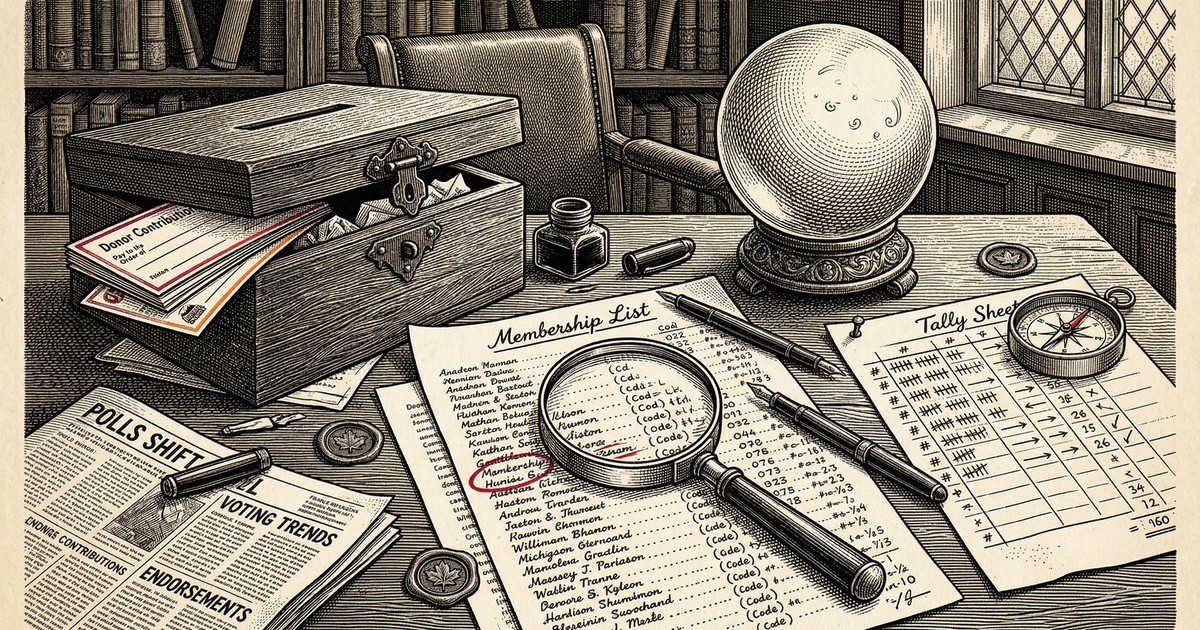
Yesterday, we saw the end of the months-long process of the NDP leadership race, kicked off after Jagmeet Singh stepped down following his party's worst electoral result in their history. The NDP won just 7 seats in the 2025 election with 6.3% of the national vote — worse even than the 9 seats they managed in the 1993 wipeout. Singh himself lost his own riding of Burnaby Central.
Leadership races are a bit of a black box to outsiders. Some parties use one-member-one-vote, some assign equal points to ridings across the country. But how can you even track the horserace of such a contest?
Ignore the polls
Some ambitious pollsters will commission a poll. But leaders are selected from the party membership, not from the general population. Only leadership contenders are allowed access to member lists, and these are never supposed to be shared with pollsters. A party organizing a leadership contest also has no incentive to do polling during the race because they are supposed to be true neutral arbiters — a poll is a measurement, but a measurement that affects the outcome. So, such polling attempts should be immediately set aside. They are not reliable.
For deeper analysis and exclusive posts, subscribe to my Substack.
Membership sales are the direct measure
I've been involved with a few leadership races. I was the digital campaign manager for two successful ones: Andrew Scheer when he became leader of the Conservative Party of Canada, and Danielle Smith when she took the helm of the United Conservative Party of Alberta (and the Premiership of Alberta). Internally, the direct measure of a race is membership sales. Only members can vote, so it's a good proxy to understand how many members you've brought onside via your campaign. However, some campaigns will strategically withhold membership sales until they are obligated to disclose them for those votes to qualify. So, if a leadership campaign won't disclose their memberships daily, how can you get a measure from the outside?
Follow the money
Here's one interesting idea to narrow down the field immediately: pollsters should offer some nominal vendor service to a campaign. Or they should just talk to those that do. If a campaign claims poverty, they aren't a serious contender. "We don't have a lot of money right now" should be a signal that they should be immediately discounted and should exit the race.
Money is a proxy for donors. And since donors are capped, campaigns need a lot of them. If a campaign can't pay vendors for basic services, they should be called out for wasting everyone's time — they don't have broad support and are only there to raise the profile of the candidate at the expense of the process.
A live test case
There's a campaign on right now in British Columbia to replace John Rustad as leader of the BC Conservatives. Nine candidates have been approved. Which campaigns are pretending to be viable, and which campaigns are truly in the race?
Related Posts
Mapping the results of the 2019 Alberta provincial election
Map release day is always a good day. I’ve been griding away putting together a provincial map of the 2019 Alberta provincial election results. In this…
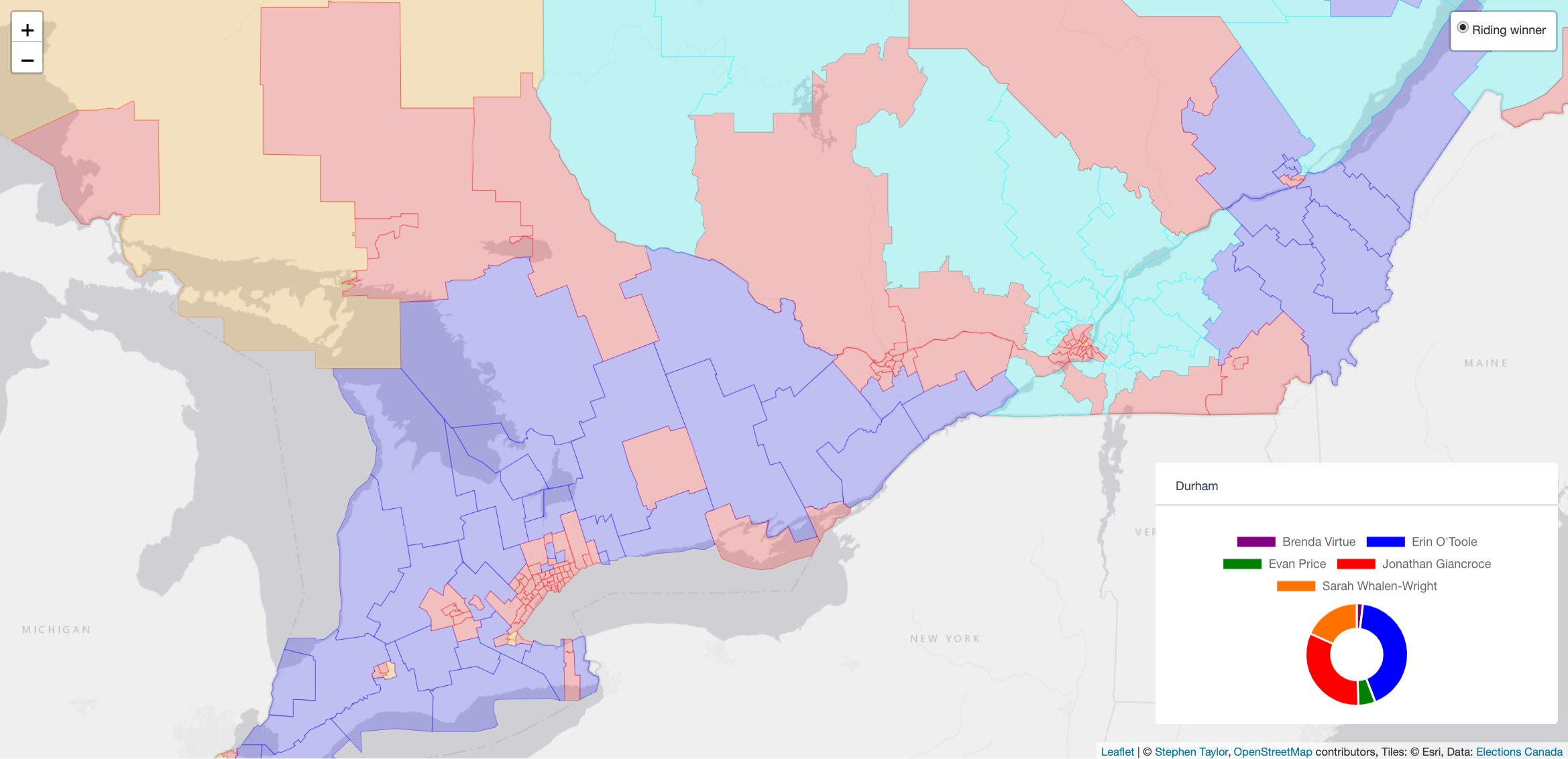
Political maps and data for Canadian electors!
Here’s something that should give every political nerd hours of material to pore over. The Stephen Taylor Data Project is releasing some political maps,…
Maxime Bernier officially running in York Centre
It’s getting a bit sad isn’t it? Maxime Bernier has announced that it’s official, he’ll be standing as the People’s Party of Canada (PPC) candidate in the…