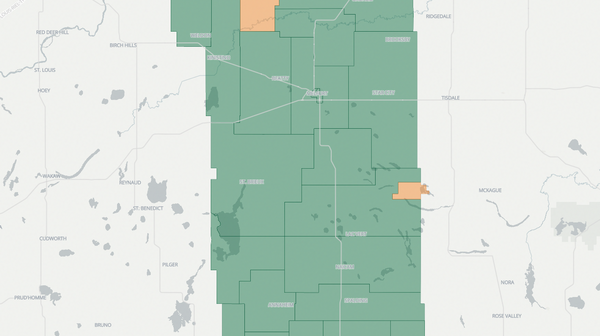
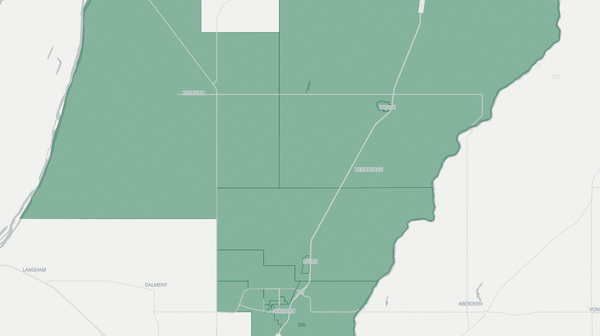
Saskatchewan Rivers — 2024 Saskatchewan Provincial Election Results Map
Saskatchewan Rivers — 2024 Election Results
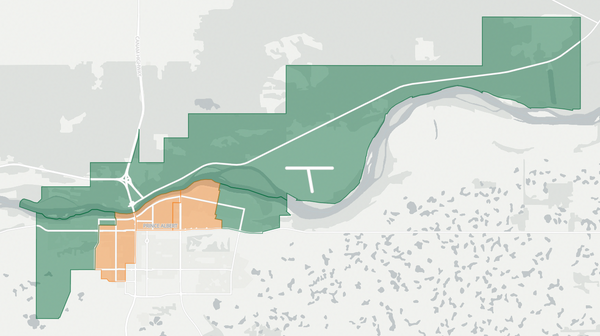
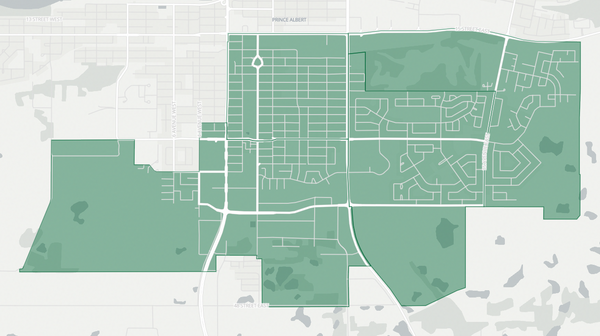
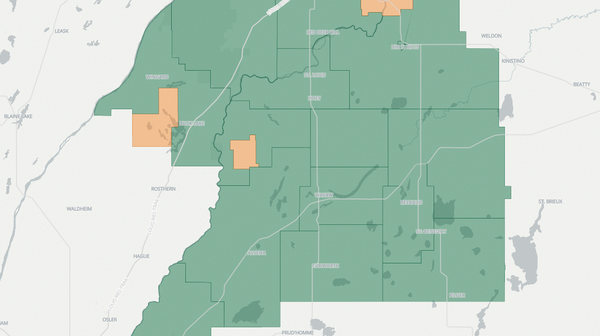
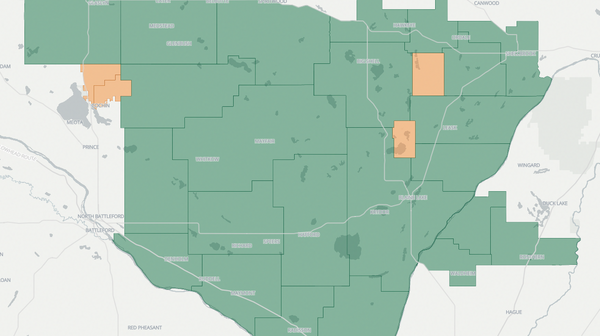
Poll-by-poll results for Saskatchewan Rivers in the 2024 Saskatchewan election. The Saskatchewan Party candidate won this riding. Explore detailed voting data, candidate results, and turnout statistics at the poll level.
Riding information
Auto generated. Flag an issue.Saskatchewan Rivers
Saskatchewan Rivers sprawls across the boreal parkland north of Prince Albert, taking in the towns of Big River and Choiceland along with the villages of Meath Park, Christopher Lake, Candle Lake, Debden, and White Fox. Prince Albert National Park occupies its western reaches, and the riding's economy mixes forestry, commercial fishing, ranching, and a seasonal tourism trade driven by cottage country around Candle Lake and other northern waterways. The constituency carried outsized symbolic weight in 2024: it was the sole seat held by the Saskatchewan United Party, whose former leader Nadine Wilson had represented the area since 2007 — first as a Saskatchewan Party MLA and, after her 2021 departure from caucus over a misrepresented vaccination record, as an independent and then leader of the fledgling SUP. The three-way contest between the Saskatchewan Party's Eric Schmalz, the NDP's Doug Racine, and Wilson herself made Saskatchewan Rivers one of the most watched rural races in the province.
Candidates
Eric Schmalz (Saskatchewan Party) — Schmalz was born and raised in Prince Albert and spent thirteen years as a member of the RCMP before returning to his family's operation, obtaining training as an auctioneer and building a farming and ranching business. Since 2019 he served as reeve of the Rural Municipality of Prince Albert, giving him municipal governance experience and strong local networks.
Doug Racine (NDP) — Racine served twelve years in the Canadian military, including a peacekeeping deployment, before completing a law degree and practising for a quarter century in Saskatoon. He founded the Aboriginal Law Group and specialized in Indigenous legal issues, representing Metis communities in forestry disputes in northern Saskatchewan and appearing before the Nuclear Safety Commission and the National Energy Board. A Metis man whose father came from the Turtle Mountains of Manitoba, Racine grew up in a rural community and positioned himself as someone who understood both the legal complexities of northern resource development and the everyday realities of small-town life.
Nadine Wilson (Saskatchewan United Party) — Wilson was first elected in 2007 and served in cabinet under Brad Wall and Scott Moe as Provincial Secretary. She resigned from the Saskatchewan Party caucus in September 2021 after the party revealed she had misrepresented her COVID-19 vaccination status. She sat as an independent, then became the first leader of the Saskatchewan United Party in 2022, positioning the party to the right of the governing Saskatchewan Party on issues of government overreach and personal liberty. She resigned the leadership in May 2024, with Jon Hromek succeeding her, but continued to run as an SUP candidate in Saskatchewan Rivers.
Local Issues
Healthcare access was the paramount concern across the riding's scattered communities. Residents in areas like Big River, Debden, and Meath Park faced long drives to Prince Albert for hospital services, and the provincewide shortage of physicians and nurses meant that even Prince Albert's Victoria Hospital was strained. The NDP's Racine argued that the government had allowed rural healthcare to deteriorate to the point where geography had become a barrier to survival, while Schmalz emphasized the Saskatchewan Party's recruitment programs targeting internationally trained health workers.
Forestry and resource management shaped the economic debate. The riding's proximity to the boreal forest makes it sensitive to decisions about logging tenures, wildfire management, and the balance between conservation and extraction. Racine's legal background in Indigenous forestry rights gave him particular credibility on this file, while Schmalz spoke to the need for regulatory certainty that would sustain local mills and the jobs they provide.
The three-way split on the right was itself a local issue. Wilson's presence on the ballot threatened to divide conservative voters and potentially hand the seat to the NDP. The Saskatchewan Party invested heavily in the riding, and Schmalz's campaign leaned on the argument that only a vote for the governing party could prevent a left-of-centre win. In the end, Schmalz consolidated enough support to win comfortably, while Wilson's diminished showing — down sharply from the base she had built as a sitting MLA — marked the effective end of the SUP's legislative presence.