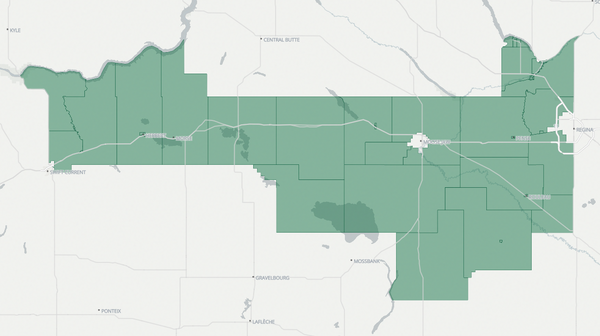
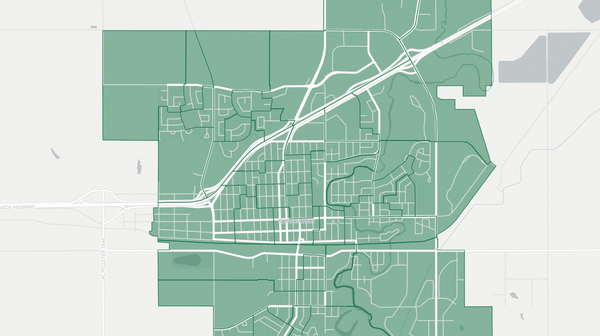
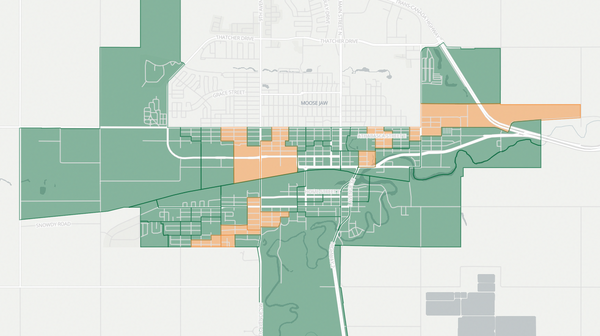
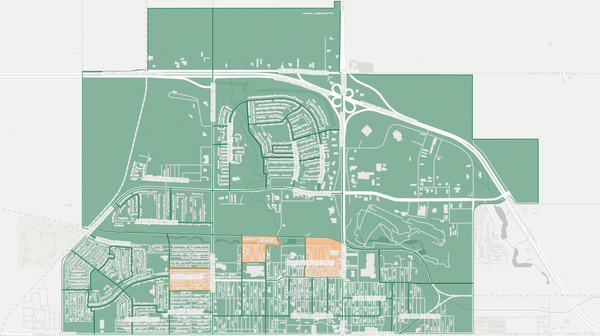
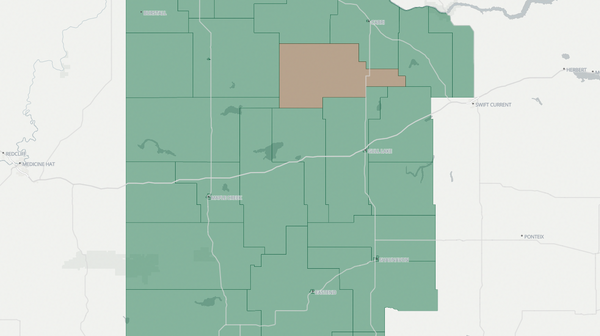
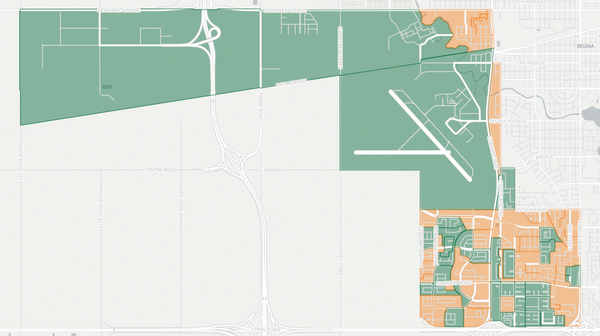
Wood River — 2020 Saskatchewan Provincial Election Results Map
Wood River — 2020 Election Results
📌 The Saskatchewan electoral district of Wood River was contested in the 2020 election.
🏆 David Marit, the Saskatchewan Party candidate, won the riding with 6,413 votes (82.8% of the vote).
🥈 The runner-up was Roger Morgan (NDP) with 1,085 votes (14.0%), defeated by a margin of 5,328 votes.
Riding information
Auto generated. Flag an issue.Wood River
Wood River, a sprawling rural riding covering a vast stretch of south-central Saskatchewan from Assiniboia to Gravelbourg and the communities in between, was represented by David Marit, a farmer and former president of the Saskatchewan Association of Rural Municipalities (SARM). Marit had won the seat in his first run in 2016 and was immediately appointed Minister of Highways and Infrastructure by Premier Brad Wall. Under Premier Scott Moe, Marit was moved to the Agriculture portfolio in 2018 -- a natural fit for someone who had spent his career as a grain and cattle producer and had served on his rural municipal council since 1993. As Agriculture Minister during a period of trade disputes, weather challenges, and a pandemic, Marit was one of the most visible cabinet ministers in rural Saskatchewan.
With no seat in the province delivering larger margins for the Saskatchewan Party, Wood River was not a competitive race in 2020. The interest lay instead in the local issues facing a riding that epitomized the challenges of rural Saskatchewan: population decline, aging infrastructure, physician shortages, and the ever-present uncertainties of agriculture.
Candidates
David Marit (Saskatchewan Party) -- Born and raised in the Wood River area, Marit was an active agricultural producer until 2019 and remains a landowner. He began serving on his rural municipal council in 1993 and was elected to the SARM Board as Director for Division 2 in 1999, eventually rising to serve as SARM President from 2006 to 2014. As SARM president, he advocated for rural road maintenance and better transportation options for grain producers. He was first elected MLA in 2016 and served as Minister of Highways and Infrastructure before becoming Minister of Agriculture in 2018.
Roger Morgan (NDP) -- Morgan was a veteran educator who taught school for 33 years across south-central Saskatchewan, working out of Val Marie, Kincaid, and virtual classrooms, and educating students from communities including Coronach, Assiniboia, Rockglen, Mossbank, and Gravelbourg. He served nine years on the Saskatchewan High School Athletics Association (SHSAA) executive, including four years as its president.
Kimberly Soo Goodtrack (Green Party) -- Soo Goodtrack was a Wood Mountain Lakota First Nation member, artist, author, and former teacher. Born and raised in Saskatchewan, she attended university in British Columbia and taught in Vancouver for 24 years before returning to the province, where she purchased the old bank building in Rockglen and converted it into an art gallery.
Local Issues
Rural depopulation and the erosion of services were the defining challenges in Wood River. Many of the small communities in the riding had experienced steady population decline over decades, and with fewer residents came reduced access to healthcare, education, and commercial services. The riding's economy is dominated by agriculture, and producers faced a gauntlet of challenges during the 2016-2020 term: volatile commodity prices, trade disruptions with China over canola exports, unpredictable weather, and the logistical complications of operating during a pandemic.
Rural broadband access was an increasingly urgent issue. The Saskatchewan Association of Rural Municipalities had called for high-speed internet to be declared an essential service, recognizing that connectivity was no longer a luxury but a necessity for farm operations, remote education, and telehealth -- a point driven home by the pandemic. Many areas in Wood River had limited or unreliable internet service, placing them at a disadvantage.
Rural crime also featured prominently in local concerns. SARM had identified it as a priority issue, and residents in remote areas expressed frustration with RCMP response times and a sense of vulnerability. The province had joined the federal-provincial Rural Crime Task Force, but many felt that concrete improvements had been slow to materialize on the ground.