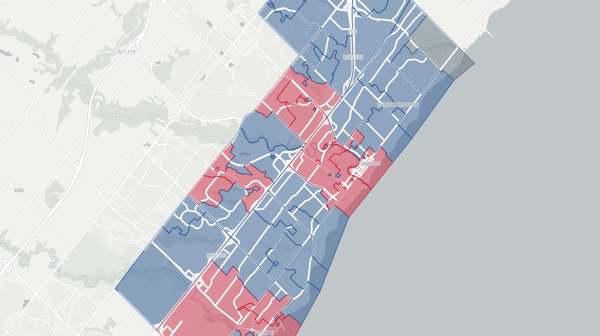
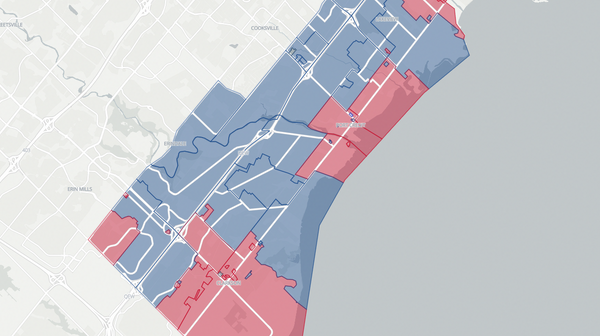
St. Catharines — 2025 Ontario Provincial Election Results Map
St. Catharines — 2025 Election Results
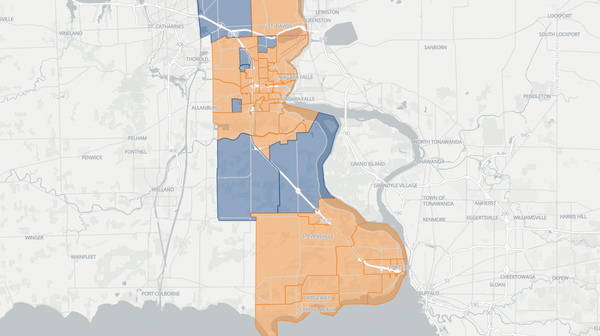
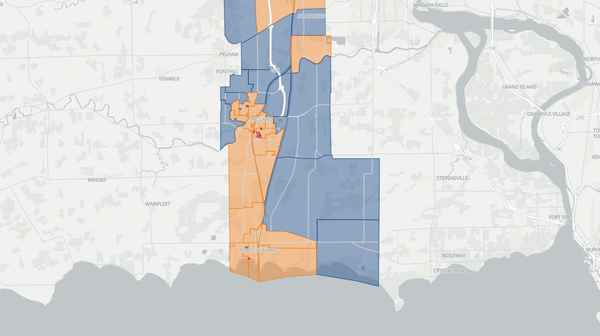
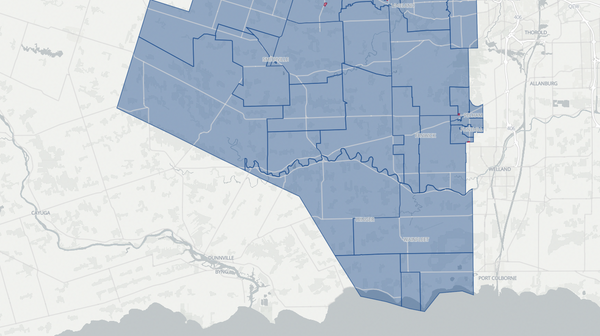
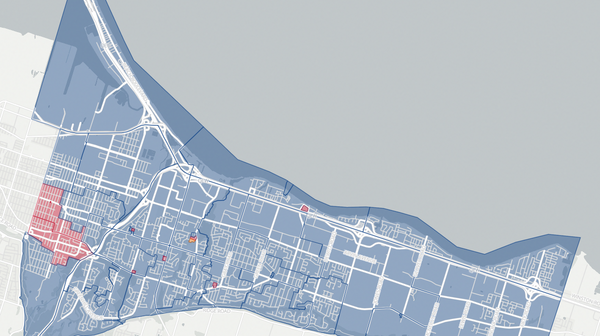
Poll-by-poll results for St. Catharines in the 2025 Ontario election. The NDP candidate won this riding. Explore detailed voting data, candidate results, and turnout statistics at the poll level.
Riding information
Auto generated. Flag an issue.St. Catharines
St. Catharines, the largest municipality in the Niagara Region with a population of approximately 136,000, went to the polls on February 27, 2025, with NDP incumbent Jennie Stevens seeking a third term. Stevens had made history in 2018 as the first woman to represent the riding provincially, breaking a long period of Liberal representation. She successfully defended the seat in 2022, defeating PC candidate Sal Sorrento. The 2025 contest was a rematch of that race, with Sorrento returning as the Progressive Conservative standard-bearer in a riding that had become a genuine three-way battleground.
Eight candidates ran in the riding, though the competitive dynamic centred on the Stevens-Sorrento contest, with the Liberals fielding a new candidate.
Candidates
Jennie Stevens (NDP) — Stevens served as a St. Catharines city councillor for the Merritton ward for fifteen years before winning provincially in 2018. She also worked as a healthcare worker and seniors' advocate. During her time in the Legislature, she introduced a private member's bill modelled on Clare's Law to provide protections for individuals at risk of intimate partner violence.
Sal Sorrento (Progressive Conservative) — Sorrento is a regional councillor in St. Catharines currently serving his second term, and was previously a two-term city councillor. He immigrated from Italy as a child, earned two undergraduate degrees from Brock University and a Master of Science in Education from Niagara University, and worked professionally as an outreach worker. He also served on the board of the Niagara Multicultural Centre for twelve years.
Robin McPherson (Liberal) — McPherson is a St. Catharines city councillor representing the St. Patrick's ward. She is the co-founder of a digital communications firm that works with non-profits and businesses.
Stephen Vincelette-Smith (Green Party), Rob Atalick (New Blue Party), Natalia Benoit (Stop the New Sex-Ed Agenda), Liz Leeuwenburg (Ontario Party), and J. Justin O'Donnell (Ontario Alliance) also ran.
Local Issues
The overlapping crises of opioid addiction, homelessness, and mental health dominated public life in St. Catharines throughout the 2022–2025 term. In February 2023, Niagara Regional Council declared three simultaneous states of emergency for homelessness, mental health, and opioid addiction, a dramatic step that underscored the severity of the situation. Although those declarations were later reclassified as states of crisis in mid-2023, the underlying conditions persisted. The number of people experiencing homelessness in Niagara rose from roughly 1,100 in late 2022 to over 1,200 a year later, and the region's sole supervised consumption site in St. Catharines faced the threat of losing provincial funding, alarming public health advocates.
Healthcare access remained a pressing concern. Like much of Ontario, the Niagara region experienced a worsening shortage of family physicians, and hospital staffing challenges continued to strain emergency departments. The St. Catharines site of Niagara Health operated under persistent capacity pressures. Mental health caseloads grew more complex, with service providers reporting a larger proportion of clients requiring intensive community supports, even as provincial base funding increases failed to keep pace with demand.
Affordable housing and cost of living weighed heavily on residents. Rents and home prices in the Niagara region, long considered more affordable than the Greater Toronto Area, had risen sharply in recent years, putting pressure on lower-income families and workers who had moved to the area seeking cheaper housing. The waitlist for subsidized housing in Niagara remained long, and the gap between incomes and housing costs continued to widen.