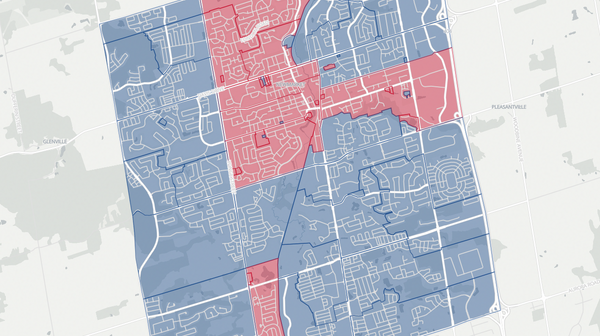
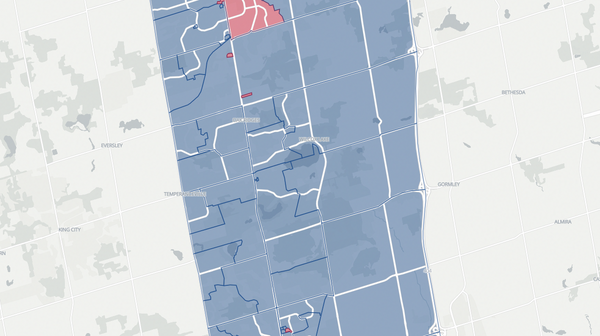
Pickering—Uxbridge — 2025 Ontario Provincial Election Results Map
Pickering—Uxbridge — 2025 Election Results
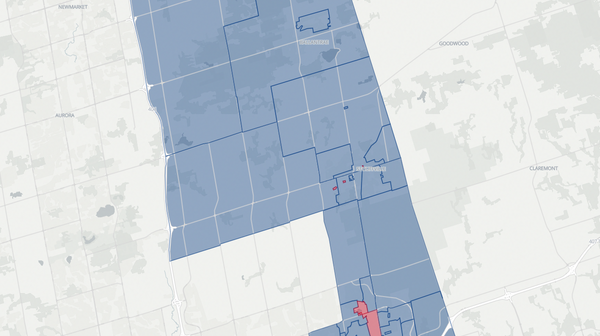
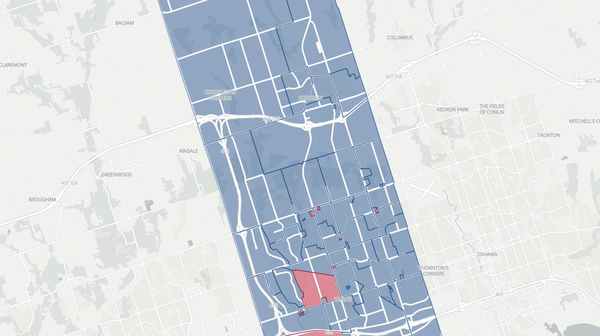
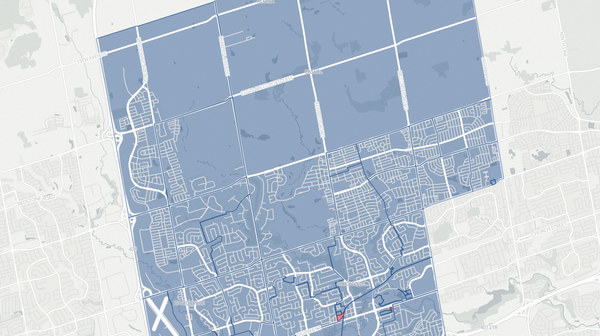
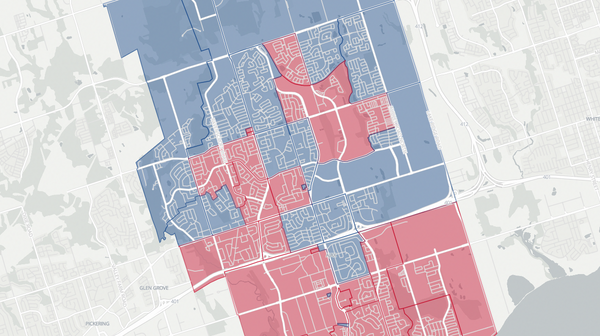
Poll-by-poll results for Pickering—Uxbridge in the 2025 Ontario election. The Progressive Conservative candidate won this riding. Explore detailed voting data, candidate results, and turnout statistics at the poll level.
Riding information
Auto generated. Flag an issue.Pickering—Uxbridge
Pickering—Uxbridge straddles two distinct communities in Durham Region: the rapidly growing suburban City of Pickering on the eastern edge of the Greater Toronto Area and the rural Township of Uxbridge to the north. Progressive Conservative Peter Bethlenfalvy, who served as Ontario’s Minister of Finance, had held the seat since 2018 and was seeking a third term. As finance minister, he oversaw the province’s post-pandemic fiscal recovery and delivered multiple budgets during the 2022–2025 term. Durham Region’s population continued to surge, with Pickering among the fastest-growing municipalities in the region, placing considerable pressure on local infrastructure and services.
The riding also drew attention because of the Pickering Nuclear Generating Station, a major employer and energy producer. In January 2024, the Ontario government announced its support for refurbishing four Pickering B reactors, a project estimated at over 26 billion dollars that would extend the plant’s life by at least 30 years and create thousands of jobs in the region.
Candidates
Peter Bethlenfalvy (Progressive Conservative) — Born in Montreal to Hungarian immigrants, Bethlenfalvy holds degrees from McGill University and the University of Toronto. He brought over 25 years of experience in financial services, including serving as president and chief operating officer of TD Securities, before entering politics. He served as president of the Ontario Treasury Board from 2018 to 2021 and became Minister of Finance in December 2020.
Ibrahim Daniyal (Liberal) — Daniyal is a small-business owner and financial advisor who has lived in the Pickering-Uxbridge area for over a decade. He holds a master’s degree in administrative sciences and a post-graduate diploma in marketing management from the Netherlands, along with a certificate in financial underwriting. This was his second time running as the Liberal candidate in the riding.
Khalid Ahmed (NDP) — Ahmed is a community leader who has advocated for equity, affordability, and improved health care. He served on Seneca College’s Continuing Education Student Advisory Board, where he worked to improve services for students.
Mini Batra ran for the Green Party, Adrian Nolan for the New Blue Party, Victoria Devenport for the Ontario Party, Mansoor Qureshi for Consensus Ontario, and Netalia Duboisky for the Ontario Moderate Party.
Local Issues
Managing rapid suburban growth was the central challenge in Pickering—Uxbridge during the 2022–2025 term. Pickering’s population growth outpaced the expansion of transit, schools, and health-care facilities, and residents raised concerns about whether infrastructure was keeping pace. The Durham Region Official Plan, approved in September 2024, included decisions on settlement area boundary expansion in northeast Pickering and established a framework for growth to the year 2051, but questions about the adequacy of transit service, school construction, and water and sewer capacity persisted. GO Transit commuter rail access and Highway 407 congestion remained daily concerns for commuters travelling into Toronto.
The nuclear sector played a significant role in the riding’s economy and identity. The announcement of the Pickering nuclear refurbishment in January 2024 was welcomed by many as a guarantee of long-term employment and clean energy production, but the project’s massive cost also drew attention in provincial fiscal debates. In rural Uxbridge, the preservation of agricultural land and natural heritage against development pressure continued to be a priority, particularly in light of the province’s Greenbelt controversy and the push to build more housing. The contrast between Pickering’s urbanizing southern portion and Uxbridge’s agricultural north created distinct sets of priorities within a single riding.