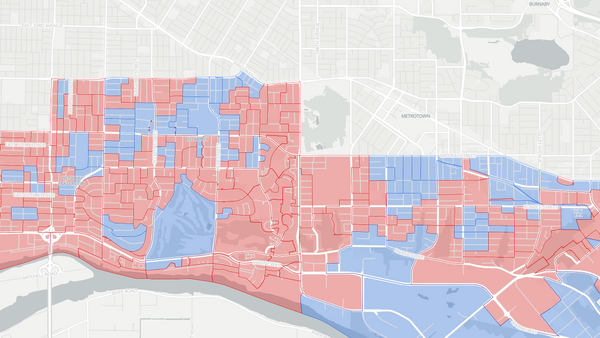
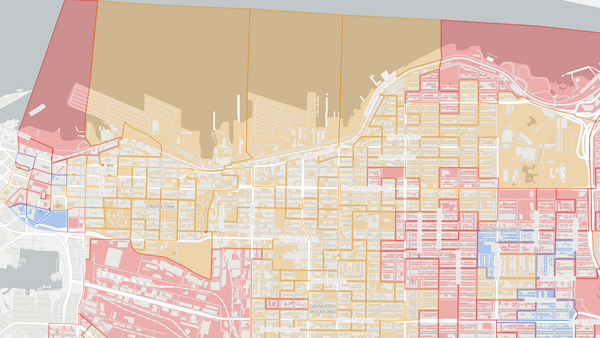
Port Moody—Coquitlam, BC — 2025 Federal Election Results Map
Port Moody—Coquitlam — 2025 Election Results
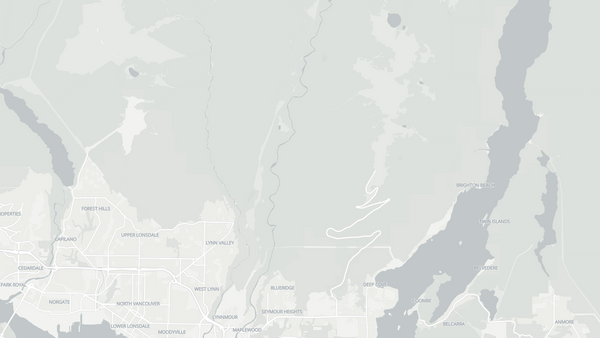
Poll-by-poll results for Port Moody—Coquitlam in the 2025 Canadian federal election. The Liberal candidate won this riding. Explore detailed voting data, candidate results, and turnout statistics at the poll level.
Riding information
Auto generated. Flag an issue.Port Moody—Coquitlam
Port Moody—Coquitlam is a suburban riding in the Tri-Cities region of Metro Vancouver, encompassing all of Port Moody, the villages of Anmore and Belcarra, and the northern portion of Coquitlam. Situated at the head of Burrard Inlet where the Coast Mountains meet the urban lowlands, the riding blends compact urban development in Port Moody and central Coquitlam with the rural character of the small inlet-side villages. The riding's population skews younger and more educated than the provincial average, reflecting the area's appeal to young professionals and families drawn by SkyTrain connectivity, relatively affordable housing compared to Vancouver, and proximity to extensive parkland.
Candidates
Zoe Royer (Liberal) is a former Port Moody city councillor who served three consecutive terms from 2011 to 2022. Born in Scotland and raised in Canada, Royer is a former healthcare administrator who founded her own dentistry solutions company. She later served as Strategic Growth Officer for Massive Canada Building Systems. After choosing not to seek a fourth council term, she was elected as a School District 43 trustee in 2022. Royer was known on council as an advocate for the local arts community, founding the KaBoom! arts event and co-founding Port Moody's art walk.
Paul Lambert (Conservative) is a business consultant and lifelong resident of the riding whose family has lived in the Port Moody—Coquitlam area since the 1940s. He holds a degree in economics from Simon Fraser University and has spent 25 years volunteering in the community, coaching youth sports and serving on local environmental and recreation committees. Lambert ran for Coquitlam city council in 2022, campaigning on managed growth and housing affordability.
Bonita Zarrillo (NDP) served as the Member of Parliament for Port Moody—Coquitlam from 2021 to 2025. A former business analyst with experience in food and beverage companies across North America and Europe, she previously served three terms on Coquitlam city council beginning in 2013, where she became known as an advocate for green jobs and affordable housing. In Parliament, she served as the NDP critic for Disability Inclusion and Seniors and introduced private members' bills addressing disability benefit clawbacks and airline labour practices.
Nash Milani (Green Party) is a lifelong Port Moody resident who works as a recreation clerk for the City of Burnaby. An accomplished musician and community activist, Milani described himself as a disenfranchised former NDP voter who was drawn to the Green Party's environmental and fiscal platform.
About the Riding
Port Moody—Coquitlam sits where the suburban development of Metro Vancouver's eastern reaches meets the rugged terrain of the Coast Mountains. Port Moody, a small city of roughly 34,000, occupies the eastern shore of Burrard Inlet and has cultivated a reputation as a creative community with an active arts scene, a cluster of craft breweries along its waterfront, and heritage character along its main streets. Anmore and Belcarra, with a combined population under 3,500, are quiet residential villages nestled against Indian Arm and surrounded by parkland, including Belcarra Regional Park and Buntzen Lake Recreation Area.
Coquitlam's contribution to the riding includes densely developed areas around Town Centre, where condominium towers have risen rapidly in recent years, as well as established single-family neighbourhoods further north. The Evergreen Extension of the Millennium SkyTrain line, completed in 2016, transformed transit access in the riding and accelerated residential development around its stations.
In 2025, housing affordability and the pace of development were central concerns. Rapid densification around SkyTrain stations strained local infrastructure, parks, and schools, while housing costs continued to outpace incomes even in what was once considered a more affordable alternative to Vancouver. Healthcare access—particularly the shortage of family physicians—was a recurring issue, as was the state of Eagle Ridge Hospital, the riding's primary acute care facility. The US trade dispute and broader economic uncertainty added anxiety for residents employed across Metro Vancouver's diverse economy.