Ottawa Centre, ON — 2025 Federal Election Results Map
Ottawa Centre — 2025 Election Results
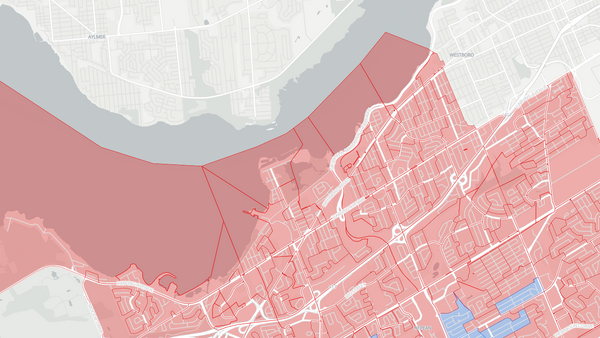
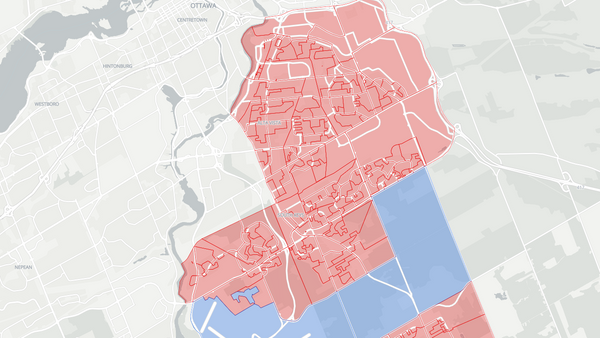
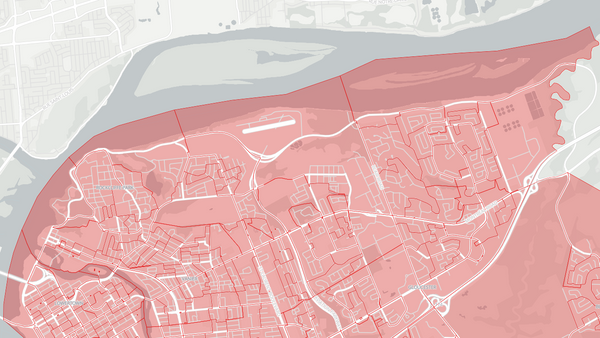
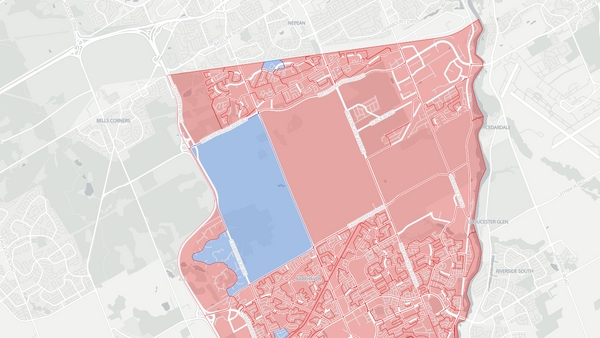
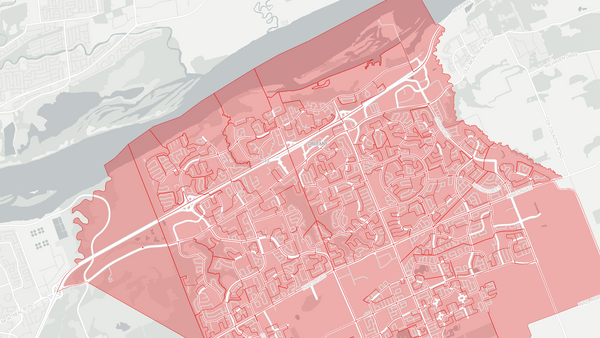
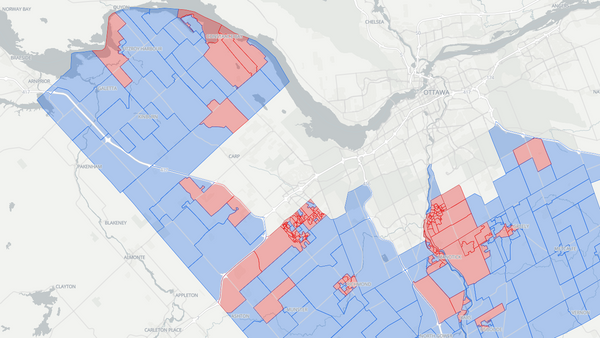
Poll-by-poll results for Ottawa Centre in the 2025 Canadian federal election. The Liberal candidate won this riding. Explore detailed voting data, candidate results, and turnout statistics at the poll level.
Riding information
Auto generated. Flag an issue.Ottawa Centre
Ottawa Centre is the federal riding encompassing downtown Ottawa, Parliament Hill, and the dense urban neighbourhoods radiating outward from the national capital's core. The riding stretches from the Rideau River in the east through Centretown, The Glebe, Old Ottawa South, and Old Ottawa East, then west through Hintonburg, Wellington Village, and Westboro. Following the 2022 redistribution, the riding gained the Mooney's Bay and Billings Bridge areas from Ottawa South while losing some western territory. It is one of Canada's most politically engaged ridings, with a high concentration of federal public servants, university students, and civic activists.
Candidates
Yasir Naqvi (Liberal) is the incumbent, first elected federally in 2021. Born and raised in Karachi, Pakistan, he immigrated to Canada with his family in 1988 after his father was jailed for leading a pro-democracy demonstration. He attended McMaster University and the University of Ottawa Law School, and practised international trade law at Lang Michener LLP before entering politics. Naqvi served as the Liberal MPP for Ottawa Centre from 2007 to 2018, holding cabinet roles including Attorney General of Ontario, Government House Leader, and Minister of Community Safety and Correctional Services. He also served as President of the Liberal Party of Ontario. In 2023, he placed third in the Ontario Liberal leadership race.
Joel Harden (NDP) grew up in Vankleek Hill, Ontario, and is a self-described democratic socialist who has written on political activism. He defeated Naqvi in the 2018 provincial election to become the NDP MPP for Ottawa Centre, serving as the party's critic for accessibility, pensions, and transit. He won the contested federal NDP nomination in January 2025 and campaigned on employment insurance for tariff-affected workers, price caps, and policies to address corporate concentration.
Paul D'Orsonnens (Conservative) served 35 years in the Canadian Armed Forces, holding leadership positions during deployments to Congo, Rwanda, Mali, Afghanistan, Bosnia, and Ukraine. This was his first run for elected office.
Amanda Rosenstock (Green Party) is a second-time Green candidate who previously ran federally in Toronto in 2021. She works as a policy analyst for Transport Canada's high-frequency rail initiative and previously worked in clean technology policy. She moved to Ottawa in 2022.
Andrea Chabot (Canadian Future Party) has two decades of experience in tax administration inside and outside the public service. Before joining government, she spent seven years volunteering with at-risk youth and worked as a tax consultant for Alberta farmers.
About the Riding
Ottawa Centre is unique in Canadian politics as the riding that contains Parliament Hill, the Supreme Court, and the core institutions of the federal government. Tens of thousands of public servants work within its boundaries, and many more live in its neighbourhoods, giving the riding a particular sensitivity to government policy on everything from the hybrid-work mandate to public service pay systems. The riding is also home to the University of Ottawa and Carleton University, whose student populations contribute to its younger-than-average demographic.
The riding's urban density supports a vibrant cultural and commercial life. The ByWard Market, Elgin Street, Bank Street through The Glebe, and the Westboro and Hintonburg strips offer independent retail, restaurants, and arts venues. The Rideau Canal, a UNESCO World Heritage Site, runs through the riding and is a defining feature of Ottawa's identity.
In 2025, the campaign in Ottawa Centre was shaped by several converging pressures. Homelessness and the opioid crisis were visible on downtown streets, with encampments and overdose incidents testing the city's social services. Housing affordability intensified as Ottawa's population grew and rental vacancy rates fell. The Confederation Line LRT's reliability problems frustrated daily commuters. The US trade dispute, while less directly felt in a public-service-dominated economy, raised broader anxieties about Canada's economic sovereignty and government fiscal capacity.