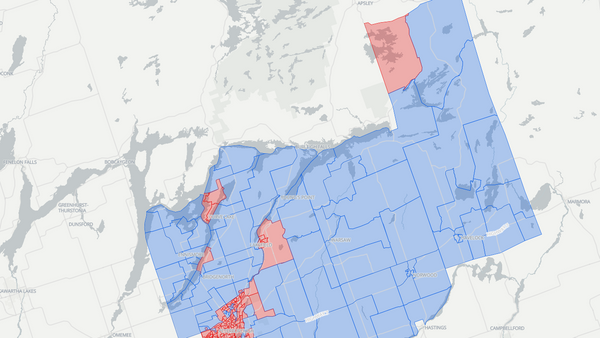
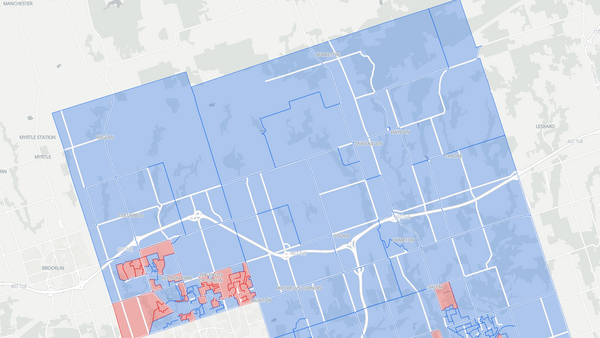
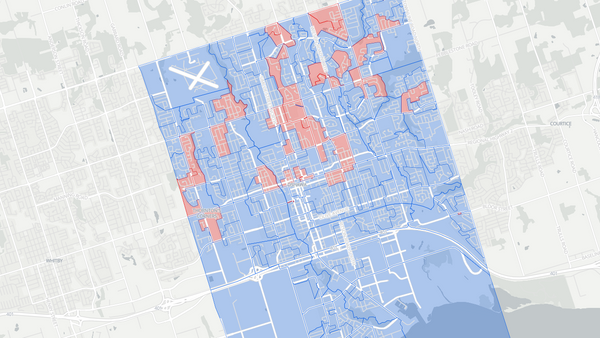
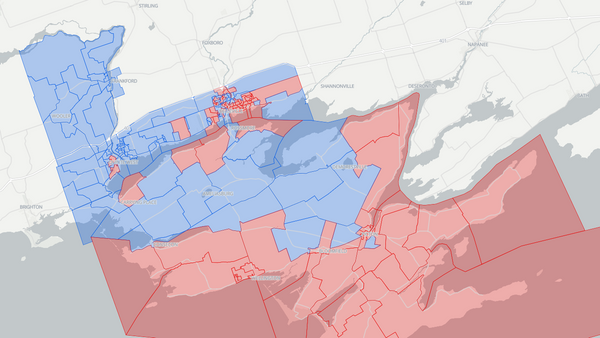
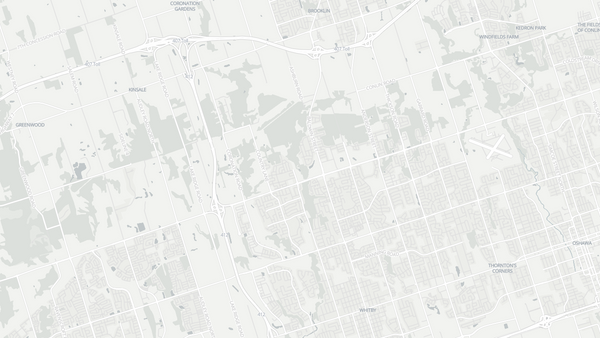
Northumberland—Clarke, ON — 2025 Federal Election Results Map
Northumberland—Clarke — 2025 Election Results
📌 The Canadian federal electoral district of Northumberland—Clarke was contested in the 2025 election.
🏆 Philip Lawrence, the Conservative candidate, won the riding with 34,862 votes (49.0% of the vote).
🥈 The runner-up was John Goheen (Liberal) with 32,648 votes (45.9%), defeated by a margin of 2,214 votes.
Riding information
Auto generated. Flag an issue.Northumberland--Clarke
Northumberland--Clarke is a riding along the north shore of Lake Ontario in central Ontario, stretching from Brighton in the east through Cobourg and Port Hope to the western edge of Clarington. Renamed from Northumberland--Peterborough South following the 2022 redistribution, the riding shed its Peterborough County territory and gained a portion of Clarington, focusing it squarely on Northumberland County and its lakeside communities. The riding blends small-town Ontario charm with growing commuter pressure from the Greater Toronto Area, as retirees and remote workers push eastward along the Highway 401 corridor in search of more affordable housing.
Candidates
Philip Lawrence (Conservative) is the incumbent, first elected in 2019. He earned a BA in political science from Brock University, a law degree from Osgoode Hall Law School, and an MBA from the Schulich School of Business. Lawrence practised tax law before spending over a decade in financial services, becoming the third generation in his family to work in the industry. He lives on a farm in Orono with his wife Natasha, an occupational therapist, and their two children. In Parliament, he has served as shadow minister for National Revenue and for the Federal Economic Development Agency for Ontario.
John Goheen (Liberal) has spent his entire 25-year professional career in education across Northumberland County, serving as teacher, vice-principal, and principal at schools in Colborne, Warkworth, Brighton, Port Hope, and Baltimore. He is currently principal of Hillcrest Public School in Campbellford. He holds a Bachelor of Arts Honours from Trent University, a Bachelor of Education with distinction from Western University, and a Master of Education from the University of Toronto. He lives in the Grafton area with his wife and three sons.
Ava Becker (NDP) was born and raised in Cobourg and is a student at Trent University. She serves as co-chair of the Peterborough Youth NDP and as communications coordinator for the Society of Ecological Restoration at Trent, and has been involved in social justice and environmental activism.
Christina Marie Wilson (Green Party) and Lisa Bradburn (People's Party) also stood as candidates in the riding.
About the Riding
Cobourg, the county seat with a population of roughly 20,000, is the riding's largest community and its commercial and cultural centre. Its restored Victorian downtown, heritage waterfront, and proximity to Toronto have made it a magnet for retirees and seasonal residents. Port Hope, immediately to the west, is known for its well-preserved nineteenth-century streetscape, the Capitol Theatre, and the long-running federal Port Hope Area Initiative to remediate historic low-level radioactive waste from the former Eldorado Nuclear facility.
Brighton, at the riding's eastern edge near Presqu'ile Provincial Park, and Trent Hills, which includes the communities of Campbellford, Hastings, and Warkworth along the Trent River, round out the riding's urban centres. Agriculture remains a significant part of the local economy, with apple orchards, dairy farms, and cash-crop operations scattered across the county's rolling terrain.
In 2025, the riding's political conversation centred on affordability and growth management. Housing prices, pushed upward by Toronto-area buyers, strained local residents and younger families trying to stay in the communities where they grew up. Healthcare access was a persistent concern, with family physician shortages affecting towns across the riding. The carbon tax, agricultural trade with the United States, and the economic future of small-town Ontario were recurring themes, with Lawrence's advocacy for farmers and opposition to the carbon levy forming a central pillar of his campaign.