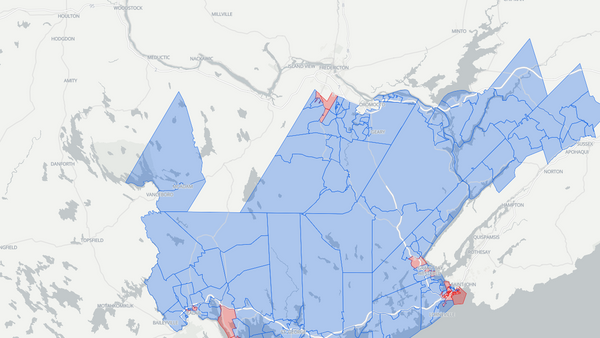
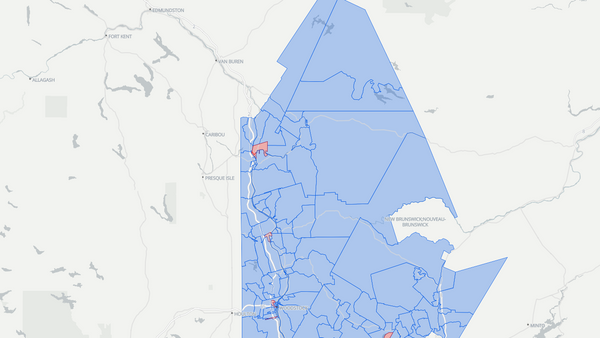
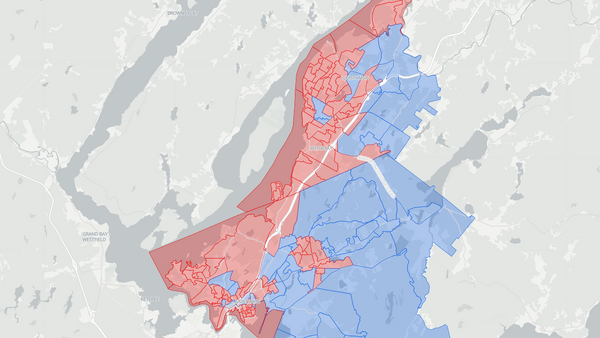
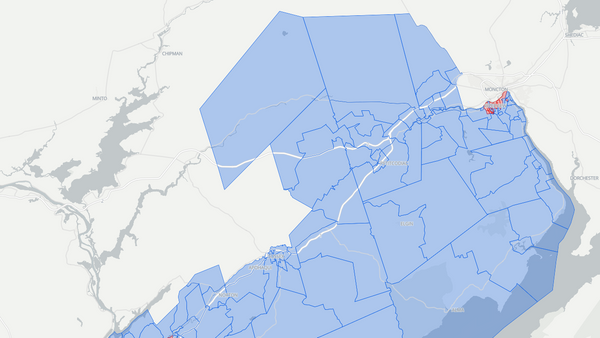
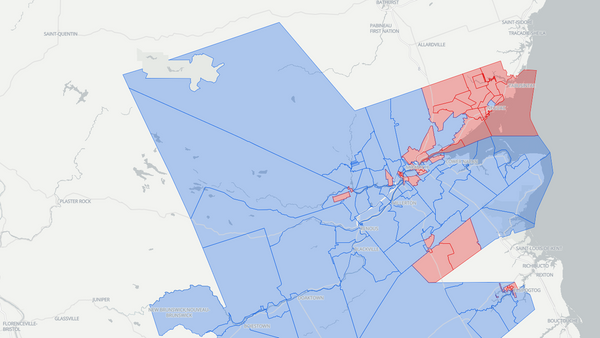
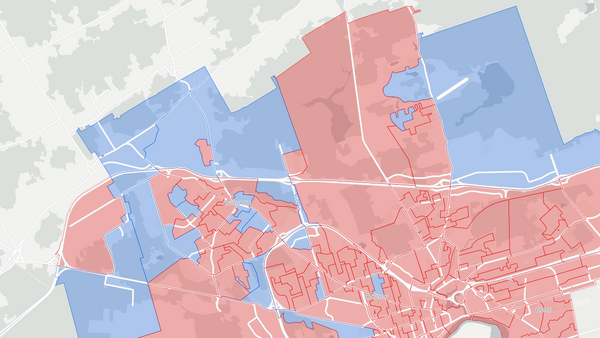
Fredericton—Oromocto, NB — 2025 Federal Election Results Map
Fredericton—Oromocto — 2025 Election Results
📌 The Canadian federal electoral district of Fredericton—Oromocto was contested in the 2025 election.
🏆 David Myles, the Liberal candidate, won the riding with 30,750 votes (61.3% of the vote).
🥈 The runner-up was Brian Macdonald (Conservative) with 16,200 votes (32.3%), defeated by a margin of 14,550 votes.
Riding information
Auto generated. Flag an issue.Fredericton—Oromocto
Fredericton—Oromocto is a newly drawn riding for the 2025 election, combining the provincial capital of Fredericton with the military town of Oromocto and surrounding Sunbury County communities. The riding takes in Fredericton’s roughly 68,000 residents, the town of Oromocto (population approximately 9,500), Canadian Forces Base Gagetown—one of the largest military training facilities in the Commonwealth—and nearby communities including New Maryland, Lincoln, and Geary, as well as three First Nations. With a 2021 riding population of about 87,400, it is among the most urban and highly educated constituencies in New Brunswick.
Candidates
David Myles (Liberal) is a Fredericton-born, two-time Juno Award–winning singer-songwriter who entered federal politics as a first-time candidate. His collaboration with rapper Classified on the single Inner Ninja went six-times platinum, and he performed at both the 2010 Winter Olympics in Vancouver and the 2024 Summer Olympics in Paris. Myles holds a political science degree from Mount Allison University, where he graduated as class valedictorian, and has raised more than $230,000 for New Brunswick food banks through his annual Singing for Supper initiative.
Brian Macdonald (Conservative) is a former Progressive Conservative MLA who represented Fredericton West–Hanwell from 2010 to 2018, serving as Government Whip and Legislative Secretary with responsibility for Military and Intergovernmental Affairs. A Royal Military College graduate, Macdonald served in the Canadian Armed Forces in Bosnia, worked in Iraq, and later served as a policy advisor to former Defence Minister Peter MacKay.
Pam Allen-LeBlanc (Green Party) is an agricultural scientist, business owner, author, and former public servant who operates a solar-powered farm outside Fredericton. She has built a career spanning trade development, work with organizations including NASA and Oak Ridge National Lab, and ran as a Green candidate provincially in 2024.
Nicki Lyons-MacFarlane (NDP) has worked since 2018 as a law library technician at the University of New Brunswick and serves as a union representative on the executive of Unifor Local 4504. She previously ran for the NDP in the 2024 provincial election in Fredericton South–Silverwood.
Dominic Cardy (Canadian Future Party) is the leader of the Canadian Future Party, a centrist federal party launched in 2024. A former leader of the New Brunswick NDP, Cardy later joined the Progressive Conservatives and served as provincial Education Minister under Premier Blaine Higgs before resigning from cabinet in 2022 over policy disagreements.
Heather Michaud (People’s Party) also stood as a candidate.
About the Riding
Fredericton—Oromocto’s economy rests on three pillars: government, education, and the military. As the seat of the provincial legislature, Fredericton employs thousands of public servants at both the provincial and federal levels. The University of New Brunswick and St. Thomas University together enroll more than 12,000 students and anchor a growing knowledge economy, particularly in cybersecurity research and technology commercialization at the city’s Knowledge Park.
Oromocto’s economy revolves almost entirely around CFB Gagetown, which directly employs approximately 6,000 service members and 1,000 civilians. Defence spending and veterans’ affairs carry outsized local importance, and the 2025 election saw the military’s role in national sovereignty become a prominent campaign theme as US trade tensions and global instability heightened questions about Canada’s defence preparedness. Audits of base housing at Gagetown revealed serious disrepair, including deteriorating infrastructure and water quality concerns, adding urgency to calls for increased military investment.
Fredericton’s population grew significantly over the preceding decade, but housing and infrastructure struggled to keep pace. Rental vacancy rates dropped to historic lows, and visible homelessness increased in the city centre. The riding’s dependence on public-sector employment meant that federal fiscal pressures—compounded by trade uncertainty—carried direct implications for the local economy.