Sydney—Glace Bay, NS — 2025 Federal Election Results Map
Sydney—Glace Bay — 2025 Election Results
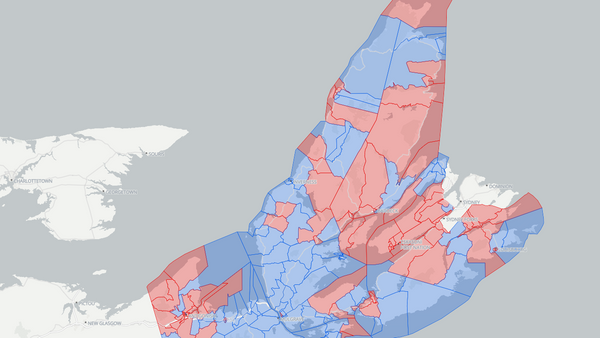
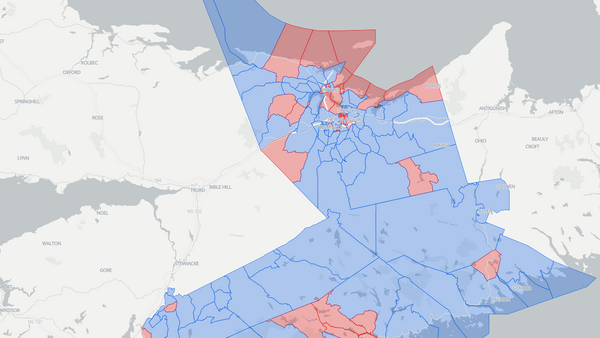
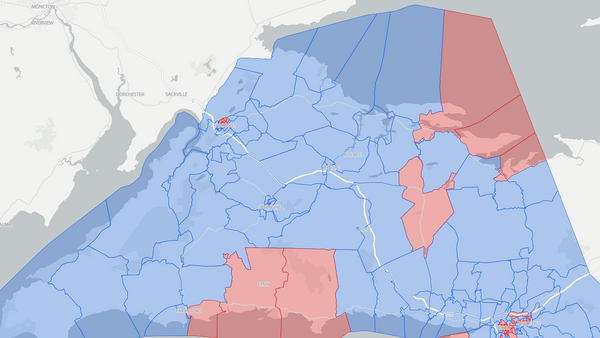
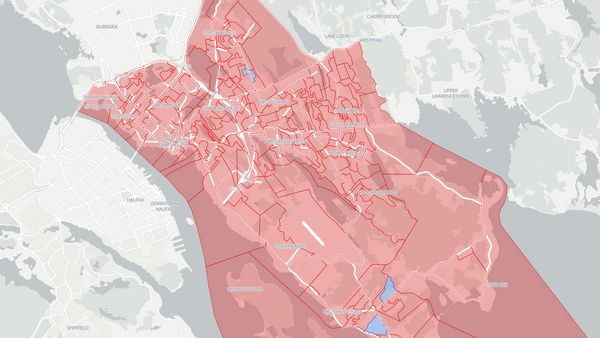
Poll-by-poll results for Sydney—Glace Bay in the 2025 Canadian federal election. The Liberal candidate won this riding. Explore detailed voting data, candidate results, and turnout statistics at the poll level.
Riding information
Auto generated. Flag an issue.Sydney—Glace Bay
Sydney—Glace Bay is a newly created federal riding on Cape Breton Island, established through the 2022 redistribution. It encompasses the urban core of the Cape Breton Regional Municipality, stretching from Sydney Forks in the west through the city of Sydney to the former coal-mining towns of Glace Bay, New Waterford, and Dominion along the eastern coastline, with Port Morien near its southeastern boundary. The riding has a population of approximately 82,000 and represents the most urbanized portion of Cape Breton Island.
Sydney, the largest community and the former county seat of Cape Breton County, serves as the island’s commercial and institutional hub. Glace Bay, once one of the largest towns in Nova Scotia during the height of coal mining, and New Waterford share a working-class heritage rooted in the coal and steel industries that defined industrial Cape Breton for most of the twentieth century.
Candidates
Mike Kelloway (Liberal) was first elected as MP for Cape Breton—Canso in 2019 and re-elected in 2021 before shifting to the newly drawn Sydney—Glace Bay riding. Raised in Glace Bay in a coal-mining family, he holds a Bachelor of Arts from Cape Breton University and a Master of Continuing Education from the University of Calgary. Before entering politics, he held leadership roles at the Nova Scotia Community College and co-founded Bay It Forward, a community revitalization initiative in Glace Bay.
Anna Manley (Conservative) is a lawyer and entrepreneur based in Sydney. She founded Manley Law in 2016 and also operates a software company building artificial intelligence solutions for the legal industry. She holds a Master of Arts in English literature from McMaster University and a law degree from the University of New Brunswick.
Kimberly Losier (NDP) is a credit union employee who entered the race citing the rising cost of living as her primary motivation. She has focused her campaign on affordability, arguing that working families should not have to rely on credit to cover basic expenses such as groceries.
Joe Ward (Independent) is a software developer based in Cape Breton who has been active in local municipal politics. He has advocated for lowering property taxes as a means of addressing housing affordability in the region.
Jeffrey Evely (People’s Party) ran as the People’s Party of Canada candidate in the riding.
Michael Pittman (Libertarian) ran as the Libertarian Party candidate in the riding.
About the Riding
Sydney—Glace Bay sits at the heart of what was once industrial Cape Breton, a region whose identity was shaped by coal mining and steelmaking. The closure of the Sydney Steel Corporation’s mill in 2001 and the winding down of the Cape Breton Development Corporation’s coal mines marked the end of an era that had sustained the local economy for a century. The environmental legacy of that industrial past was addressed through a four-hundred-million-dollar federal-provincial cleanup of the Sydney Tar Ponds, completed in 2013 and transformed into Open Hearth Park.
Economic diversification has been a slow and ongoing process. Sydney’s waterfront has undergone significant revitalization, with cruise ship facilities, a boardwalk, and marina development drawing visitors and reinvigorating the downtown core. Cape Breton University, located in Sydney, has expanded its enrolment—particularly among international students—and serves as a major employer and economic anchor. Call centres, healthcare institutions, and small businesses round out the employment base, though the region continues to contend with higher-than-average unemployment and outmigration of younger workers.
Affordability, housing, and healthcare access were the dominant election issues in 2025. Research from Cape Breton University found that housing affordability problems in Glace Bay and New Waterford were roughly double what national statistics suggested, with approximately thirty per cent of residents struggling with housing costs. The region’s aging population—seniors comprise over a third of residents in parts of the CBRM—has placed heavy demands on a healthcare system already strained by physician shortages and long emergency-room wait times. The potential impact of American trade tariffs on the local economy also featured prominently in campaign debates, as Cape Breton’s export-oriented industries, including seafood and forest products, faced uncertainty about cross-border market access.