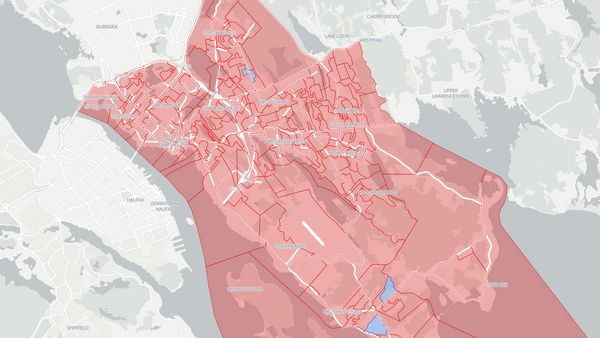
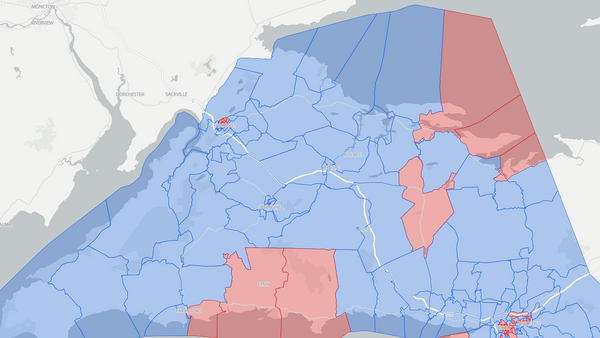
South Shore—St. Margarets, NS — 2025 Federal Election Results Map
South Shore—St. Margarets — 2025 Election Results
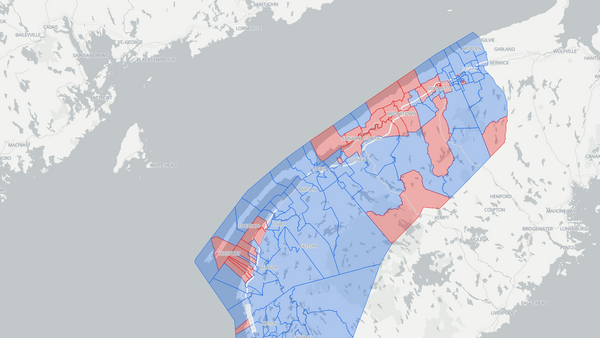
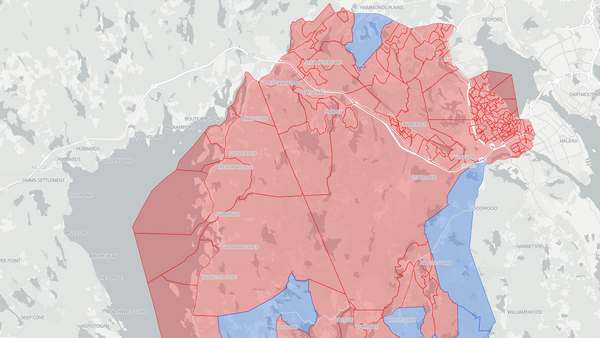
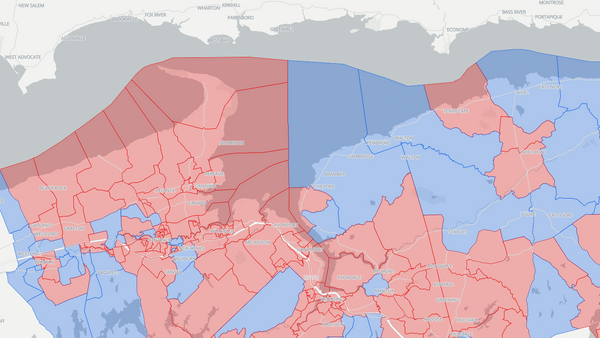
Poll-by-poll results for South Shore—St. Margarets in the 2025 Canadian federal election. The Liberal candidate won this riding. Explore detailed voting data, candidate results, and turnout statistics at the poll level.
Riding information
Auto generated. Flag an issue.South Shore—St. Margarets
South Shore—St. Margarets stretches along roughly 217 kilometres of Nova Scotia’s Atlantic coastline, from the suburban communities of St. Margarets Bay near Halifax in the north to Barrington and Clark’s Harbour at the province’s southwestern tip. The riding encompasses the counties of Lunenburg and Shelburne, the Region of Queens, and a small portion of Halifax Regional Municipality, combining picturesque coastal villages with working fishing harbours and inland forestry communities. It is one of the most geographically expansive and rural ridings in Nova Scotia.
Major population centres include Bridgewater, the largest town in the riding and a regional service hub on the LaHave River; the UNESCO World Heritage town of Lunenburg, celebrated for its preserved colonial architecture and maritime heritage; Chester, a popular summer destination on Mahone Bay; and Shelburne, which claims one of the largest natural harbours in the world. Liverpool, Lockeport, and Barrington round out the riding’s southern communities.
Candidates
Jessica Fancy-Landry (Liberal) is a teacher at Forest Heights Community School in Chester Basin, originally from Caledonia and residing in Bridgewater. She holds advanced degrees in educational leadership and rural education from Memorial University and has served as board chair of the Rural Communities Foundation of Nova Scotia, helping direct over two million dollars in investment into Nova Scotia communities.
Rick Perkins (Conservative) was first elected as the riding’s MP in 2021, defeating then-Fisheries Minister Bernadette Jordan. He holds an MBA from Saint Mary University’s Sobey School of Business and previously worked in financial services and corporate strategy, including co-founding the investor relations firm Genoa Management. In Parliament, he served as shadow minister for Fisheries and later for Innovation, Science, and Industry.
Mark Embrett (Green Party) is an implementation scientist with Nova Scotia Health who lives in Hubbards. His research has focused on primary care expansion, virtual health, cancer treatment, and precision medicine, and he has provided policy advice to organizations including the World Health Organization and the Canadian Institutes of Health Research.
Patrick Shea Boyd (People’s Party) is an international business executive with experience in the energy and financial services sectors across Europe, Asia, Africa, and the Middle East. He runs a consulting firm on the South Shore and serves as a volunteer firefighter and medical first responder.
Hayden Henderson (Independent) ran as an independent candidate in the riding.
About the Riding
The commercial fishery is the economic backbone of South Shore—St. Margarets. The lobster grounds off southwestern Nova Scotia are among the richest in the world, and Shelburne County has long been recognized as the lobster capital of the province, with annual landed values reaching hundreds of millions of dollars. Lunenburg hosts one of Canada’s largest secondary fish-processing plants, and the broader seafood industry sustains thousands of jobs across harvesting, processing, boatbuilding, and export logistics. The threat of American tariffs on Canadian lobster exports was a significant source of anxiety heading into the 2025 election.
Tourism is the other major economic driver. Lunenburg’s designation as a UNESCO World Heritage Site in 1995—recognizing it as one of the best surviving examples of planned British colonial settlement in North America—draws visitors from around the world to its colourful waterfront and the Fisheries Museum of the Atlantic. Chester, Mahone Bay, and the LaHave River valley attract seasonal tourists and a growing population of retirees and remote workers.
Despite its scenic appeal, the riding faces persistent challenges. Housing affordability and availability have become acute issues in communities that historically had stable, low-cost housing markets. Rural poverty rates in parts of the riding are among the highest in Nova Scotia, and access to healthcare—particularly family physicians—has deteriorated as the province grapples with a broader primary-care shortage. The environmental impact of open-pen aquaculture operations along the coast has also been a point of local contention, with residents and fishers voicing concerns about water quality and the ecological effects on wild fish stocks.
Fisheries enforcement emerged as a particularly heated issue during Rick Perkins’s tenure as MP, as he became an outspoken critic of federal fisheries policy. Disputes over lobster poaching and enforcement in the St. Mary’s Bay area drew national attention, and the question of how Ottawa manages and protects the inshore fishery remained central to the 2025 campaign in the riding.