Air Canada CEO caves to the mob
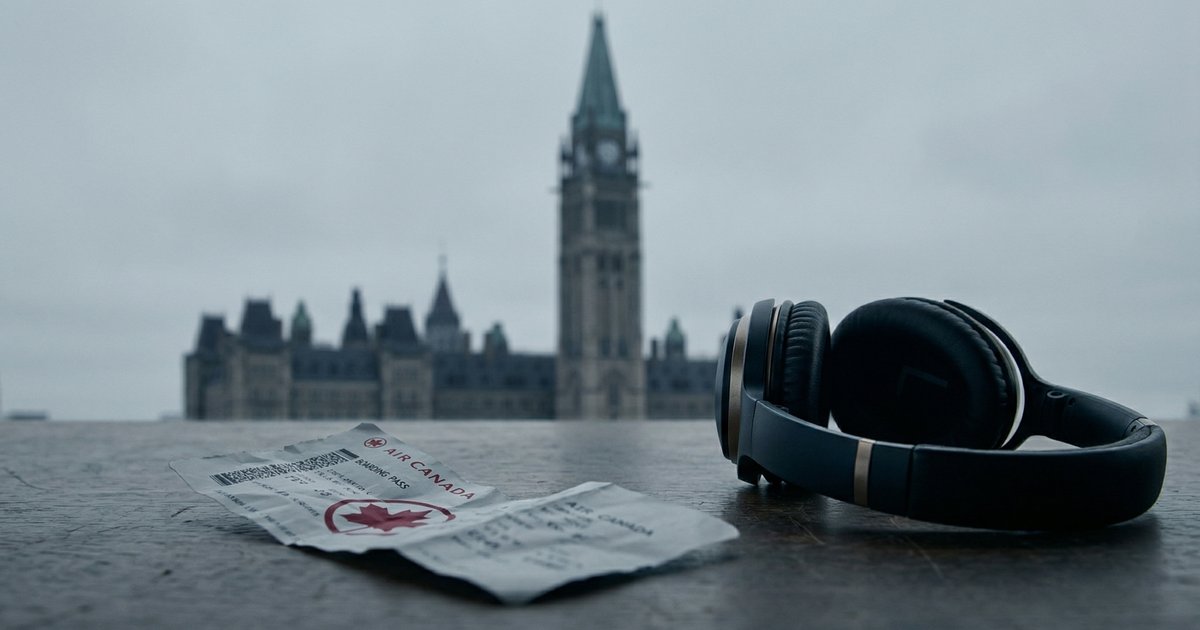
Air Canada CEO Michael Rousseau announced his retirement last week, ending a tenure defined less by his management of Canada's flag carrier and more by the relentless controversy over his inability to speak French. Rousseau had been under fire since 2021, when he told reporters in Montreal that he'd been too busy to learn the language during his 14 years living in the city. The backlash was immediate and never really stopped. The Official Languages Commissioner launched an investigation, Quebec politicians piled on, and Rousseau became a symbol of anglophone indifference to bilingualism.
Airline fatalities? Change the subject
On March 22nd, Air Canada Flight 8646 crashed on landing at New York's LaGuardia Airport. Two pilots were killed. Forty-one people were hospitalized. It was the deadliest incident at Laguardia in decades, and the investigation into what happened is still in its early stages.
One week later, the CEO is forced into retirement. And what are we talking about? It's about whether his replacement speaks French.
For deeper analysis and exclusive posts, subscribe to my Substack.
Neither of the bereaved families has come forward to express disappointment that the outgoing CEO didn't address them in both official languages. The families are grieving the dead and tending to the injured. The language of the CEO is not on their minds. But it is on the minds of politicians and commentators in Ottawa and Montreal who are offended on behalf of others. In Canada, process and symbolism crowd out substance.
Prime Minister Mark Carney weighed in to say that the next Air Canada CEO should be bilingual. This from the (barely bilingual) leader of a country where Air Canada just suffered a fatal crash on foreign soil - and the Prime Minister's priority is the linguistic credentials of the replacement. The federal government in Ottawa has the wrong priorities.
The bilingualism industry
What is official bilingualism in practice? Only 18% of Canadians are functionally bilingual. The Official Languages Act requires that federal institutions provide services in both English and French, and the annual cost of maintaining this regime is approximately $2.4 billion. That's the cost of a system that serves a country where the vast majority of citizens operate in one language.
The Official Languages Act mandates that Air Canada communicate with stakeholders in both official languages. And it did. In the minutes and hours after the LaGuardia crash, Air Canada communicated with the public, with families, and with media in both English and French. The spirit of the law — that both language communities are served — was satisfied. But Ottawa has overreached, enforcing a standard that isn't codified but is now somehow expected, largely due to a lack of pushback. A politician will tweet the same message in both official languages rather than tailoring distinct messages to each audience — even though both communities are being served. It's performative redundancy. The insistence that the CEO of Air Canada — a publicly traded company, not a government department — must himself speak French is an extension of this overreach into the private sector. In practice, it narrows the candidate pool for one of the most important corporate leadership positions in the country to the small fraction of Canadians who are bilingual.
A class filter disguised as a national value
This is how bilingualism has functioned since Pierre Trudeau enacted it as national policy. Let's be clear, it's a class filter. The Canadians who are bilingual tend to come from privileged backgrounds - private schools, immersion programs, families with the resources to cultivate a second language. When I was in French Immersion, the parents of my friends told me a key motivator for them was to keep their kids out of 'gen pop'. No problem child from a troubled home would be enrolled with us. The requirement that senior leaders in government and now in quasi-public corporations be bilingual systematically excludes Canadians from the west, from rural communities, and from working-class backgrounds where French immersion wasn't an option. Not to mention that Canada is now a country of many languages - not just English and French. We call that 'colonial privilege' I suppose.
There is an emerging conversation about Western alienation yet again. A CEO who managed a national airline is hounded out not for operational failures that led to a crash, but for not speaking French? And the Ottawa political class tuts with approval because bilingualism is the shibboleth that separates the good people from everyone else.
Technology has already solved this
I feel that this is now particularly antiquated. Technology has already solved the translation problem. On March 26th - four days after the crash, and while the bilingualism industry was coming to a boil - Google announced that its Translate app on iOS now supports real-time translation through headphones. You can have a conversation in English while the other person hears French, and vice versa, in real time.
And on the same day Rousseau's retirement was announced, Elon Musk's Grok rolled out automatic post translation on X. Every post on the platform is now translated into the user's language of choice, automatically.
We are spending $2.4 billion a year to maintain a translation infrastructure that a smartphone app can now replicate for free. The entire justification for requiring bilingual leaders - that they must be able to communicate directly with francophones - is being rendered obsolete by technology that fits in your pocket. The Macdonald-Laurier Institute has estimated that when you add up all government spending, tax expenditures, and price regulation, the state accounts for roughly 64 % of Canadian GDP. A class filter indeed. Proponents of the biligualism policy suggest it's just an learned skill like any other. So why is it that otherwise highly skilled Canadians routinely fail to meet this standard? We need to be a lean country, agile to meet the challenge ahead. We are dulling ourselves - unable to optimize practices that enhance our productivity.
A serious country would talk about the crash
We should be asking hard questions about why the plane crashed and how we can prevent such incidents from happening in the future. Instead, we're relitigating whether the CEO speaks enough French. Michael Rousseau's French didn't kill anyone. The next CEO's bilingualism won't save anyone. Canada should be serious country. We should aim to act like one.
Related Posts
Avi Lewis is the new leader of the NDP
Avi Lewis won the NDP leadership race on a decisive first ballot, taking 56 per cent of the vote.
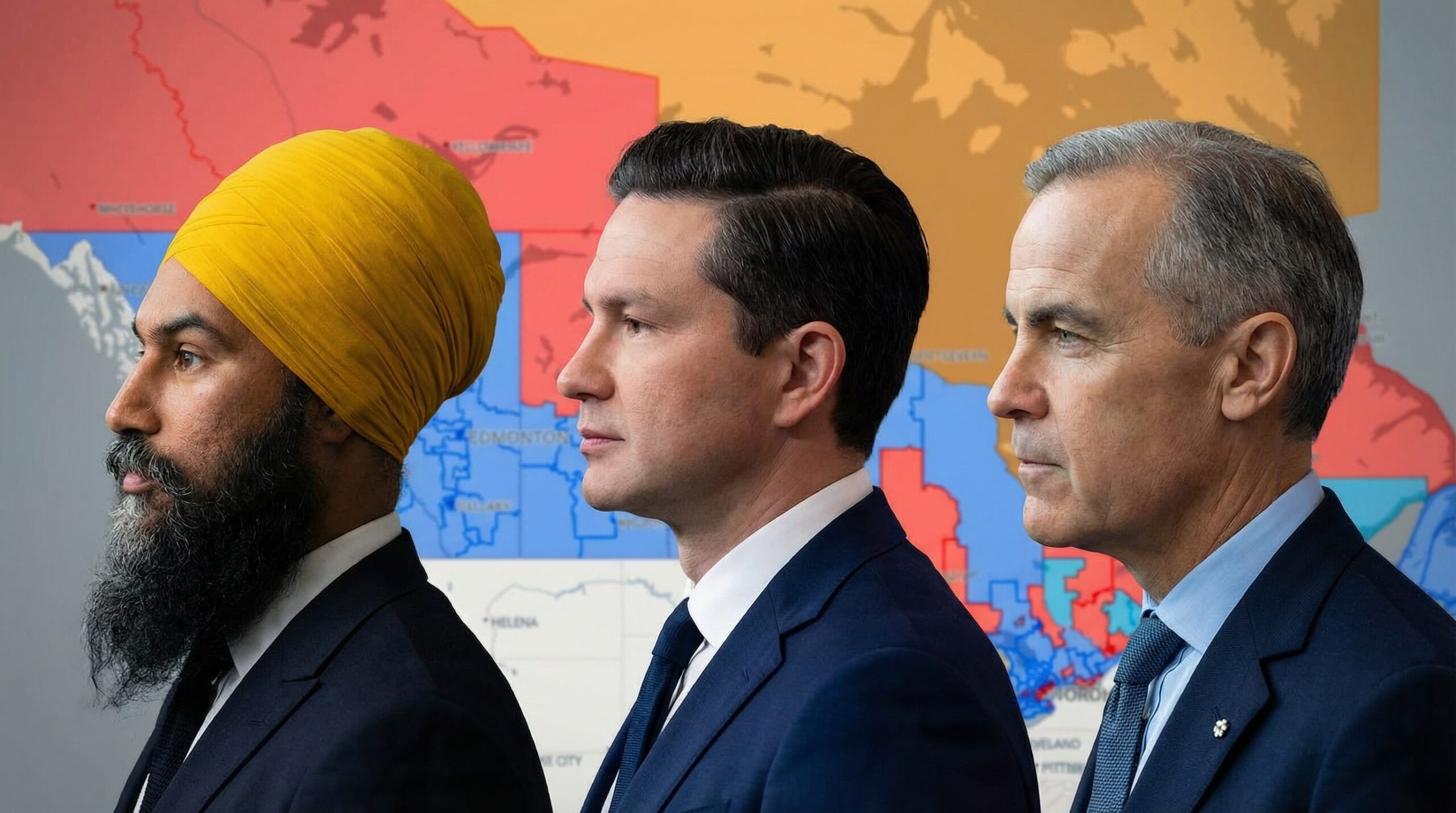
Mapping the results of the 2025 Canadian Federal Election
Yes, it’s finally here. I’ve generated the maps for the 2025 federal election wherein Mark Carney’s Liberal Party elected enough MPs to form a minority…
Elbows Down for Mark Carney on the Digital Services Tax
A late-night, long-weekend post from the GC Newsroom X account indicates that the Government of Canada is backing down on the Digital Services Tax, following…